How To Lower pH In Aquarium Fish Tanks (Safe Methods)

Keeping track of the pH in a fish tank is important for maintaining a healthy environment for your fish.

But did you know that some fish like a high pH while others do not? If you like fish that prefer a lower pH, how do you go about providing it for them?

After all, tap water is almost always higher in pH value. And having used the term “pH” so much already…

So, how to lower pH in aquarium fish tanks? Let’s find out!

What Do pH Levels Mean?

Aquarium pH levels are one of those chemistry concepts that might feel a little intimidating at first. We all likely graduated high school chemistry. But how long has it been since we needed to answer a test question on what pH actually is? Fortunately, it is not that difficult to understand what the pH value of your water actually is!

A laboratory assistant in a blue medical suit and gloves

The pH level is simply a measurement of the concentration of hydrogen ions (H+) relative to the hydroxide ions (OH-) in chemical solutions. If there are more hydrogen ions, then we say the solution is acidic. On the other hand, if the solution has more hydroxide ions, then we have a basic solution! Simple, right?

Well, there is one more wrinkle: pH levels are not a straightforward measurement. When you test pH, you are actually reading a logarithmic scale. This means that each step on the scale is a base 10 (10x) adjustment compared to the last step. pH 5 is 10 times more acidic than pH6. And pH 4 is 100x more acidic than pH 6. pH 9 is 10 times more basic than pH 8, and so on.

pH 7.0 is a neutral pH, meaning the concentration of hydrogen and hydroxide ions is balanced. Pure water (such as the kind coming from an RO filter) has a pH of 7.0 as well.

All marine aquariums will have basic (alkaline water) pH levels. But freshwater aquariums replicate environments that are much more diverse. They can have an acidic, neutral, or alkaline water ph, depending on what your fish and plants need.

Water Hardness

Before we talk about how to lower the pH, there is a second element to freshwater aquarium water chemistry to discuss: water hardness. Hardness is a description of the minerals dissolved in water; we say water is “hard” if it has a high concentration of minerals and “soft” if not.

Hardness is closely related to the pH in your aquarium and has a major effect on it. But they aren’t the same thing. If your water is loaded with buffering minerals, it will resist lowering pH.

The two measurements for water hardness are GH (General Hardness) and KH (Carbonate Hardness). GH measures the concentration of magnesium and calcium salts. These make up the limescale that forms not only in old pipes but also the white “chalk” along the water line when fish tank water evaporates.

Carbonate hardness is the measure of the carbonate concentration (CO3-). We measure this to determine how resistant our tank water is to swings in pH (buffering capacity). The higher the KH, the less it will shift suddenly when acids are introduced.

A high GH goes right along with a high KH in fish tanks because these elements and molecules are normally found bound together (CaCo3).

Tap Water pH and Hardness

Tap water chemistry in most countries is moderate to very alkaline. The water is also usually very hard, meaning there are a lot of dissolved minerals in the water as well. It would cost a lot of money to add equipment like a reverse osmosis filter to process wastewater into drinking water. Plus, these added minerals don’t affect human health in any way, so municipal water companies leave them.

When you test tap water using a pH test kit (see below), you will almost always get a high ph reading thanks to these minerals.

Do Aquarium Fish Need Soft Water?

The pH levels in fish tanks are not something that is set in stone and must be the same for every system. The aquarium pH levels you are aiming for depend on the kind of freshwater fish that you plan on keeping.

Different fish species have different water chemistry needs. This is easy to forget when you visit your local pet store and see fish from all over the world sharing a single fish tank.

But the majority of aquarium fish that pet stores carry are much more flexible in their water chemistry needs. These include Guppies, Zebra Danios, Tiger Barbs, and other hardy, captive-bred fish.
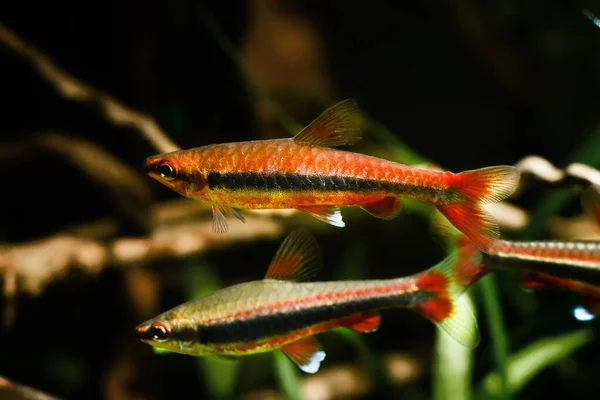
Adult pencilfish in aquarium

But some pets popular with fish tank owners are a little more demanding than you’d think. Tetras are a prime example. Even captive-bred tetras strongly prefer slightly acidic water conditions.

While they will survive with a higher pH, they are much more likely to get sick and will almost never breed. Other pets for a fish tank with a lower pH include Discus, Angelfish, Barbs, Rasboras, Betta fish, Gouramis, Corydoras, and Plecostomus.

Do Aquarium Plants Need a Lower pH?

Many people strongly believe that aquatic plants must be kept in soft water with a lower pH. Most plants do prefer conditions where the pH levels are at 7.0 or below.

The soil debris and mud that plants need is a constant source of organic acids that arise as matter decays along the bottom. So plants are well adapted to live in slightly acidic conditions.

But you don’t need to remove the minerals from the freshwater that you provide for the system. In fact, soft water can be a problem, especially if you add carbon dioxide (CO2) to the system. CO2 is also a weak acid and will lower the pH in a freshwater aquarium.

With no buffering minerals, the pH levels of your tank water will swing drastically. First, it will crash when carbon dioxide levels rise. And then, the pH will rise dangerously as plants remove CO2 via photosynthesis. These swings are dangerous for both plants and freshwater fish in your tank.

How to Lower pH in Aquarium Fish Tanks?

Now that we understand why pH levels sometimes need to be lowered, how do we go about this? Here are some of the most common ways to reduce pH levels in a fish tank!

Driftwood for the Freshwater Aquarium

One way to gradually reduce pH in a fish tank is to use natural methods like adding a piece of driftwood. A gradual reduction is important because fish adjust their biochemistry to match the water conditions they live in.

If you suddenly raise or lower the pH, it can fatally shock your pets. Remember, pH is a logarithmic scale, so a shift from pH 6.0 to 5.0 is a ten-fold increase in acidity.

Driftwood releases tannic acid over time as water soaks into the wood. How much is released depends mostly on the kind of natural driftwood you buy. Some, such as manzanita wood, are quite beautiful and easy to find.
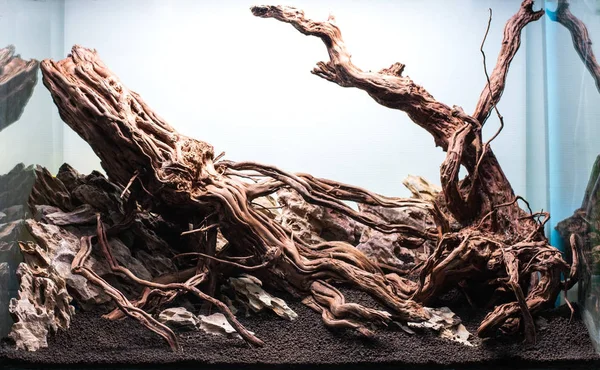
Rock and driftwood hardscape arrangement

But it has very low levels of tannic acids, so adding driftwood of this variety won’t affect the pH very much. If you don’t want the pH to raise or lower, then this is an advantage of using manzanita wood.

Instead, you can look for Mopani wood, Sumatran driftwood, and other types. If you aren’t sure of the variety, choose pieces that are on the softer side and have a dark hue. These tend to be loaded with tannic acids and will allow water to more easily penetrate them.

Driftwood pieces are also amazing tank decorations. So choose one that will make a great centerpiece or place for fish to hide and spawn within!

Indian Almond Leaves

Another popular way to bring the pH level down is to use Indian Almond leaves. These leaves reduce the pH by releasing tannic acids over time, just like aquarium driftwood does.

Since Indian Almond leaves are rich in these molecules, you should be careful how many you add. Otherwise, the tank’s ph levels can crash rather quickly, harming even fish that prefer a lower pH.

What’s more, the leaves impart a very natural look. Many bodies of water have leaves, twigs, and other debris along the bottom. When artfully arranged in a fish tank, they add realism to any aquascape.

Small fish fry and shrimp use them as natural hiding spots and places to feed. And the plant acids and other molecules can promote better color and even spawning behavior in fish.

This video does an excellent job of breaking down the positives and negatives of using almond leaves in a fish tank!

Using Peat Moss to Treat Water

Peat moss is yet another way to introduce plant tannic acids into your aquarium water. Peat moss works by doing the exact same thing as almond leaves or driftwood. Water penetrates it and slow-releases the agents into your aquarium water.

But you should be careful with how much you add because peat moss can hold a lot of tannins. It is not as exact as adding a precise amount of bottled chemicals (see below). And it may not take much to bring the pH level down more than you wanted.

So be careful not to add too much peat moss all at once. Instead, I recommend starting off with adding peat moss to a small filter bag. The peat moss should be a wet, compressed lump about the size of a golf ball for aquariums 10 gallons or larger.
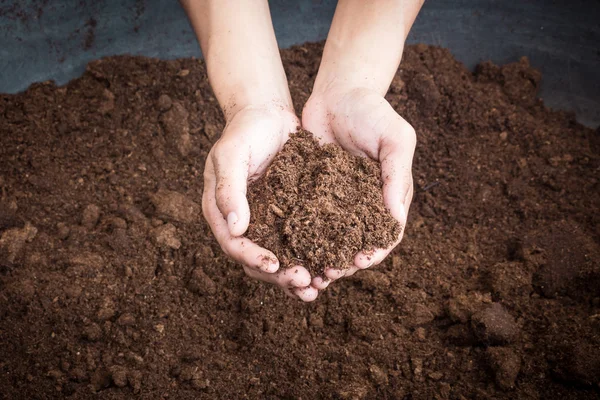
Peat moss soil

After you add peat moss to a power or canister filter chamber, monitor the pH over the course of 2-3 days. And then add more if needed to get the pH in your aquarium where you want it!

By the way, all of these methods will also stain your fish tank water a dark tea color. This depends on how much peat moss you add and the total water volume.

Some people really like the look of peat moss-treated water, however. It is very natural and looks amazing with twisting driftwood, colorful fish lighting up the murk, and almond leaves along the bottom. Blackwater aquariums and other biotopes with tannin-rich water are very popular these days.

Chemical Additives that Lower pH

One more way you can lower the pH of your fish tank is to use chemical additives. These have the advantage of being more precise at achieving a target pH level than adding peat moss, driftwood, or almond leaves.

But they aren’t nearly as decorative as driftwood and other additions. These chemical additives are slowly removed as you perform proper maintenance like aquarium water changes. So each time you add treated tap water, you will need to add some of these acids as well.

One benefit to using agents like API pH Down is that they don’t turn the water brown. If you prefer clear water, these are better than peat or other organic methods. However, there are brands like Brightwell Aquatics Blackwater that include the darker organic molecules without needing to add driftwood or peat. This way, you get all of the convenience of a bottled product with the benefits of natural blackwater additives.

Monitoring pH Levels in a Fish Tank

Just because we’ve added acids to the tank and lowered the pH does not mean our job is over. We still need to keep track of the changes we’ve made after we lower the pH.

Aquarium Water Test Kits

One way of tracking aquarium and tap water chemistry changes is to use a water test kit. These kits use liquid reagents to precisely measure how acidic or alkaline the pH in your aquarium is. While they can take a few minutes to get results, they are very accurate.

scientist dripping water on aquarium test kit

The most popular by far is the API Master Freshwater Test Kit. It includes both regular pH and high pH ranges. You can also measure the concentration of the toxic elements ammonia, nitrite, and nitrate.

Dip Test Strips

Dip test strips are a faster way to get a reading on the water conditions of your aquarium once you lower the pH. The upside is that they are cheap and give you a result quickly without much preparation.

However, they are much less accurate than using liquid reagents. If you want a result that is a ballpark estimate and ensures you haven’t crashed the pH, then dip test strips are good to have on hand. But every aquarist should have a liquid test kit on hand for more refined measurements.
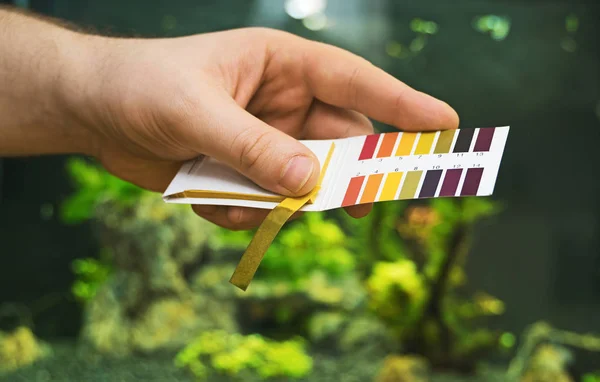
aquarium test kit

Using Reverse Osmosis Water

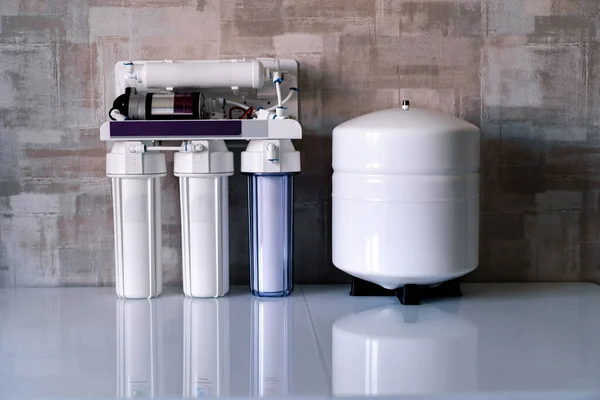
Strictly speaking, reverse osmosis water does not lower the pH. RO water is just water free of dissolved minerals. Water is forced through a semi-permeable membrane that screens out almost everything except for water molecules. The result is ultrapure water with a pH close to perfectly neutral (7.0).
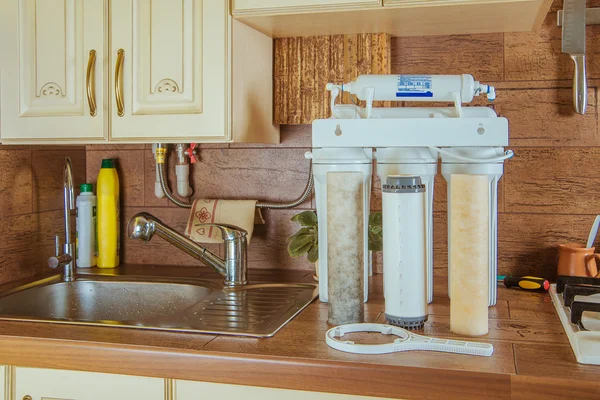
Reverse osmosis system in the kitchen

Some aquarists use reverse osmosis water when doing water changes. This is one of the best ways to maintain soft water conditions and a low pH. Usually, you only do this for specific setups.

Blackwater fish and certain rare freshwater shrimp need these conditions and would die if normal tap water were used during water changes.

You can also use reverse osmosis water for tetra and discus fish breeding, but it can be overkill for all except wild fish.

Some people already have an RO filter set up in their home for drinking and bathing needs. So there is no reason why you can’t use this water to fill an aquarium with a lower pH as well!

Wrapping Up

Lowering the pH of a fish tank is not all that difficult to do. You simply have to add more acidic agents (H+ ions) until you overwhelm the buffering capacity (OH-) of the solution. But keeping the talk acidic can be fairly challenging.
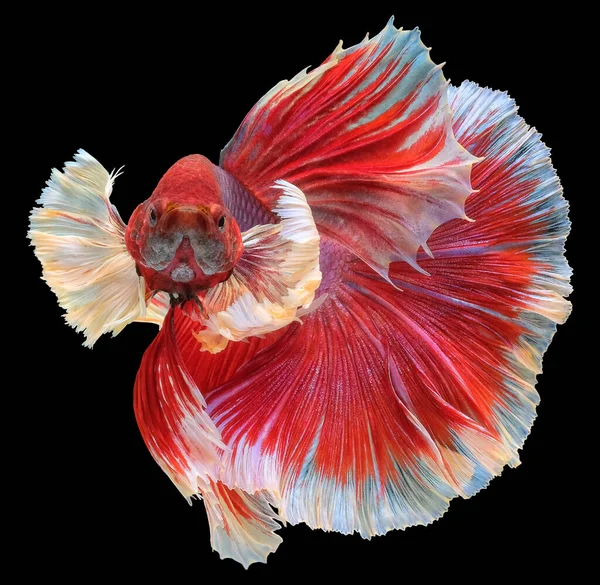
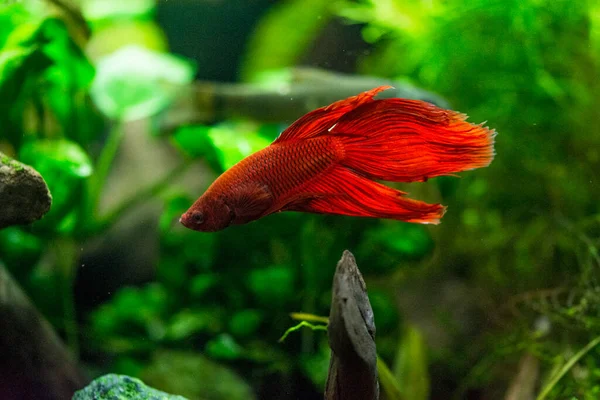
Beautiful red Betta fish

Strategies like peat moss, driftwood, and almond leaves all help to lower pH levels and then keep them there. If you have live aquarium plants, then adding carbon dioxide will further push the chemistry towards acidity.

And don’t forget how valuable using pure water can be! If you have an easy source of RO water, you can not only lower the pH but keep it there. Not having to fight the dissolved minerals that tap water contains will save you a lot of time and effort.

Related Reading:
How to Lower pH in Aquariums - Featured Image V2

source https://aquariumlabs.com/how-to-lower-ph-in-aquarium-fish-tanks/
Datnoid Care: Diet, Lifespan, Tankmates, & More!

The Datnoids - Blog Image

There are several types of datnoids. They include the Siamese tigerfish, Indonesian tiger fish, New guinea tigerfish, silver tiger fish, and the Thailand tigerfish.

They are found in the tropical Southeast Asian water bodies like the Mekong river and other water bodies in the Malay Peninsula.

Each species is different and this affects their unique needs.

Failing to consider these differences and many other important considerations can prove fatal for your beautiful tigerfish. Here’s an article that explains everything about datnoids.

About Datnoids

Datnoids refer to the five distinct species of the genus Datniodes in the Datnioididae family. They are also called Tiger fish because they have stripes like a tiger’s on their bodies. Like tigers in the jungle, they prey on smaller fish for food by stealthily approaching them.

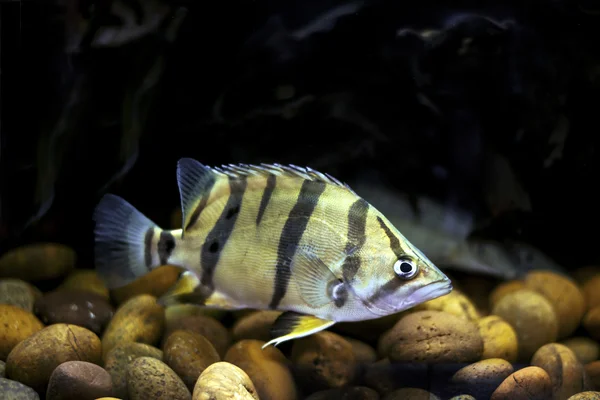
Siamese Tiger fish in aquarium

The Datnioididae family is native to Southeast Asian countries like Indonesia, Thailand, and New guinea. Some of these species are often mistaken for others because they usually do not exhibit distinguishing features at their tender age.

Types of Datnoids

There are five distinct species, and they are not all brackish or freshwater fish, even though the pet store attendant might tell you that.

Siamese Tiger Perch or Siamese Tiger Fish (Datnioides pulcher)

The siamese tiger fish is probably the most common datnoid species in the hobby. They are often mistaken for Indonesian tiger fish since they look identical.

However, Siamese tiger fish are distinguished by the three major stripes on their bodies and the two irregular stripes on their tail. They are also known as wide bar datnoid fish.

Indonesian Tiger Fish (Datnioides microlepis)

Indonesian tigerfish are the second true freshwater datnoids. Although they share almost the same identity as the siamese tigerfish, you can tell Indonesian datnoid apart from the stripes on their tail fins.

\While Siamese tigerfish have irregular stripes on their tail fins, the two stripes on the tail fins of Datnioides Microlepis are the same.

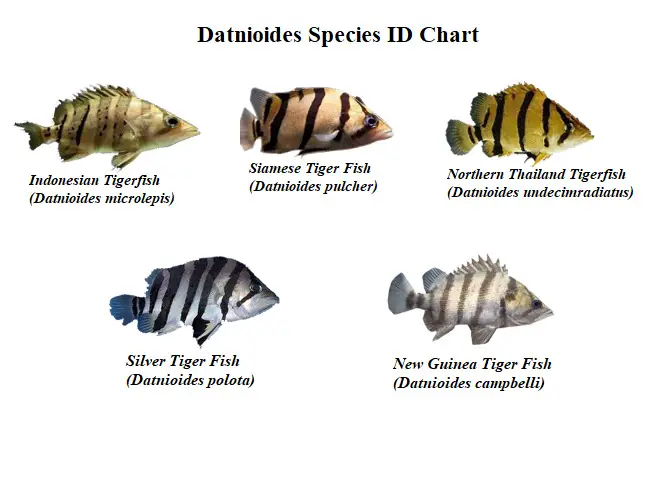
Datnioides Species ID Chart

Northern Thailand Tiger Fish (Datnioides undecimradiatus)

Also known as the Mekong tiger fish, this north Thailand tiger fish is the last of the three true freshwater datnoids. You will typically find them in the Mekong river basin.

They usually have about three to four stripes on their bodies. Their bodies have a brilliant golden color which almost always turns yellow.

Silver Tiger Fish (Datnioides polota)

One way to identify silver tigerfish is to look out for their silver-toned bodies, which is why they are called silver tigerfish. They are not native to America, as suggested by some.

They usually have irregular stripes all over their bodies. Datnioides polota is a true brackish water datnoid.

New Guinea Tiger Fish (Datnioides campbelli)

Although they are sometimes found in freshwaters, they are native to the brackish water bodies of New Guinea. You can identify them from the beautiful wavy stripes on their bodies. Unlike other datnoids, the color of their stripes is beautiful tones of gold and black.

Check out this detailed ID chart to know the different datnoid species.

Aquarium Tank Setup

Water Parameters

The optimal water temperature for datnoids is 75°F-84°F because they are tropical fish species. They prefer the water pH anywhere between 7.0 and 7.5.

Datnoids are very sensitive to nitrates and ammonia. It would be best to change the water regularly to keep them healthy. Installing a canister filter is another easy way to ensure optimum water quality.

Unlike many other freshwater aquarium fish, they produce enormous waste. You need an impressive filtration system coupled with regular water changes to keep the water quality at its best.

Try the Fluval 207 Performance Canister Filter

It is the ideal filter for your datnoids. The Fluval 207 Performance Canister Filter is

  • Easy to assemble and clean,
  • Powerful suction level,
  • An impressively low noise level.

Salinity is a very important aspect of water conditions to mention. Although datnoids are seen as freshwater fish, only three are strictly freshwater fish.

The New Guinea tiger fish and the silver tigerfish are true brackish water fish. They need to stay in water that is, although saltier than freshwater, is not as salty as saltwater.

That is how their real habitat is, even though they may survive for months in the freshwater aquarium.

Keeping them in freshwater for too long without a mild increase in the salinity of the water will put them under stress and even lead to more serious health issues.

Although they have to be put in pure freshwater, a little salt once in a while will stimulate the production of their slime coat. 

Tank Size

Datnoids can grow up to a shocking length of 16 inches. The smallest tank size for your datnoid is a 150-gallon tank. If you wish to have them live in a community tank, you would need a bigger tank.

You can raise juvenile tiger fish in smaller tanks of about 50 gallons. But they will outgrow the small aquarium, and you would have to upgrade the tank to a bigger one.

Datnoids are notorious for jumping. It would be wise to fix a cover for the aquarium to prevent them from jumping out of the aquarium. A tight cover will do a great job.

Tank Decor

Many hobbyists prefer to leave the tank floor bare for easy and thorough cleaning. But you can replicate their natural environment in your aquarium with sparsely placed plants.

This will provide your fish with sufficient space to swim and hide. Providing aquatic plants with hiding spots to hide within the roots and other parts is as important as providing enough room to swim freely.

They are tropical water fish found in rivers and swamps, so the water flow must be moderate as in their natural environment. Installing diffused lighting, especially close to the hiding spots, is another great idea to recreate the dim lighting in swampy areas and rivers.

Datnoid Diet

In the Wild

Datnoids are carnivores, and they have a predatory nature. In the wild, they tend to eat other smaller aquatic animals. They eat small crustaceans such as crabs. They also eat insects, insect larvae, and fish fry. They also eat worms such as bloodworms, blackworms, and snails.

They eat smaller fish too. But they will only eat smaller fish on rare occasions, such as when food is scarce.

In Captivity

Due to their predatory nature, tiger fish are no different in captivity in the new environment. They tend to naturally prefer live foods. You can feed them small crustaceans like shrimp, krill, and crabs. You can also feed them worms such as blood worms, black worms, and other healthy larvae you can find.

Since this can be too expensive to cope with sometimes, you can supplement their diet with frozen food like frozen bloodworms. Otherwise, you can feed them freshly chopped seafood such as clams, mussels, etc. Using feeder fish is also another option that many aquarists explore.

But be careful with feeding feeder fish. Feeding feeder fish to your tiger fish without taking steps to purge them of possible parasites can be fatal for your pets. It would be best to first quarantine them in a separate tank to eliminate whatever parasites they may have in them before feeding them to your datnoids.

Floating carnivore pellets can always come in handy when you run out of meat until you replenish your stock. But you are more likely to run into trouble feeding pellets to older tiger fish than you would with younger tiger fish.

Best Food Recommendations for Datnoids

For pellets, remember that your tiger fish are not bottom feeders. They like to stay in the middle area of the tank but will come up to suck food. Some great recommendations your tigerfish can eat whenever you run out of live foods to feed them include the following:

Jack Supper’s 3000ml Floating Carnivore Fish Food

This floating carnivore pellet is 60% protein, 6% Moisture, 10% Fiber, and 8%fat. The high protein value makes a must-have choice if you are raising tropical carnivores like Datnoids. It does not matter whether it is an adult size datnoid or young datnoids.

Another good option is the Sera 400 Arowana Floating Pellets for large carnivores.

This product offers the following advantages:

  • Easy digestibility
  • Low water pollution rate
  • Quality aquatic protein

Feeding Frequency

Young datnoids should be fed no less than twice a day. But the feeding frequency should be reduced to once a day after they reach adult size. Feed only what your fish can finish in 2 minutes. This is one of the best ways to limit pollution and ensure proper living conditions.

If you notice that they prey on other species in the tank, you can feed them more often without worrying that they will grow fat. The warm temperature will cause a faster rate of metabolism to ensure that they do not grow fat.

Choosing Tankmates

You can have more than one Datnoid fish in the tank. Datnoids serve as a great tankmate for other datnoid fish. You want to avoid keeping them in the same tank with small fish species.

Your datnoids will eat them sooner or later. While bottom dwellers will be good tankmates for datnoid fish, you want to ensure that you get big bottom dwellers to limit the chances of these great fish attacking them for food.

Another tip is to keep larger and semi-aggressive species of whatever tankmates you choose.

Some tankmates to consider are:

  • Stingrays
  • Arowanas
  • Peacock bass
  • Larger catfish species
  • Spiny eels
  • Dinosaur Bichir
  • Silver dollars
  • Tinfoil barbs

Common Diseases

Ich

Ich is a typical aquarium disease, and many aquarium species of fish are susceptible to it. Stress is the main cause. Stress weakens their immune system and leaves them susceptible to the disease.

Sudden changes in the water conditions, quality, spikes in the waste materials, and even choosing the wrong tank mates for the aquarium put your datnoid fish under stress.

Symptoms to watch out for are clamped fins and small white spites on their skins. You can treat this disease by identifying and eliminating the cause of the stress.

You also want to ensure that the water quality is optimal. It would also be best to quarantine the affected datnoid in a different tank for treatment.

Tail and Fin Rot

Tail and fin rot is another disease that many aquarists deal with, including datnoid owners.

The reasons for tail and fin rot are poor water quality and improper water temperature. Bacterial infections can also cause it. Preventing tail and fin rot is a critical aspect of datnoid care.

Symptoms to look out for include:

  • The entire rotting away of the fin
  • Whitening of the fin edges
  • Ragged appearance of the fin
  • Splitting of fins and fin inflammation.

You can avoid it by quarantining feeder fish well before feeding them to your datnoids. You also want to avoid keeping very aggressive and territorial fish with a tiger datnoid, especially during their young and middle age.

Underestimating good datnoid care practices like keeping the water quality pristine can also lead to tail and fin rot. Many aquarium hobbyists also treat it with tetracycline and chloromycetin.

Eye Problems

This disease is called Popeye disease and is often characterized by mild protrusion to the extreme swelling of your datnoid’s eyes. Cloudy eyes are another symptom of this disease. You may also find the eyes discolored or red with blood and a loss of appetite.

Popeye disease is an ocular disease caused by poor water conditions and the presence of bacteria in the tank. Sometimes, an eye injury from another datnoid or other housed aquarium species may take too long to heal.

This usually exposes the fish to infection. Datnoids with eye injuries should be watched closely.

Usually, the popeye disease heals by itself with a regular datnoid care routine. You can also remove decorations with sharp pointed edges that may have caused the injury.

You can also treat with amoxicillin and penicillin, especially when there is reason to believe the underlying cause is bacteria. But you want to move the affected datnoid fish to a separate tank for treatment.

Datnoids or Not?

Datnoid fish are large fish species. Keeping this large fish species requires a lot.

You would need a large fish tank, the right aquatic plants for decor, powerful filters, top-quality pellets when you can’t cope with the cost of live food, and many more important concerns. These concerns tend to make aquarium hobbyists prefer other fish species.

But the sight of a thriving new guinea tiger in the tank with other colorful tank mates is one of the most priceless sights you can behold as an aquarist. You only need to make space for the right datnoid tank and choose the right tank mates.

Breeding Datnoid

Datnoids breed naturally in the wild, but breeding datnoids in captivity has been impossible. There have been progress reports with some farms breeding datnoids in Thailand. The process has, however, not been made public.

Final Thoughts

You can never go wrong with tiger fish. Keeping this fish may require some serious investments in food, expensive structures, and more.

But the sight of these beauties is worth every bit of the investment as they can live up to 10 years! This article has explained in details everything you need to know about datnoids.

One mistake that could undo all your hard work is choosing the aggressive pairs to share the aquarium with them. You want to avoid fish like central American cichlids.

Most of these fish are aggressive and will perceive your tiger fish as a contender. You can be sure they will attack your poor tiger to assert their superiority, even if it leads to the death of your tigerfish.

The Datnoids - Featured Image

source https://aquariumlabs.com/datnoid-care/
How Long Do Clownfish Live? (Nature vs Captivity Lifespan)

How Long Do Clownfish Live - Blog Image

We should probably be grateful to the film Finding Nemo for launching the popularity of the Clownfish into orbit. While this beautiful fish has always been popular with aquarium enthusiasts, Hollywood stardom has certainly made the Clownfish a finned superstar.

Clownfish are a favorite with hobbyists because of their striking, bright orange bodies, bold black and white stripes, and black-tipped fins. And yes, there’s something endearing about their faces.

Clownfish are a good choice for beginner hobbyists and are relatively easy to care for. If you’re thinking about adding Clownfish to your aquarium, you’ll also want to know how long they live. So, how long do clownfish live?

In this article, we’ll talk about the lifespan of the Clownfish and how to provide them with the longest and healthiest lives.

A Quick Clownfish Overview

Sea anemone and clown fish

Clownfish, also known as anemonefish, originated from the Amphiprioninae family of Pomacentridae. It has over thirty different species categories.

However, only one belongs to the Premas genus, with the remaining belonging to the Amphiprion genus. All the categories of clownfish have a symbiotic relationship with anemones and are often found swimming close to them.

Clownfish come in various shapes and colors depending on the species. They can reach an average length of 2 to 5 inches.

Clownfish Lifespan

clownfish in the surface of a tank with bubbles

How Long do Clownfish live?

If raised in an aquarium, the clownfish’s lifespan ranges from 4 to 10 years or up to 20 or more years depending on the quality of their habitat, diet, and care.

In their natural environment, Clownfish face more competition for food and threats from predators, so their lifespans average between 6 to 10 years.

Genetics

Genetics plays a major role in the health of your Clownfish. As with dogs and other animals, there are many new designer varieties of Clownfish introduced to the saltwater aquarium hobby. While it’s difficult to assess whether these “designer” fish are as hardy as natural Clownfish, they are typically bred more for appearance than health and hardiness.

Clownfish raised in captivity often have a longer lifespan than live caught fish because they haven’t been subjected to the stress of capture and transport. In other words, if you want to invest in the healthiest fish, do your homework and always ensure that you buy fish from a reputable breeder. 

Environment

Native to the Indian Ocean, Clownfish feed on small creatures present in and around the anemone and algae. Anemones benefit from the essential nutrients found in poop excreted by the fish.

a good shot of The Clownfish

Clownfish are tropical fish sensitive to colder water, which means keeping them in a temperature range of 75-85 degrees Fahrenheit. Optimal tank size is 20-30 gallons, and for every Clownfish added to the tank, allow an extra 10 gallons. Even with proper filtration, regular water changes are important to maintain balanced levels. It’s always better to have a tank that’s too large rather than too small.

Clownfish should be kept in pairs or small groups as most creatures don’t thrive in solitary conditions. However, since Clownfish tend to grow from to 3-5 inches, it’s important to avoid overcrowding, which can cause ammonia poisoning and stress in smaller tanks. Also, if you plan to introduce multiple Clownfish, do so one fish at a time, as Clownfish don’t always get along with each other.

Do your research before mixing Clownfish with other fish. Some species may be incompatible because of temperament or because of water conditions, temperature tolerance, or food requirements.

Salinity in the tank should range between 1.020 – 1.024. You’ll need to balance the nitrites in the water and keep pH between 8.0 – 8.4. Invest in a good testing kit and test levels regularly.

You can also use water conditioners, salts, and similar products to keep the water properly balanced, or you can invest in a natural way to keep the tank clean by adding scavengers like snails and crabs.

Maintaining optimal tank conditions will ensure healthy fish and longer lifespans.

Diet

Proper nutrition is vital to ensuring the health and longevity of your Clownfish and maintaining their vivid colors.

Feeding should be daily if fish are small and 2-3 times daily for mature or juvenile fish. The best way to feed your fish is to spread the food and allow them to eat for 1-3 minutes, depending on the size of the fish.

Make sure to remove excess food to avoid fouling with water. Clownfish can live a week without food, so don’t overfeed. Since Clownfish are omnivorous, you can also mix multiple kinds of food to provide a balanced diet.

Diseases

Even with the best care, your Clownfish can sometimes contract a disease from bacteria in the water, live food, from other fish, or fights with other fish.

Keep an eye out for common diseases such as Fin Rot, White Spots, Hole-in-the-Head disease, and Swim Bladder Disorder. Some diseases are treatable with quarantining the sick fish, water changes, and medications, but some, like Hole-in-the-Head, require professional attention. 

Lifespan Specifics of Clownfish

Tropical Clown Fish Hiding In Anemone

Researchers at the Scuola Normale Superiore in Pisa, Italy, in collaboration with the Leibniz Institute on Aging (FLI) in Jena, Germany, conducted research to reveal the secrets behind the clownfish’s longevity.

They found that modified proteins are a major factor that determines the longevity of a Clownfish, but which can be influenced by the quality of care and whether they live in the ocean or in aquariums. 

Conclusion

It’s no coincidence that interest has grown in Clownfish since Finding Nemo propelled the species to fame.

Clownfish are a beautiful addition to any saltwater aquarium that should provide years of enjoyment with proper care.

However, there are factors to consider as maintaining a saltwater tank can be more challenging than maintaining a freshwater tank.

Considering the beauty of Clownfish and the enjoyment they bring, the commitment is well worth it!

We hope this article has provided you with the information you need about making Clownfish part of your aquatic population.

How Long Do Clownfish Live - Featured Image

source https://aquariumlabs.com/how-long-do-clownfish-live/

Do Goldfish Eat Mosquito Larvae? And Should They?

Do Goldfish Eat Mosquito Larvae - Blog Image

Are you wondering about the variety of foods your goldfish can eat? Have you ever wondered do goldfish eat mosquito larvae?

The ability to consume almost everything has made the goldfish a highly coveted fish by aquarium lovers. Thus, goldfish do consider mosquito larvae edible and can eat them. Mosquito larvae are a good food source for your goldfish, and your fish will heartily consume them.

Mosquito larvae are full of nutritional richness, making it a good meal for your goldfish, and it can be served either frozen, live, or freeze-dried.

In this article, I will detail all you need to know about your goldfish and how they can eat mosquito larvae and some precautions.

What Are Mosquito Larvae?

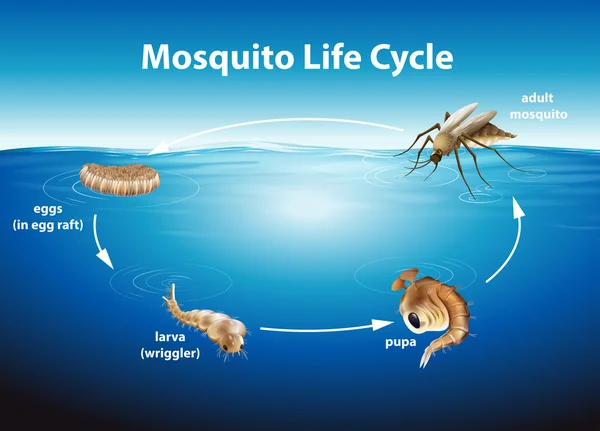
Mosquito Life Cycle

A typical mosquito undergoes four life cycles, with larvae being the second phase of the cycle. Although the first three stages are technically aquatic, the goldfish is likely to eat mosquitos in any of their life stages.

However, the easiest stage for your fish to make a meal of them is when they are in the larva stage.

Larvae exist in various colors and are usually sold in black, white, and red (commonly referred to as bloodworms). To your goldfish, they are all the same.

This meal is typically a significant food source in the wild. All omnivorous fish will naturally eat them as long as they are large enough.

What Benefits Are Derivable When Fish Eat Mosquito Larvae?

Larvae have many nutrients that make them the perfect meal for your goldfish. They provide a balanced diet that will make your goldfish grow rapidly while staying healthy.

You can feed mosquito larvae to your goldfish when they are being picky and avoiding their usual goldfish food; they will devour them.

It is often challenging to provide your goldfish solely with mosquito larvae. However, they are a rich meal that helps your fish meet its dietary needs. You can feed your fish other insects and get similar benefits too.

However, it’s not ideal to focus on feeding your fish solely with larvae, as the fish might increase in body weight and become ill due to a low intake of other meals that provide other needed nutrients in their diet.

What Forms Are Mosquito Larvae Available In?

Mosquito larvae can be fed to both larger fish and small goldfish in two ways, either live or frozen, each with pros and cons. Below is a review of these forms.

Living Larvae

Live mosquito larvae can be purchased from pet stores in bags. Live larvae wiggle constantly, so you can be sure that they are alive before buying them (dead larvae have little nutritional value).

Upon arriving home with your purchase, pour the bag’s content into a strainer and rinse the larvae of unclean water. It’s then ready for your goldfish!

Once the goldfish sees the wiggly larvae in the aquarium, it will be attracted to them and will often consume them within minutes.

Larvae not consumed at first might live for a couple of days before getting eaten.

Advantages and Disadvantages of Live Mosquito Larvae

A significant advantage of giving your fish live mosquito larvae is that they can live in the tank for a while even if not eaten, unlike dry larvae that will rot and contaminate the tank if not eaten.

A disadvantage of live mosquito larvae is that they can’t be kept for long, meaning you have to make your purchase when you intend to feed the larvae to your fish.

Another disadvantage is the possibility of live mosquitoes bringing disease to your fish water, though this is an infrequent occurrence.

Fish that eat mosquitoes will also eat mosquito larvae, and they can reduce the mosquito population and help with mosquito control. Eating larvae is not restricted to goldfish types, as other tropical fish also consume mosquito larvae. Guppies, for example, eat mosquito larvae.

Frozen Mosquito Larvae

When you visit stores to buy frozen mosquito larvae, they are often sold in packs or other broken-down sizes, depending on the quantity you want to purchase.

In the process of giving these frozen larvae to your fish, you can either put the cube in the tank (or pond water) and allow your goldfish to nibble at it as it defrosts, or you can place the cube in a bowl of aquarium water and let it defrost before pouring it to the main tank.

Advantages and Disadvantages of Frozen Mosquito Larvae

Unlike live larvae that need to be purchased on-demand, you can keep a pack or two in the freezer for a long time (months or possibly years) and only cut out slabs that you intend to feed to your goldfish when required.

The main disadvantage of frozen mosquito larvae is that it is often impossible to tell if you have purchased a quality larvae pack or not. Were they dead, or were they a wiggly soup of larvae? Only purchase your frozen tiny mosquito larvae from reputable stores to ensure that you buy top-quality food for your goldfish.

How Constantly Should Your Goldfish Be Fed Larvae?

Mosquito larvae are a rich source of protein, fat, and fiber, but they should not be fed to your goldfish for every meal.

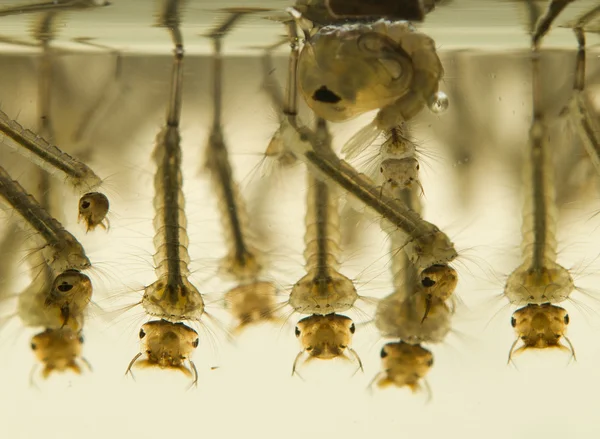
close-up photo of mosquito larvae

For instance, if you feed your goldfish 3 or 4 times daily, one of the meals can be mosquito larvae, bloodworms, or alternative goldfish foods.

Other Live Food to Feed Your Goldfish

Your fish will gladly eat any of the following other frozen foods:

  • Daphnia
  • Bloodworms
  • Brine Shrimp
  • Mysis shrimp
  • and other live small crustaceans

Is It Possible to Make Your Own Mosquito Larvae?

There’s an important caveat when trying to produce mosquito larva at home, as they are often a cause of ailments in many countries. Hence, take special care when attempting to produce at home.

You can make your own bowl of mosquito larvae yourself; all you need is to put a container of shallow water outside in the spring or summer months.

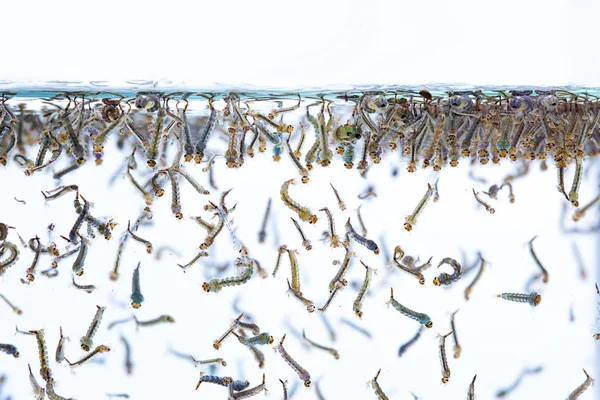
several mosquito larvae in water

Inadvertently, female mosquitoes will be attracted to the water and gladly litter it with their eggs. Mosquitoes are aquatic pests and thrive in adequate water temperatures, regardless of hot or cold conditions.

Once you notice the wiggly little creatures in the water, you can easily fish them out and pour them into your fish tank for your fish, who will eat them alongside other foods in their daily intake.

Smaller fish are known to eat mosquitoes just like the larger fish, as eating mosquitoes are common to most fish types.

Conclusion

Like other live food for your goldfish, larvae are another essential source of protein, fiber, and fat to your fish and can be fed sparingly. They are an excellent supplement to other foods.

Use mosquito larvae as part of your goldfish’s varied, balanced diet and feed them as a treat now and then. Eating mosquito larvae is not restricted to a single fish species, as other species will eat larvae comfortably too.

Related Reading:

Do Goldfish Eat Mosquito Larvae - Featured Image

source https://aquariumlabs.com/do-goldfish-eat-mosquito-larvae/

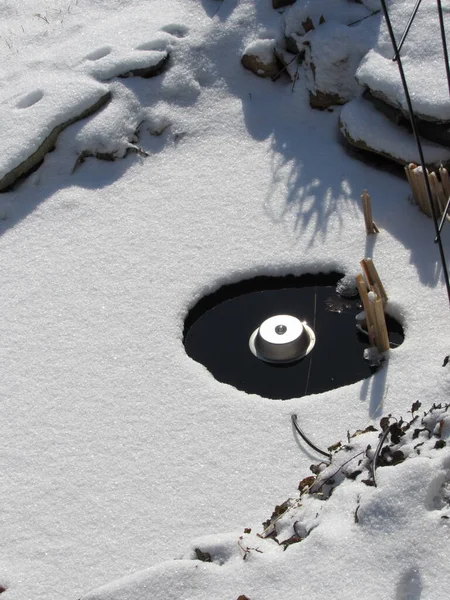
How To Keep Pond From Freezing

how to keep pond from freezing - blog image

Is your pond freezing quickly? Do you use too much electricity to prevent your pond from freezing?

Winter can be a challenge for pond owners in cold climates. Pond fish become less active during cold weather. As cold-blooded creatures, their metabolism drops dramatically when the temperature dips.

When this occurs, fish enter a state called “torpor.” This resting state is somewhat similar to hibernation. The heart rate of the fish slows down, they require less oxygen, little to no food, and their movement becomes sluggish or almost non-existent. This typically occurs when temperatures fall below 45-50F.

During this state, fish tend to migrate to the bottom of your pond, where the warmer water is. As long as the pond water doesn’t completely freeze, Koi and goldfish will remain in these warmer pockets of water and should be able to survive the winter.

Keeping a hole in the ice on our pond’s surface sounds like a simple and economical solution for many pond owners. However, it’s not a one-size-fits-all solution for every pond.

While you can prevent your pond from freezing without electricity, there are certain factors to consider before you decide to keep your pond from freezing. When you have fish in your pond, their survival depends on it.

This article will discuss what you need to know about keeping your pond from freezing.

Without pond fish, there’s no reason to keep your pond from freezing or leaving a hole in the ice. However, if your pond contains small fish like goldfish, it’s a good idea to take them inside to keep them warm during the winter.

Your pond’s location can also determine your decision. If your pond is likely to freeze intermittently during winter, perhaps for a day or two, you probably won’t have to worry about it freezing.

You should note that fish can survive for a relatively short period before getting cranky in a frozen pond. You can relieve their discomfort by pouring warm water on the ice to create a hole.

Keep in mind that you don’t need a large hole to keep your fish healthy. A hole the size of a dinner plate will work adequately to provide the oxygen fish need to ‘breathe’ and prevent them from getting sick or dying.

Ultimately, there’s no reason to worry about your pond freezing unless you keep fish in it. If so, you can keep it from freezing by following the appropriate steps.

Is it Possible to Keep a Pond From Freezing Without Electricity?

If you want to keep your pond from freezing, you must determine if it’s possible without electricity.

Someone with a pond in Little Rock, Arkansas, will find it easier to keep their pond from freezing than someone in Des Moines, Iowa.

This doesn’t mean that temperatures don’t drop to freezing levels in Arkansas or that Des Moines doesn’t have a warmer climate. It simply means that, on average, the temperature in Little Rock is much higher than in Des Moines.

You can check out the map to identify locations and areas where a pond can experience a prolonged freeze. Des Moines, for example, is considered a zone of 5a with an annual average temp of -15 to -20.

In contrast, Little Rock is an 8a zone with a minimum temp of 10 to 15. A higher zone means a lower chance of your pond freezing. Therefore, locations in zone 10 and above will likely not experience freezing.

You should know if your pond tends to freeze if you check it during winter and observe how long it remains frozen.

For example, if you’re in zone 6, use the guidelines to estimate whether or not your pond freezes for long periods.

How to Keep Ponds From Freezing

There are four main ways to prevent your pond from freezing that don’t require electricity. While these methods may not be completely foolproof, they’re effective when implemented under the right conditions.

However, always clean your pond before cold winter temperatures before implementing these methods. Remove organic debris such as leaves, sticks, algae, and sludgy residue on the bottom of your pond.

This is important because organic build-up consumes the oxygen your fish need to survive. To avoid multiple cleanings, use a pond vacuum, net, or rake to remove debris, ideally in the fall after the leaves have fallen.

Next, check your water quality to ensure ammonia, nitrates, nitrites, pond pH, and other levels are balanced.

Regarding feeding your fish, if the water temperature remains between 50-60F, feed once daily. For temperatures between 40-50F, feed once every other day. Once the temperature drops below 40F, stop feeding completely.

Once you’ve prepared the pond for the winter, consider the next steps to keeping it from freezing:

Pond Depth

The depth of your pond significantly determines if your pond will freeze. While a shallow pond might not experience instant freezing, a deep pond is better. Some fishes like Koi and goldfish can withstand cold water but not when the water completely freezes.

Always be aware of the best depth to prevent your fish pond from freezing. If your pond has Koi or other fishes, the minimum required depth is 18 inches.

However, a pond depth of 24 inches is the recommended depth, or even deeper, to be on the safe side. Remember, your fish won’t survive if the pond completely freezes.

Method 1: Pond Pumps

Running your pond pump during the winter is one way to help keep your pond from freezing in the winter.

Not only will the circulation of water help prevent the surface from completely freezing over, but water pumped through a mechanical or biological pond filter also improves water quality during the winter, providing a healthier environment for your fish.

Method 2: Solar Pond Aerator

Solar pond aerators are an extremely effective way to keep the temperature high if you live in regions with occasional temperature dips. Solar pond aerators can keep your pond from freezing and are ten times cheaper than electric pond heaters.

Solar pond aerators are effective during the day, but they won’t work at night without battery power. This leaves your pond to freeze overnight. A point to note about solar aerators is that even with the best models, it’s possible that the battery won’t work overnight.

Some pond aerators come with a backup battery of 132GPH that runs for 4 hours. This might be enough depending on your zone and nighttime temperatures.

Aerator for water source to increase the oxygen

With enough time and adequate resources, it’s possible to build solar pond aerators capable of running 24hrs.

If you choose an aerator, make sure to place it near the shallow end of the pond. This makes it easier to maintain an open hole to allow oxygen into the pond and vent out carbon dioxide without disturbing the warmer water in deeper parts of the pond where fish would enter torpor.

You can also use submersible aerators for your pond. They’re most effective when submerged in the deepest part of the pond where there isn’t much circulating water, which helps prevent losing heat to the surface.

Method 3: Solar Pond Heater

A solar water heater is another effective way to heat your pond. While these heaters are mainly used for swimming pools, they can also be used in ponds to raise water temperatures in colder climates. When you install solar pond heaters, the pond pump releases hot water that prevents freezing.

Solar water heaters effectively circulate pond water through the panels. It uses the sun’s energy to retain warmth in both shallow and deeper ponds. The drawback is that the panel must be placed in direct sunlight for an extended period.

It won’t work effectively in zones with freezing temperatures and can’t heat your pond at night. You’ll also need to pump water into the solar heater and from the solar heater to the pond.

a man-made koi pond covered with ice

Method 4: Floating Devices

A smart option to keep your pond from freezing includes devices like floating saltwater bottles and ping pong balls. You can also include a floating ice preventer.

Besides preventing your pond from freezing, floating objects also help keep farm animal water tanks ice-free through constant movement.

The three floating device options have similar functions to keep your pond from freezing. When wind or bubbles from an aerator hit these devices, they constantly move and prevent the hole from freezing, much the way a river doesn’t freeze because of the movement of water.

Method 5: Adjust Your Filter and Keep It Working Well

Always maintain your filter to keep it working efficiently throughout the year, especially during winter. Filtering cleans the water, reduces fish waste, maintains a balanced pH, and reduces harmful gases. Water movement created by the filter also prevents the pond from freezing.

Position the filter outlet, so water flows horizontally and avoids feeding cold water throughout the bottom of the pond. This method keeps warm water below the surface while keeping cold water at the surface to create a safe, comfortable environment for your fish.

pump and filter system

Turn off fountains and waterfalls in the winter. These are only useful for keeping your fish cool in the summer.

Method 6: Cover Your Garden Pond

Another way to keep your pond from freezing is to cover it with a pre-made cover, net, tarp, or bubble wrap that can be stretched over the pond.

Covering your pond depends on the size and shape of the pond. Smaller ponds are more likely to freeze, but they’re easier to cover.

Covers are also useful in preventing debris from falling into the pond during the winter, where it can be trapped beneath the ice, foul the water, and potentially reduce oxygen levels.

You can also cover the pond to trap warmth on sunny days and retain this warmth during winter, which creates a greenhouse effect. Floating plants are another effective way to keep the pond from freezing.

Method 7: Polystyrene Ice Preventer

Looking for a cheap way to keep your pond warm during winter? Use a polystyrene ice preventer to protect your pond from freezing.

It works with an air pump to create bubbles circulating throughout the bottom of the pond to keep the water from freezing. It’s a cheaper alternative to your heater but may not be the most effective option during a harsh winter.

Method 8: Invest in Pond Heaters

If you want to use electricity to keep your pond from freezing, pond heaters are available in different sizes and models depending on pond water volume or depth.

Some pond heaters float and defrost certain areas to release gases. Others heat all the pond water and are your best bet if you have fussy fish.

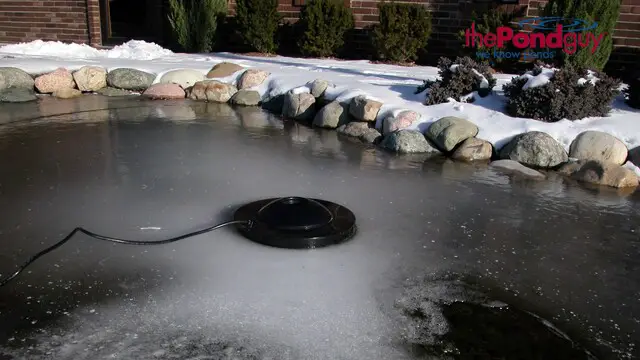
Smaller heaters float on the surface and have a heating element to defrost small areas. They have a long power cord that can be connected to an external electrical outlet. It’s not necessary to run them overnight except during the coldest conditions.

Another option is a heater system that slots directly into a hose between the pond pump and filter, which heats your water. A heater with 1 kilowatt heats 1000 liters of water.

While it can be expensive to run all the time, you only need to run it long enough to prevent the water from freezing.

 heater system for pond
Image Credit: The Pond Guy

Newer models have a thermostat allowing you to turn the heater on and off when it reaches the desired temperature to help you conserve power.

Your choice of wattage depends on the volumes of the pond and your freeze zone. Most heaters come with a recommendation on how low the temp can dip and still run effectively.

It’s always a good idea to check your pond temperature to make it’s at the correct temperature to make sure the heater is doing its job.

While some pond owners prefer to prevent freezing without electricity, it ultimately depends on the temperatures in your zone.

Other Tricks You Can Try:

Try different methods to achieve the best results. You can connect a floating device with a solar aerator. When the aerator releases bubbles, set the floating balls in motion to prevent the pond from freezing.

If your pond does freeze, avoid breaking the surface with a hammer or other heavy object, which can stress your fish. Don’t use boiling water to create a hole. Heat a saucepan of water in the morning and place it on the surface until it defrosts a hole in the ice.

In addition to a properly functioning filter, pond owners can adjust the flow to create a warm water pool below the surface. Your fish will gather here once the water drops below 4 degrees, making it more comfortable.

How Cold Must It Be to Freeze a Pond?

You can typically expect to see your pond covered in a thin sheet of ice after two weeks of freezing temperatures.

However, before your pond freezes, the water must cool to 39.2 degrees. Water deeper than 24 inches may not freeze because the volume won’t reach a cold enough temperature.

It takes quite some time for a 4-inch sheet of ice to form on the surface of your pond. Water gets denser and heavier as it cools, so water freezing from surface to bottom is critical for aquatic life to survive.

Conclusion

If your pond has been frozen for more than two days, your fish can be affected by a lack of oxygen and exposure to toxic gases.

The point of having a pond is to enjoy the serenity of the water and the beauty of fish and plants in a natural environment, so caring for your pond in the winter is simply a sensible investment.

Fortunately, you have many options to keep your pond from freezing. Some are more expensive, but you’ll find enough choices to fit your budget and suit the size of your pond and the type of fish you keep.

Related Interesting Reads:

How To Keep Pond From Freezing - Featured Image

source https://aquariumlabs.com/how-to-keep-pond-from-freezing/

Can Guppies Live in a Pond? (How Long & Risks)

Can Guppies Survive in a Pond - Blog Image

Are you curiously asking yourself can guppies survive in a pond?

This article will review all you need to know about this hardy fish and if an outdoor pond is an ideal place to keep them.

Yes, you can keep your guppies in an outdoor pond if you keep them in the right water conditions. Guppies prefer warm water and can live in an outdoor pond with adequate water temperature.

Guppies are naturally small fish suitable for small ponds, and you may even keep them in containers placed outside, also referred to as patio ponds. Guppies prefer warmer climates; you should note this if you decide to go with an outside guppy pond.

They will thrive in climates where the temperature rarely falls lower than 67 degrees. If you live in a cooler climate, you should be ready to bring your guppies indoors during winter.

Overview of Guppy Tropical Fish Kept in a Guppy Pond

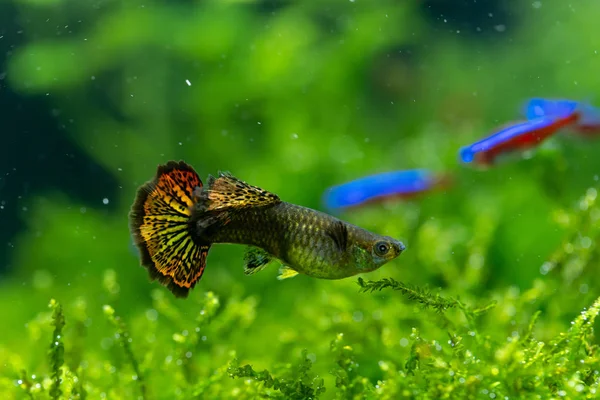
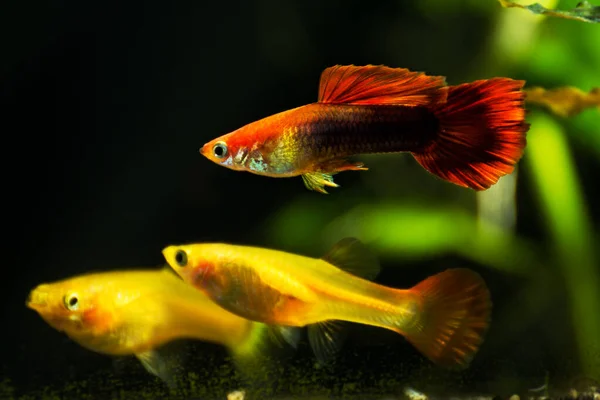
Guppies are minuscule, energetic tropical freshwater fish measuring about 1.5” long.  They come in many varieties and feature multiple colors, which are a beauty to behold.

Due to their small size, you can easily keep them in small tanks containing 9 or more guppies. They are docile and cohabit well with other fish in the community tank, but make sure not to keep them in the same tank with fish eaters!

Guppies are more inclined to warm water conditions with a 70-to-80-degree heat level. A calm current is also preferred for your guppies due to their small size and fragile body.

close up shot of female guppy

When keeping guppies in a pond or aquarium, ensure you don’t set your filtration system to produce a strong water current. You are better off adopting a sponge filter for your aquarium tank for these fish species.

Guppies reproduce by giving birth to live fry. They do not require much encouragement. However, guppies are omnivores and might eat their young ones in a crowded tank.

Therefore you must try to remove the excessive fish from the pond/tank before it becomes an uncontrollable issue; otherwise, make sure you keep them in a large-sized pond that will allow them to thrive. A large-sized aquarium helps create the perfect area for the young guppies to grow, as they can swim out of sight of the adult fish while they are attaining adulthood.

Guppies are social fish, but if there is an imbalance in the male-to-female ratio, they can begin to stake their territory, and the males might pick on one another.

You are better off with a three-male-to-four female ratio to keep peace in your pond or tank. Do not hesitate to take out the additional male and keep it in its own tank to maintain sanctity.

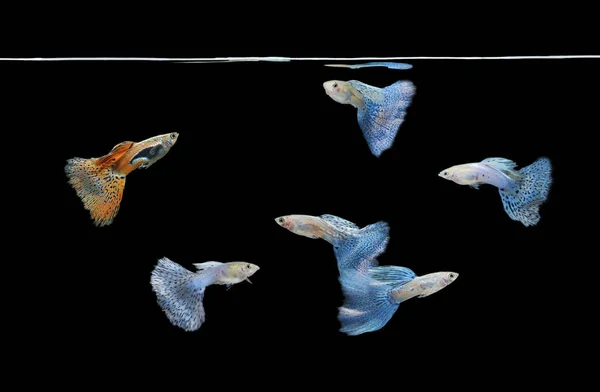
There are many guppy varieties, and your selection is really just a matter of preference. All guppies require equal amounts of care and feeding. Guppies with fancy colors are the most popular since they fill your tank with a beautiful rainbow of hues. Veiltails feature beautiful enormous fins that catch the eye.

Another popular option among guppy keepers is the Swordtail, a popular guppy species with a sword-like tail. Third on the list is the less flashy Endler’s guppy.

When you intend to keep your guppies in a pond, you need to take special consideration of their colors and ensure that you do not keep flashy guppies in areas they would be visible to predators.

Basics for Your Guppy in an Outdoor Pond

Guppys in freshwater aquarium

Guppies are one of the smallest fish you will keep in your pond or tank; therefore, their space requirement is minimal. Whether you are keeping a large pond or a small container pond, even a tank of about 10-12 gallons is a lot of space for guppies. You should especially note the filtration system when preparing a pond for your guppies. Guppies enjoy slow and calm currents due to their delicate fins.

With a pump and filter in your pond, your guppies will be truly happy and clean. You might also equip your guppy pond with a heater and air pump if you reside in an area with fluctuating temperatures. 

Like most fish, guppies prefer a balanced temperature, and since they are warm water fish, it is important that they are provided with a heating system that will protect them from getting chilly.

You can achieve aeration in your pond by equipping it with a system that features a fountain. It would be best if you took care to provide the tiny guppies with enough room to navigate, as the waterfall might create currents that could sweep them up.

Having live plants in your pond is almost a necessity; its function transcends merely providing atmosphere. The presence of these aquatic plants in your water helps you cleanse your tank of waste and allows for proper oxygenation for your guppies. 

The symbiotic relationship between your plant and the water helps make your pond water maintenance easier. The foliage of the pond also helps provide adequate coverage that allows your guppies to hide as it grows, which will help relieve their stress.

Guppies are water-sensitive, and the flow of water is a determining factor when considering the overall well-being of your fish. Therefore it is in the best interest of your fish that you provide aquatic plants to promote oxygenation in the tank.

To help your guppies breed and grow strong, you should endeavor to situate the pond near partial sunlight. Partial sunlight is needed, as a direct onslaught from the full sun could make the water super hot if not checked.

Group of red and blue guppies in isolated black background

Check the location of your pond and make sure it’s situated in a place that gets enough sun. You should endeavor to provide adequate coverage, in the form of plantings or commercial coverings, for your guppies.

Guppies need small, delicate plants that will provide them with proper coverage. It will also help keep your aquarium free of unwanted pests and promote the general health of your fish, as your guppies will likely consume mosquito larvae and algae.

Guppies will survive in an outdoor pond that mimics their natural habitat, as long as the water temperature is right and the pond allows for ample swimming space. The right temperature for guppies is warmer temperatures.

Fancy guppies eat live food and mosquito larvae when kept in an outside pond. Whether they are placed in a small pond or not, female and male guppies will breed guppies just like when they are placed in an indoor aquarium, and your guppy fry will survive like other fish outdoors.

Factors You Must Consider When Raising Your Guppies

Like any other fish, your guppies face unique dangers from living in the pond that you will need to consider. Guppies like to jump around in the pond; hence you should try to keep your guppies in an outside pond with a net covering. 

Aside from keeping your guppies from jumping out of the pond, it also helps protect them from falling prey to predators attracted to them by their bright colors, looking for an easy meal. It also helps keep debris from littering your pond.

Guppies swimming near surface

It helps limit the littering of leaves and other unwanted waste in your garden, which could create a situation of wrong chemical composition in your pond and lead to the growth of algae. It also helps limit filter clogging and increases the filter’s effectiveness.

Guppies are live-bearing fish and will likely litter your tank with their fry if the population is not kept in check.

Be careful when placing them in ponds with other fishes, as they will likely stifle the pond with their population and make it difficult for other tropical fish to get food.

If you are to raise guppies in an outdoor pond, endeavor to keep larger fish as tank mates or in a climate where winter chills can prevent them from taking over like weeds.

How Long Can You Keep Guppies Outdoors?

colorful small guppies in tank

Depending on the pond’s water temperature, your guppies can be kept outdoors for as long as you like. Guppies can withstand temperatures as low as 20 degrees Celsius (68 degrees Fahrenheit), and if your temperature does not fall below this, you can keep guppies out for the entire year.

Warmer temperatures are experienced between April and October. If the Autumn season is cool, you can move them inside to a fish tank with warm water.

Generally, guppies thrive in outdoor ponds during spring and summer. You can then move them during the turn of the season when the temperature falls, i.e., during autumn and winter.

Final Thoughts

guppy male fish in aquarium

Most beginners and experienced fishkeepers prefer guppies due to multiple factors. This lovely fish has many varieties, and you can keep lots of them so that the beautiful colors can create a rainbow pleasant to the eyes.

They like warm water and excel in tropical climates, and their smallish size makes them comfortable in even small ponds or containers placed on patios or ample space. Guppies are tropical fish with sensitive fins. They require only minimal current and might get swept up if placed in a tank with a heavy flow.

When you care well for your guppies, they will survive for an extended period. Guppies birth their fry alive and, unlike other fish, do not lay eggs. They breed fast and easy, so it is vital to make sure that your pond is large enough to accommodate extra fish.

Guppies are excellent pond fish, and apart from being low maintenance and beautiful, they also enjoy eating live food. You can feed your guppy mosquito larvae and other live food as part of its meal.

Netting your pond is also essential to protect the guppies from escaping the pond and to protect them from possible predators. Be careful when keeping guppies in outdoor ponds in climates that support guppies, as they breed arbitrarily and might overrun your tank if you are not careful, causing discomfort to other fish in the pond. 

Overall, guppies can live comfortably in an outdoor pond, as they require little maintenance, meaning it is easy for them to thrive and adapt in the right outdoor ponds.

Related Reading:

Can Guppies Survive in a Pond - Featured Image

source https://aquariumlabs.com/can-guppies-live-in-a-pond/

Panda Telescope – The Strangest Goldfish You’ll Ever See

Panda Telescope - Blog Image

When searching for the right exotic fish to add to your aquarium, the options are plentiful, but the decision doesn’t have to be difficult. Allow me to introduce you to the Panda Telescope Goldfish and show you why it’s the perfect addition to your tank.

There are several cold fish with attractive features, but the Panda Telescope Goldfish stands out in terms of sheer beauty. This fish features unique colors, sizes, and patterns, and it is a heavily hybridized goldfish variety.

Species Profile of The Telescope Goldfish

Scientific Name Carassius Auratus
Origins Asia (Japan & China)
Family Cyprinidae (aka. Carp or Minnow Family)
Care Difficulty Easy
Fish Size 7-8 Inches
Diet Omnivore
Feeding 2-3x Times per Day in Smaller Portions
Foods Pellets, Flake, and Live Foods
Temperament Peaceful
Water Conditions pH 6.5 – 7.5, KH 4-20
Water Temperature 65-74° F
Time for Fry to Hatch 4-7 Days
Beginner-Friendly Fish? Yes!
Lifespan Average: 10-15 years. Max.: 20 Years
Tank Decor Plants and Gravel
Tank Size 30 Gallons Min.
Cost ~$15 – $20

How Big Does the Panda Telescope Goldfish Grow?

Panda Telescope Goldfish has an average size of 7 inches and tends to grow up to 8-9 inches max, making it easily identified. Several factors are responsible for this growth rate in this fancy goldfish. They include; water conditions, how large the tank is, and the quality of feed. 

What Size Aquarium is Ideal for Your Panda Telescope Goldfish?

To enable this cool water fish to attain its full potential in terms of growth, it is often advisable to go for the largest aquarium possible. However, it might be nearly impossible to equip your home with a considerable tank; therefore, the minimum aquarium size for your Panda Telescope is 30 gallons. 

You may also keep these fancy goldfish in an outdoor pond in an area with temperate water conditions. However, you should note that too low or too high temperatures will cause stress in this fish.

Warm aquarium water limits oxygen in the tanks and poses a massive problem to the fish. 

Related: Top Recommended Goldfish Tank Brands

Will The Size of The Fish Tank Limit The Growth of Your Panda Telescope Goldfish?

The topic of the ideal tank size for your Panda Telescope goldfish is a controversial one. Keeping your fish in a small, confined aquarium is cruel and unethical.

Thus, to answer the question, “will small volume impair growth in your fish”? Yes! A small tank will definitely affect the growth of your Panda Telescope fish.

Keeping your pet goldfish in a small, confined space is detrimental and should be avoided. You should care for your fish by providing it with the biggest aquarium possible to enhance its overall well-being.

An average-sized aquarium capable of holding about 50-60 gallons of water is a good size for your Panda Telescope. More so, research has pointed out that keeping fish in a small space will stunt growth.

However, if your Panda Telescope Goldfish is kept in a little tank but with a constant clean freshwater supply, growth will likely continue. Many wholesalers of aquarium tanks often have tiny tanks where fish are stocked, but they always ensure a constant supply of freshwater.

However, when your fish has a continuous water supply, it is more likely to continue to grow; it is still not advisable to keep your fish pet in a considerably small tank if you can avoid it.

Ideal Size of Tank For Panda Telescope Fish

Getting the largest possible tank for the Panda Telescope Fish is advisable. An aquarium of 30 gallons is ideal for a couple of small fish. If you continue to add more fish to your tank though, you should increase by 5 gallons for each new additional fish.

The size of your gallon should not be based on the current size of the fish; it should be based on how big your fish will likely grow. If you add two fully grown Panda Telescope fish to a small-sized aquarium, you will be overstocking the fish tank.

Where Can You Get Panda Telescope Fish?

Most of the Panda Telescope goldfish originate from Asia and are derived from farm breeding. The panda coloring of this goldfish is due to the cross-breeding of different panda moors to create its fabulous color.

The Panda Telescope has multiple variations, with the most common one being its veil tail. This breed is sought after by collectors all over Asia.

Possible Issues With The Panda Telescope Goldfish Varieties

panda goldfish in white background

The Panda Telescope Goldfish is an impressive and distinctive Goldfish breed. However, as beautiful as the fish seems, the substrate in your tank can result in issues for it, as Panda Telescopes are diggers who seek at the bottom of the tank.

If the substrate in your pond environment is sharp, it might result in issues for the eyes of the fish.

The sharp rocks in the tank are also a cause for concern as your goldfish might unknowingly bump into it and scratch its rather sensitive eyes. Panda Telescopes are also prone to common goldfish ailments such as; parasites, Rotten Fin, Rotten Tail, and Goldfish Ich, amongst others.

If your fish is suffering from any of the above-listed uncomfortable ailments, do not hesitate to check the fish disease guide and apply the correct treatment to help it recover and live for a long time.

Also, the size of this fish can also make it seem predatory as it may scare and even eat the smaller goldfish in the tank.

How Much Does a Panda Telescope Goldfish Cost?

Despite being considered a fancy fish, the Panda Telescope does not cost an arm and a leg to purchase. You only need about $15-$20 to get a small one. The bigger fish will cost more, even up to a thousand dollars in Asia, where these fishes are coveted.

When buying the fish, you must consider the unusual patterns in the young ones. The colors signify how healthy the fish is.

Your $15-$20 would turn out a good investment if you find a 2″ fish with a velvet appearance. Such Panda Telescope Goldfish will survive in a relatively cool temperature range, which differs from other goldfish varieties.

Panda Telescope Goldfish Care Facts

Like other goldfish varieties, the Panda Telescope Goldfish requires top-quality care. It requires water free of dirt, ample room to grow, a quality balanced diet, and other things that make for a happy fish. Once you stick to this regimen, you are less likely to go wrong with the fish.

It would help if you remembered that they are pretty delicate when compared to other goldfish. This implies that it is easier for them to suffer injury from the substrate in the tank and the added decorations. Therefore, you should eliminate harmful elements when you decorate the tank.

You should pay particular attention to their delicate eyes, as infections to their eyes are common and cannot be treated easily and can lead to eventual death. 

Dragon Eyed Fish

close up shot of dragon eyed goldfish

Dragon eye is the popular name attributed to fish with large or telescopic eyes. It is a term often used in China when referring to these telescope fish like Black Moors and Panda Telescope fish.

The most common dragon-eyed fish is the Blackmoor, which is farm-bred, and the term is attributed to all fish with this distinctive eye.

Black Moors are native to China and have been bred since the early 17th century. They are considered the species from which other fish with large protruding eyes originated.

There are now many goldfish varieties from which you can choose, thanks in part to the selective breeding of the panda moors on farms in Asia.

Panda Telescope Goldfish Diet

All aquarium fish deserve the best combination of protein and fiber meals, and your Panda Telescope is no exception.

The main diet of this class of fish is often flake food.

Flakes do not dissolve hastily, allowing your Panda Telescope Goldfish the right duration to feed on them, thus limiting the pollution in your tank. Secondly, they contain the necessary components of a balanced diet to ensure that the fish are active and healthy.

Combining this flaky food with pellets, frozen, and dried foods helps ensure that your fish gets the right nutrition to keep swimming happily and maintain its lively nature all year round.

It is essential that your Panda Telescope Goldfish are fed constantly, up to 4 times a day, with varied tiny portions that they can consume in 90 seconds. The suggested plan for feeding your fish is to give flakes twice daily with a bit of food like the bloodworms and round it up with pellets. 

Be mindful not to overfeed your fish!

Related: Recommended Food for Healthy Goldfish

Conclusion

An early investment in a Panda Telescope with panda coloration patterns could help you create the perfect sight-worthy pet.

Identifying young Panda Telescope Goldfish at an early age is difficult, as they do not show the full extent of their strange patterns when young.

However, identifying and purchasing a good 2-3” Panda Telescope Goldfish is an excellent investment for any fish enthusiast.

As with all fish, you must take adequate care of your panda fish and ensure that its dragon eyes are well protected from cuts and abrasions.

The addition of a Panda Telescope Goldfish could be all you need to brighten your fish tank, and we hope after reading this article, you’ve found everything you need to know about this rare and fascinating breed.

Panda Telescope - Featured Image

source https://aquariumlabs.com/panda-telescope/

Do Barracudas Eat Clownfish?

Do Barracudas Eat Clownfish - Blog Image

Many fish lovers and even new hobbyists think barracudas eat clownfish. Some also have the imagination that barracudas eat their eggs too. And all this misconception is a result of Hollywood’s inaccurate depiction of marine life habits in the movie; Finding Nemo.

The film has got many things wrong about barracudas and even the reproductive patterns of clownfish.

Here is an accurate piece that answers the question, Do barracudas eat clownfish?. It also discusses other important questions about clownfish and how they feel about their eggs in real life.

Do Barracudas Eat Clownfish?

Contrary to what you saw in the movie Finding Nemo, Barracudas will rarely eat clownfish or any other small fish, for that matter. They are less likely to eat clownfish because they typically eat larger fish.

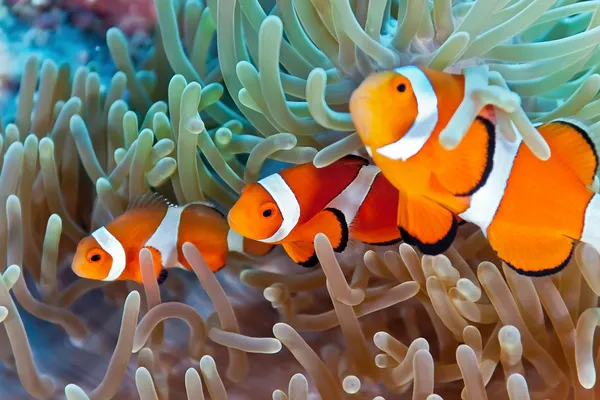
clownfish with reef in the back

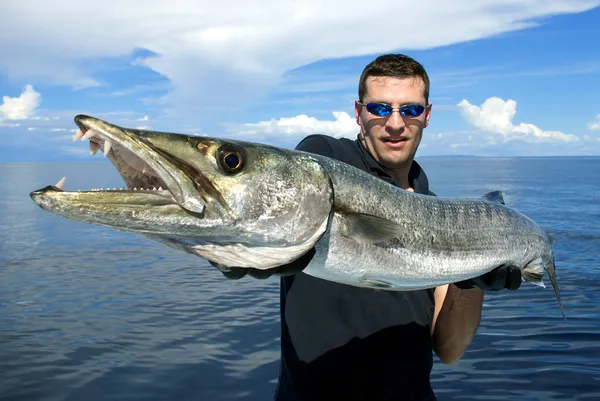
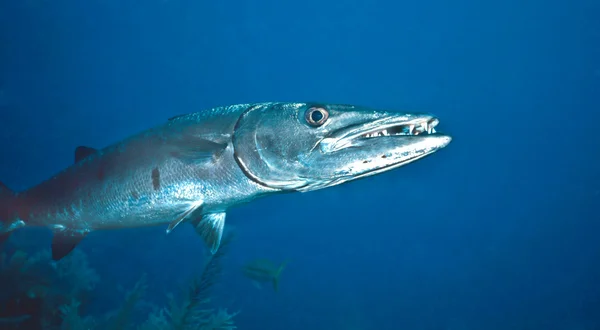
Another reason barracudas will rarely eat clownfish is the difference in their habitat, even though they are both saltwater fish. Barracudas are long and tubular fish with a pointed snout that has two rows of teeth, and they generally live in open waters at a depth of about 325 feet.

Unlike barracudas, clownfish live in coral reefs. You will usually find them housed in a sea anemone (bubble tip anemone, for instance, is popular for fishkeepers). The difference in the depths where they live is more than a hundred feet, as most corals reefs are usually shallower than 150 feet.

This difference in habitat depth makes it highly unlikely that clownfish will suffer a barracuda attack.

What Do Barracudas Eat?

Barracudas, also known as cudas, are large, predatory, and ray-finned fish famous for their awful temperaments and scary looks. There are about 26 species of this fish type, and their size varies due to various conditions. They are usually about six feet to eight feet, and some species have the tendency can reach almost one hundred pounds.

Barracudas Typically Eat Larger Fish

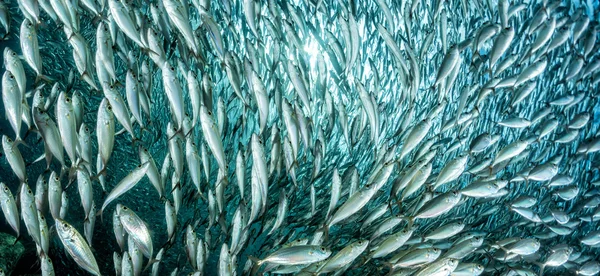
They eat large fish because they can do so effortlessly with the large spaces in their teeth and sharp teeth. These useful eating tools help barracudas feed on their prey by chopping them in half. Barracudas hunt bigger prey like killifishes, tunas, jacks, snappers, herrings, mullets, grunts, mackerel, anchovies, etc.

School of Fish Mackerel

You can find barracudas in tropical and subtropical oceans worldwide, ranging from the Atlantic oceans’ eastern border to the tropical areas of the Indian and Pacific Oceans.

Can Barracudas Eat Fish Eggs?

No, barracudas don’t eat clownfish eggs or other fish eggs. They are carnivores interested in eating large fish of various sizes and shapes. They prefer sizeable live prey. They enjoy fatty fish like tuna and mackerel the most and won’t trade them for fish eggs.

clown fish eggs

Also, clownfish typically lay their eggs right where they live. They usually clean a small spot on a rock or two around where they spend a significant portion of their time. It is on this clean spot that the female clownfish lays her eggs.

No matter how many eggs she lays, you can be sure that there will be no barracuda attacks on the clownfish eggs. This is where Hollywood got it wrong by portraying that barracudas eat fish eggs and even clownfish, as suggested at the beginning of the film, where Nemo’s mother is eaten along with all his future brothers and sisters.

Do Barracudas Eat Humans?

Unlike the rumors and speculations that all big fish are man-eaters and aggressive, barracudas prove them wrong. While it is true that they will attack humans, they don’t eat humans.

man holding giant barracuda

Also, the attack is usually not intentional on their part. For instance, barracudas will attack divers or swimmers with any reflective object because they are curious and attracted to shiny objects.

They are scavengers (feed on the remains of other predators) that can mistake snorkelers for large predators and follow them in the hope of consuming the remaining prey leftover by such predators. These attacks are seldom and rarely severe incidents.

Even though they charge against humans, they won’t bite unless they mistake a shiny object you have on for fish. They are intelligent enough to stop biting once they realize that the shiny thing isn’t a fish. Their big teeth will surely damage a human’s skin once bitten. 

Humans can swim with barracudas without problem after ensuring that they have no shiny objects before jumping into the water. Some species of barracudas are dangerous to humans, mainly because of their poor eye judgment. They see what is not as if it is (mistaking humans to be large predators or sharp objects to be prey).

The concern should be the other way round. Humans are the ones who go after barracudas and eat them as food. Also, they are targets of sport-fishing enthusiasts.

What Do Clownfish Eat? 

Clownfish are omnivores that enjoy different food sources from the ocean. While they capture some foods on their own, they get others from their symbiotic relationship with sea anemones.

Clownfish Eat Aquatic Plants 

Clownfish relish aquatic plants. Among their staple food is the algae. And phytoplankton is a great type of algae that clownfish love to eat. Although some phytoplanktons are bacteria and protists, many are single-celled plants that depend on photosynthesis for energy.

photo of algae in the ocean

Like land plants, aquatic plants also use chlorophyll to capture sunlight to grow. And clownfish enjoy them as a readily available food source.

Seaweeds are also marine plants that serve as food for clownfish.

Clownfish Eat Other Smaller Aquatic Animals

Clownfish in the wild eat zooplankton, Mysis shrimp, copepods, white worms (enchytraeus albidus), blackworms, brine shrimp, smelt, krill, and different leftovers from the sea anemone. They also eat fish eggs, insect larvae, and small crustaceans.

close up photo of brine shrimp

When kept as pets in aquariums and tanks, they will eat all these smaller aquatic animals too.

Clownfish Eat Commercial Fish Food

Clownfish in aquariums also do well with commercial fish food. Flakes marine fish food is one of the many commercial alternatives food sources that clownfish will do well with.

But it would be best to mix these commercial foods with love foods. Live foods tend to help them develop natural survival instincts for getting food.

Clownfish Eat Their Eggs

In real life, it is clownfish that eat their own eggs. The smaller fish is usually the male clownfish, and the larger fish is the female clownfish.

They stay faithful to each other and pick a spot together for laying the eggs.

Male clownfish are saddled with cleaning, preparing the location, and taking care of the eggs. Their method of taking care of the eggs is fanning them with their fins and using their mouth to get rid of algae. The male clownfish does all of these as he watches over the eggs closely.

But they have no parental instinct whatsoever. Although they protect the eggs before they hatch, but will eat some of their babies in the fry stage after they hatch.

Related: How Many Eggs Do Clownfish Lay When Spawning?

What Predators Do Clownfish Have?

Large species of eels, sharks and other giant fish are the main predators of clownfish. But humans disturb them the most.

a good shot of a morray fish

However, clownfish have a defensive mechanism against predators. They have a symbiotic relationship (mutualism) with sea anemones. Clownfish can withstand the stinging tentacles of the sea anemones, and they use them as protection against predators.

In return, clownfish help rid anemones of parasites, circulate water around anemones, and provide a source of nitrogen for regeneration and growth.

Final Thoughts

While in Finding Nemo, the giant barracuda ate the mother clownfish and all her eggs except the only surviving egg, which turned out to be Nemo, clownfish are rarely eaten by barracuda.

Barracudas usually eat both bigger fish and small fish sometimes, but they will not eat fish eggs and rarely even come across clon fish, let alone eat them.

shot of a barracuda underwater

But if you have a large tank with barracudas in it, and you want to put a few clownfish and some anemones to spice things up, there is no guarantee your clownfish won’t suffer giant barracuda attacks.

Remember that the reason they don’t eat clownfish in the wild does not apply to your large fish tank. There is no depth difference of 100 feet in your aquarium, and the typical barracuda preys are absent. So there is a great chance they might snack on your clownfish.

Related Reading:

Do Barracudas Eat Clownfish - Featured Image

source https://aquariumlabs.com/do-barracudas-eat-clownfish/

Fish Not Eating? 10 Possible Reasons Why Your Fish Are Not Eating (With Solutions)

fish not eating

Are you worried about your fish not eating? Is your fish eating less than it used to? In this article, I will review possible reasons affecting your fish’s ability to eat.

Several factors could lead to your fish’s lack of appetite or poor eating. Many of these can be remedied before they become longtime ailments or result in the death of your aquarium fish.

One of the leading causes of loss of appetite in a fish is disease. Unhealthy water quality could also cause it. When this situation arises, you should ask yourself if you are practicing the wrong husbandry.

Other common reasons for your fish not feeling hungry are temperature changes, lack of space, or introduction to a new aquarium with not-so-comfortable tank water.

When your ordinarily healthy fish is showing signs of being unwell and is avoiding food, you need to be aware that there is an issue somewhere that could have resulted in this situation for your fish.

#1. Poor Water Quality

If you are determined to keep a healthy fish, you should ensure that you constantly change the water you keep it in. Fishes swim, poo, and urinate in their aquarium water, and if this is not changed frequently, it could result in ammonia buildup.

A rise in chemicals in its water could leave your fish feeling awful. Hence, poor water quality might be why your fish stops eating for a few days. Water hardness is often a function of cold water, which is outside the correct temperature that your species requires to start eating.

Siamese fighting fish

To avert this, you can procure a suitable water tank test kit to test the water quality and maintain a balanced pH and protect your animal from falling sick.

#2. Wrong Types of Food

A beginner’s mistake for most aquarium owners is to feed the fish with the wrong type of food. There are multiple options available, and the choice might be difficult.

To ensure that you feed your fish right, make sure you read the manufacturer’s label and select one suitable for your pet fish.

For reef fish food, it might be better to feed them with frozen meat foods.

Ensure the feed you are providing matches the correct species, as the feed necessary for your reef fish might not be the right choice for your freshwater fish.

To properly feed your fish, mix the frozen foods, or whatever food type you are using, with other meals like live food and other frozen food to ensure that you are feeding them a varied diet.

#3. Unbalanced Temperature in Water Can Affect Your Fish’s Appetite

Most fish are comfortable with the water temperature they would experience if they were in their natural habitat.

Most species, like freshwater, saltwater, and reef fish, live comfortably in a tank with a temperature level of 74 to 80 degrees FH. Therefore you need the proper water parameters for your fish.

Your fish will experience a drop in metabolism if the temperature in the tank drops below 74 degrees FH. Fishes, unlike humans, are not equipped to regulate their temperature, so they can only depend on the temperature of the water.

When you notice your fish looking sluggish or sleepy, it is often a result of a drop in its body temperature below the optimal level.  You’ll often see that they are swimming as usual but won’t eat like they used to. This situation must be immediately remedied, or it will lead to starvation.

Don’t be quick to make changes to your aquarium since, unlike the lake or ocean, aquariums do not contain that much water. Your fish will therefore respond to changes in the water parameters quickly, with little tolerance.

High water temperatures in your aquarium render your fish hyperactive, but this is dangerous to the health of your fish.

Hot water increases the stress level of your fish and makes it difficult for it to get oxygenated. Stress can prevent fish from eating.

Check your tank’s water with an aquarium thermometer to understand if your fish are uncomfortable with their water temperature.

#4. Stress Can Result in Your Fish Not Eating

Stress is prevalent in fish. Most fish kept in aquariums came from natural habitats where they could hide from bigger fish.

Hence, if your tank is not adequately equipped with a place for the fish to hide, it might lead to stress in the fish. Just like humans, fish require the safety that comes with a hiding place if they are to get the much-needed regular shut-eye to maintain their overall health.

The provision of dense vegetation and aquatic caves could help increase the rest of your fish and help relieve stress and make it feel relaxed enough to eat.

#5. Disease Can Prevent Your Fish from Eating Fish Food

As in humans, a disease in fish is an unnatural state of the body. When your fish suffers from ich (Ichthyophthirius multifiliis), which affects the exterior part of the fish, this condition could lead to the death of your fish if you do not quickly treat it. Ich in fish is highly contagious and can quickly spread.

Hence, it is important to ensure that your fish is adequately taken care of. Most fish will fall sick when placed in dirty water and show other symptoms aside from not being hungry, such as a swollen abdomen.

#6. Presence of Parasites Can Affect the Ability of Aquarium Fish to Eat

Despite living underwater, your fish is not less prone to parasites. Fish carry parasitic copepods, monogeneans, and leeches, and the presence of these parasites can cause crankiness in your fish.

photograph of Siamese fighting fish with plants in the background

When a parasite infests a body, it lives inside the host and benefits from it and, in the process, causes discomfort for the host, in this case, your fish.

#7. Infection Has the Propensity to Have Devastating Effect on How Your Fish Eat

The contraction of parasites can make your fish likelier to get infected. These parasites can cause the immune system to grow weaker and thus make your fish prone to infections.

Your fish often swims around in tight spaces in the pond, which might result in cuts on their lower fin or other parts of the body. Frequently these cuts and abrasions go unnoticed. Still, a fish whose system is already weakened by a parasite might become prone to severe infection.

Both freshwater and saltwater aquariums are susceptible to fungal infection, with the most prominent disease being cotton on the fin, also referred to as the “Cotton wool disease.”

Cotton fin is found where an infection or parasite has affected the fish. The fungus is highly contagious and can lead to the death of all the fish in an aquarium if left untreated.

Aquarium keepers often worry about bacterial infections. One of the nasty bacteria usually found in fish in freshwater is Aeromonas, a bacterium that thrives in aquarium water like other bacteria in below-par water conditions.

Such conditions will often result in the death of the host. An infected fish exudes signs ranging from bulging eyes and ascites to raggedy-looking fins.

Constant water changes and quality water use can significantly reduce the risk of infection and mitigate disease outbreaks. Therefore, simply keeping your aquarium clean will go a long way to improving the appetite of your fish.

#8. Poor Lighting Affects Your Fish

Keeping your bedroom illuminated doesn’t necessarily mean your fish is getting sufficient lighting. This is particularly true for a reef aquarium. The bright colors often noticeable in some fish, especially ones found in a reef aquarium, are more vivid than those in freshwater fish because a bacterium is alive in them.

Unlike the aforementioned parasites, these bacteria reside in the hosts and offer significant health benefits. This is called “symbiosis,” as both organisms help each other.

To survive, though, these bacteria rely on a particular kind of light. It is essential to use suitable bulbs with a unique light spectrum to ensure the proper development of your fish’s aquatic friends.

Since they rely on each other for healthy living, what affects one organism will also touch the other organism; hence you should do proper research when getting your aquarium-appropriate lighting.

LED aquarium lighting manufacturers often have different kinds of light you can select. Your research will guide you in choosing the light range that best suits your fish.

#9. Picky Stubborn Fish

You might wonder why your fish doesn’t eat the food you have given it. It might be because you have switched up its meal, and it does not like it; it will take it in at first, only to spit it out later. Fishes can be relatively stubborn creatures.

Some older fish might prefer frozen foods, while others prefer live foods or other foods. Make sure you space the food by a few hours, as most fish cannot eat both at the same time.

Aquarium lovers have noticed that for those who intend to feed their fish with a different variety, a slight shift in the properties of the food might completely derail fish from eating.

Therefore you should try to feed your fish with the right food and note when to give it freeze-dried foods or other fish food that will make it difficult for it to stop eating.

#10. Pregnancy

During pregnancy, fish are nervous and uncomfortable in the presence of other fish.

They may abandon their usual dietary habits owing to stress, but most pregnant fish will eat less or cease eating before giving birth.

You’ll notice a dark triangular mark on their belly, near the lower fin, as their abdomens expand. Sometimes you can even see fry eyes through your fish’s body.

If you detect any of these indications, move the pregnant fish to a breeding tank where it can give birth in peace.

Avoid Overfeeding Your Fish, As Uneaten Food Impairs a Healthy Environment

Sometimes your pet will not want to eat more food simply because it has had enough. Overfeeding your fish could have a detrimental effect on your tank in the long run.

When your fish is already full, it will naturally not want to eat more. Therefore, having excess food could lead to it decomposing and affecting the overall tank conditions, ultimately resulting in your fish falling sick.

Having unclean water in the tank is an indication of an unhealthy fish. When you notice this residue, you must find a more appealing feed for your fish and encourage it to eat better.

the betta fish with plants in the back

When you feed your fish something it is excited to eat, your fish will be quite happy to eat it, and you can tell instantly.

Fishes who like what they’re offered are usually hyperactive and will swim around joyously while they eat. Many reef fish are captured from the wild and still retain their instinct in the wild.

When buying fish food, ensure that the specific class of meal purchased matches the demands of your fish. Some fish require particular nutrients other than what your regular pellet or flake food provides.

Giant catfish, bettas, and triggerfish are various species that require specific meaty diets to survive. It would be best if you took special notes to include other foods in its diet.

Feeding these rather particular fish species, the regular pellet food may not offer the right protein they desire. Moreover, these fish depend on the flesh of some scaly aquatic animals like squid to file down their teeth.

If they don’t get their teeth filed, they might overgrow, which leads to the inability to eat.

Take Your Fish to The Vet

It is never a bad idea to take your fish to the vet when you notice that it has been refusing to eat. Fish not eating is a truly bad sign, and you never can tell how long they can survive starvation.

If you lack the proper experience in the field or just want to be on the safe side, you might be better off seeking a professional opinion. With a veterinarian, it won’t be long before they pinpoint the cause of the lack of appetite and ensure that these issues are fixed.

They will identify the likely cause and narrow it down, making you a happy fish owner with a healthy fish.

Conclusion

We have covered several of the most common factors leading to your fish not eating. One thing that these factors have in common is that your fish should be sufficiently safe from them with the proper husbandry.

Husbandry covers significant areas of your fish life, including but not limited to the quality of water in the tank and the proper lighting, temperature, and diet. When any of these factors are awry, it might lead your fish not to eat freeze-dried, frozen, or pellet food.

As a fish lover, it is paramount that you pay close attention to all of these factors to create a natural environment for your fish. With this in place, your fish is likely to grow healthier and live longer.

Keeping a clean tank, ensuring proper meals for your fish, maintaining the right temperature, and adhering to all other factors that will reduce the stress level of fish in the tank will help you improve your fish’s eating habits.

source https://aquariumlabs.com/why-fish-not-eating/

How To Make Tap Water Safe for Fish Without Conditioner

How To Make Tap Water Safe for Fish Without Conditioner - Blog Image

A tap water conditioner is usually a water treatment formulation usually mixed with tap water before its use in an aquarium. Fish keepers may purchase one from a local fish shop for water treatment to make tap water safe for fish in their fish tanks.

While this is okay, many hobbyists do not like using chemicals to treat tap water before using it in their aquariums. Here is an informative piece about how to make tap water safe for fish without conditioner.

Can You Fill Your Tank With Tap Water?

Yes, you can fill your aquarium with tap water, but only after ridding it of its chlorine. Tap water is ordinarily not safe for your fish. It contains chlorine which will cause serious health complications for your fish and even lead to their death. 

photo of turn on faucet releasing water

It is imperative to ensure that the tap water is safe for fish before filling your aquarium. But why exactly should you make it safe for fish?

Why Should You Make Tap Water Safe for Fish?

Tap water contains chlorine, and for good reasons. Chlorine is a popular disinfectant used in water treatment, especially public water. Chlorine effectively eliminates viruses and bacteria in public water to reduce water-borne diseases and make the water safe for human use. 

So there is a high chance that public water supplies contain chlorine. Here are reasons you should make tap water safe for fish. 

Chlorine Harms Your Fish

Another reason dechlorination is essential is that this chemical terminates living cells. Adding fish directly to tap water will lead to their death. Usually, fish placed in chlorinated water will suffer respiratory problems and, in time, die from the suffocation.

Other harms include burning up. Chlorine is so highly toxic that it destroys the sensitive gills of the fish as it burns the region around the fish’s gills. It will also penetrate the bloodstream of your fish and burn every part of the fish skin covering its whole body. 

Chlorine Will Stress Your Fish

Even though it is not in excess, leaving your fish in chlorinated water is still not advisable. If the concentration of chlorine in the water is not enough to kill your fish, your fish will suffer stress from the discomfort and will have to endure constant pain in the water. It is not uncommon to see fish in chlorinated water swimming erratically and gasping all over the aquarium. 

Chlorinated water is dangerous for your fish regardless of the level of concentration. So it is best to dechlorinate your tap water before putting your fish in it. 

While many hobbyists like to remove chlorine with conditioners, others prefer a no-chemical procedure to dechlorinate tap water. How can you make your tap water safe for your fish without conditioners?

Can You Make Tap Water Safe For Fish Without Tap Water Conditioner?

Dechlorinators are also known as water conditioners and can be used to make the water safe for fish. However, many hobbyists loathe using chemicals to get rid of other chemicals. They prefer a natural way.

Another reason is the cost of these conditioners. Many of these aquarium products are just too expensive.

Here are some no-conditioner alternatives to dechlorinating your tap water before using it in your fish tank.

Leave Tap Water Exposed To Open Air

Leaving the tap water to sit exposed to the air for at least 48 hours is one of the straightforward ways to remove the chlorine in your tap water. To do this, you have to leave the water in an open container and leave it in the open for about 24 to 48 hours. 

Another way is to simply fill your tank with tap water and leave your aquarium filter and air pump running for at least 24-48 hours while it is exposed. The aeration of the water will speed up the evaporation of the chlorine and ultimately lead to dechlorinated water.

After 48 hours, the chlorine in the water will naturally evaporate from the tap water, and you can then use a submersible pump to transfer the water from the bucket to your fish tank.

But while this method is simple, it is not so quick.

Boil the Tap Water

Ordinarily, the chlorine will evaporate from the tap water if left in the open for about 24-48 hours. But you can dechlorinate your tapwater by speeding up the evaporation process. You can do that by boiling the tap water. 

boiling water in a saucepan

All you have to do is get tap water in a clean pan. You can boil the water with an electric heater or an electric kettle. You can also boil the water with your gas or heat stove. Bring the water (preferably about 10 gallons) to a boil for about 10 minutes. If you are boiling more than 10 gallons, you can leave the water to boil for about 15-20 minutes. 

After boiling, ensure to let the water cool before introducing it to your fish tank. 

Use Ultra Violet Lights

Ultraviolet lighting is a great no-chemical option to dechlorinate your tap water. Ultraviolet lights dechlorinate tap water by direct action, also known as photolysis. If you opt for this choice, you’ll require an ultraviolet lamp or a lighting system that produces at least 254 nm wavelength with no less than a 600ml density. 

This type of ultraviolet light can and will effectively dechlorinate the tap water and even kill off other microorganisms in the tap water. 

UV lamp sterilization of an aquarium

Ultraviolet light encourages chemical reactions started by the assimilation of energy in the form of light to disassociate free chlorine but does it between the wavelength of 180 and 400 nm. So you must get an ultraviolet lighting system that emits no less than 254 nm for best results.

Prepare a place outside for the dechlorination. Place your tank full of water under the UV sterilizer. Station your UV sterilizer light over the bucket of water and leave it on for at least 24 hours. Leave the filter working in the tank while the dechlorination process continues.

Ensure that the UV light penetrates the aquarium and leave it there with the filter running for at least 24 hours. This will not only leave you with dechlorinated water but with microorganism-free aquarium water for your fish to enjoy.

This option is more effective when the light penetrates the water for a long time. It would be best to use UV lighting equipment you can station on the water for a long time. Using a tube UV system may not be as effective as a stationary light that stays right on top of it as the water must flow through it.

Related:

Install a Reverse Osmosis System for Your Fish Tank

A reverse osmosis system removes chlorine and other contaminants and sediments from the tap water, making the water safe for your fish. You’d have to purchase a Reverse Osmosis unit if you do not have one already. After that, proceed to install it with the detailed steps below. 

When you get your reverse osmosis unit, you will find little blue clips on the end of the unit. You want to remove the blue clips and push your nail on the pressure fitting of the unit to remove the hose. It should slide out naturally since it is a pressure fitting.

osmosis water purification system used in aquarium

After that, you open up the membrane housing and slide in the membrane while ensuring that the black rubber seal comes on the outside. Slide it into the membrane housing and seal it up as tight as possible. Make sure that the cover is facing the same direction as when you took it off in the beginning. 

At this stage, you have to slide the hose you remove from the cover of the membrane housing back in and pull it gently to make sure that it is secure. When you pull it, it should not come out. From here, you slide those blue clips you removed in the beginning back on.

Now you have to fix the water movement. The red hose in the unit is the intake point where the public water supply must go in. 

Then you want to arrange the chambers for proper filtration. Unscrew the first and second chambers nearest the red intake hose. Slide in your carbon filter and put it together. Repeat the same process for your second chamber. Be careful not to let the washers in the carbon filter fall out. 

Connect your intake pipe to a water source in your house. You can use a garden hose adaptor or a better connector to get water through the red inlet hose. Ensure that the red intake hose is connected to a cold water source so that you do not damage your RO unit.

Direct the blue hose to a storage tank or any available water collector, as this would be the safe dechlorinated water to use in your aquarium.

Direct the black waste line down a drain as this is the line for the brine solution. You do not want this in or anywhere near your aquarium. 

Now, slowly turn on the water supply and allow the RO unit to run for 60-90 minutes. Note that the water discharged from the black and blue lines are not suitable for use. The first few gallons of water typically flush any fine and preservation oil from the membrane’s surface.

While your unit is running, it would be best to check for leaks from anywhere in the unit to ensure its proper working condition. After confirming no defects and discarding the first few gallons from both outlet hoses, connect the blue hose to a collection tank or your aquarium to get your dechlorinated tap water. 

While all these methods work just fine, the reverse osmosis system is the best. This is because chloramine is now used in public water treatments. While other no-conditioner treatments remove the chlorine alone, the reverse osmosis system is equipped with many pre-filter chambers to remove the chloramine and reduce the ammonia concentration.

Using Carbon Filters

Carbon filters are another great option to eliminate chlorine present in your tap water. You can purchase a simple design carbon filter that can be fixed under your kitchen sink or to an outlet pipe.

Check your product carefully to find the water inlet and outlet point. If you choose to fix it under your kitchen sink, drill holes to mount the brackets to hold the carbon filter in place. You want to fix it on the cold water side of the faucet.

Disconnect the cold water supply pipe, and connect the supply line to the inlet point of the carbon filter. Fix the other supply hose to the outlet point of the filter cartridge and connect the other end to the line supplying the faucet. From here on, you can access dechlorinated water for your aquarium.

Another way is to purchase the simple models to attach to your kitchen tap. They work great, and they are visible enough for you to know when they need a replacement.

Final Thoughts

After removing the chlorine from the tap water with any of the sure options discussed above, you should test the water with appropriate test kits to ensure it is no longer harmful to your aquarium fish. You can also test for other water parameters such as the nitrate level, general hardness, and other concerns depending on the fish species you wish to keep.

Making tap water safe is crucial to preventing a life-threatening environment in fish keeping. It encompasses removing harmful chemicals, heavy metals and cleaning contaminated water to make the aquarium water safe for fish. Choosing one of these great options is the first step to making tap water suitable for fish without chemicals.

How To Make Tap Water Safe for Fish Without Conditioner - Featured Image

source https://aquariumlabs.com/how-to-make-tap-water-safe-for-fish-without-conditioner/