Why Does My Aquarium Filter Get Dirty So Fast?

Why Does My Aquarium Filter Get Dirty So Fast - Blog Image

Are you worried that your aquarium filter gets dirty so fast? Is it possible that fish food and algae are causing your fish tank filter to get dirty?

In this article, I will answer the question: why does my aquarium filter get dirty so fast?

Your Aquarium filter can get dirty quickly due to the following reasons:

  • Overfeeding your fish could result in uneaten food in the tank, which decomposes and creates ammonia and build-up of several other bacteria which might litter your fish tank.
  • Excessive exposure to sunlight
  • Absence of live plants
  • The presence of a large colony of fish in the aquarium

How Can I Keep My Fish Tank Clean Longer?

You can successfully keep your fish tank clean by keeping the right filters for your tank or by changing the water regularly.

Some of the ways to keep your aquarium clean include:

Keeping The Proper Filter

Ensure to select the proper fit that matches the size and type of your fish tank. Adhering to this is the best way to limit dirt in your fish tank water. 

Constant Water Changes

Be conscious of constantly changing the water of your tank. By regularly changing the water, you will be eliminating dirt and easing pressure on the filter, and keeping your tank clean.

Correct Feeding

A good rule is to ensure that you do not overfeed your fish. Too much feed in the tank water can make it uneaten and might lead to ammonia and bacteria build-up and is unhealthy for the fish.

Get An Algae Eater

Placing organisms that nibble algae could also limit the chances of getting clogged.

Ensure Proper Lighting

To promote general fish health and reduce stress, it is essential to provide 12 hours of light to allow fish rest and sleep. 

How Often Should Water In Fish Tanks Go Through The Filter?

It is best to select one for your fish tanks with a flow rate of six times the tank’s volume. Thus for a 30-gallon tank, you would want a flow rate of about 200gph. This allows water to pass through it reasonably and keep your aquarium clean. 

How Do I Make Water In My Tank Crystal Clear And Free Of Fish Waste?

The direct answer is you can’t keep your tank over-filtered. It is, however, easy to under-filter one. Aquariums are often rated according to how many gallons of water they can hold. To get the best result from your filters, you should get a filter rated for a giant aquarium than the one you own. 

Aquariums often get filthy quickly when the tank is too small for your fish colony. A small aquarium stresses the fish and makes the tank dirty much quicker. However, it shouldn’t be overly large. Thus, keeping your tank water clean requires taking care of waste and filters. 

What Will Eat Waste And Uneaten Food?

No specie will eat fish waste in the aquarium. Cories and Bristlenose plecos plants, often referred to as cleaners, won’t eat fish waste, nor will shrimps and snails. 

Related Reading:

Why Does My Aquarium Filter Get Dirty So Fast - Featured Image

source https://aquariumlabs.com/why-does-my-fish-tank-filter-get-dirty-so-fast/

Why Does My Fish Tank Get Dirty So Fast? A Guide to Understanding Aquarium Maintenance

Why Does My Fish Tank Get Dirty So Fast - Blog Image

Like any other home for one’s pets, fish tanks require maintenance over time. Fish breathe, eat, poop, and sleep all in the same place. And since they live in the water, all of this mess tends to float around, making keeping the system clean a little more complicated.

A well-stocked and managed aquarium should not take up too much of your time. And it should not get dirty very quickly. If your fish tanks are getting dirty fast, then there may be some underlying issue to think about.

Fortunately, in this comprehensive guide, I’ll break down the different issues on one of the most common questions “Why does my fish tank get dirty so fast?

This way, you will be spending less time doing maintenance and more time enjoying your beautiful wet pets!

Types of Fish Tank Dirt

Aquarium pump

Why does your fish tank get dirty so fast? Dirty water is usually caused by any of the following issues in an aquarium.

Fish Waste

Fish waste is mostly fish poop and contributes to the bioload of your tank. Since it gets dropped into the water, it periodically needs to be removed through water changes. And in the meantime, your filtration system ensures that fish waste (and leftover foo) don’t become a huge problem.

Whether you have a powerful canister filter or a basic sponge filter, having some sort of filtration that is working properly is essential to fish health.

But if you are lax on performing filter maintenance, then problems with dirty water and other debris can quickly arise, no matter what size tank you have.

Leftover Food

Leftover food is another important reason why a tank can get dirty so fast. Unlike fish waste, leftover food is packed with nutrients that fuel algae and bacterial growth. Fish food can cause ammonia levels to quickly rise.

A healthy nitrogen cycle helps mitigate this, but you still don’t want too much uneaten food accumulating. Your helpful bacteria can only do so much.

Excessive Algae Growth

Algae is a fact of life for any fish tank you set up. Nutrients, water, and light mean that you will eventually have to clean up algae. A tank with a heavy bioload will always see more algae than one with a lighter bioload.

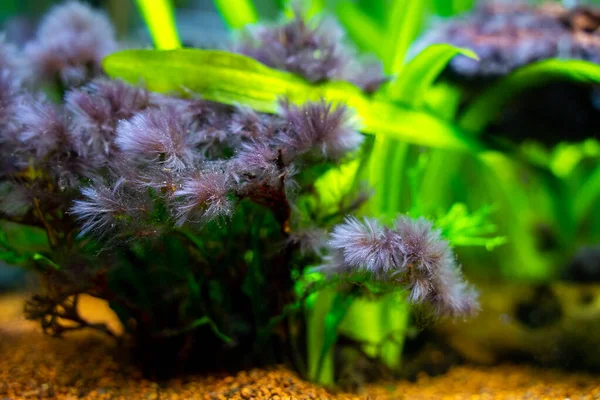
Algae come in many forms, with green algae being by far the most common. Aquarists also have to deal with brown (diatomaceous) algae, staghorn algae, black beard algae, and green water algae.

black beard algae

Algae is not always a sign that something is wrong. They are simply organisms taking advantage of light and nutrients that plants aren’t using. In fact, a continually algae-free tank can be a sign that there is something very wrong with your system.

How Much Light Does Your Tank Get?

Too much light is one of the main factors in helping algae take over in fish tanks. Are you running the aquarium lights for a long time? Anything more than 8 hours of full-power run-time will cause excessive algae growth.

Even if your lights are carefully controlled to not be on all of the time, sunlight from nearby windows is also a contributing factor. Sunlight is full-spectrum and ideal for plant growth. And it does not take much to help algae take hold; algae requires much less light than complex plant life does.

Hard Water Stains

Hard water stains are familiar to anyone living in most of the developed world. Tap water is usually moderate to very hard, and when the water evaporates from your aquarium, it leaves white scale deposits along the water border.

Unfortunately, there is really only one way to forever eliminate hard water stains from your fish tank. Buying a tap water filter won’t do the trick here since they can only remove phosphates, nitrates, chlorine, fluorine, and a few other compounds – but not white scale.

The only way to be rid of it is to use distilled or reverse osmosis water. Vapor distilled water is usually created by evaporating water through boiling and re-condensing the steam, which is pure water free of minerals. And reverse osmosis is made by forcing water through porous membranes that filter out molecules other than water and certain gases (which is why it usually tastes better than distilled water).

Both are much more expensive than tap water. So most folks buy a razor blade and scrape away the mineral deposits if they become too thick. Keeping up with evaporation and topping off your fish tank regularly helps minimize this. Another trick is improving your home’s humidity because dry air will cause evaporation to happen faster.

Why Does My Fish Tank Get Dirty So Fast (In One Day)?

If you see dirty water in your fish tank after just one day, then there is a serious problem somewhere. No aquarium should become dirty fast as that.

Is there a dead fish hidden beneath your decorations somewhere? If so, find it and remove it ASAP as it contributes directly to high ammonia levels and a bad smell in your tank water.

Is it loads of fish poop? If so, then you have too many fish, are overfeeding, or more likely – both problems. You may need to move some of the other fish to a new tank in order to reduce overcrowding.

You may also not be cleaning thoroughly enough. Aquariums with large gravel grains can trap debris within it that resists being removed easily during maintenance. So you might need to stir the bottom up more when removing dirty water to truly clean the fish tank.

How Often Should I Clean My Fish Tank?

Ideally, you will be doing some sort of basic maintenance very frequently. Not necessarily daily, but certainly weekly. Without a good maintenance schedule, aquariums tend to get dirty fast.

Keep in mind that each of these tasks may or may not apply to you. You will need to look at and consider how each of these tips and ticks fits into your personal aquarium system and maintenance routine.

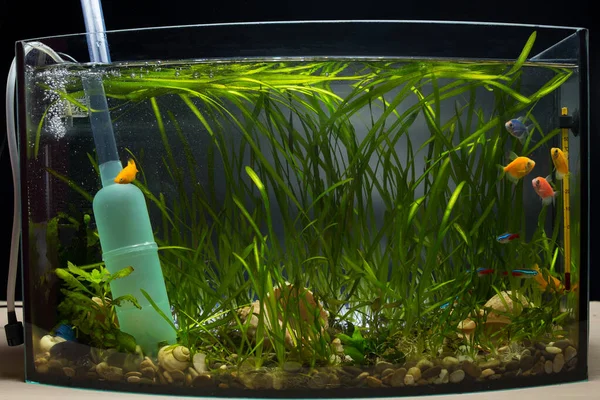
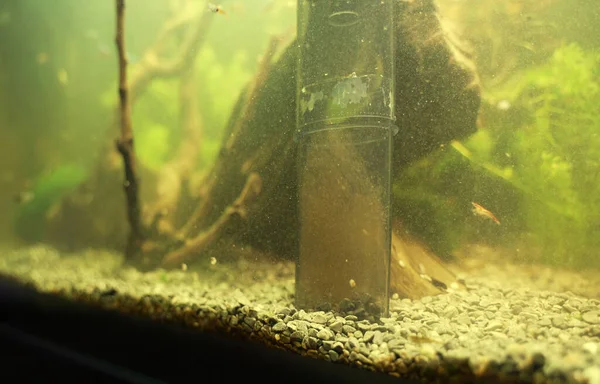
Powered gravel cleaner in aquarium

Daily Fish Tank Cleaning Tasks

Look over the aquarium glass for limescale deposits. The longer they are allowed to build up, the harder to clean they become. Remove any mineral build-up using a razor blade.

Is the aquarium water level too low? You may need to top off your fish tanks. Also, remember that if you have a power filter running and the outflow is causing splashing, that extra water movement speeds up evaporation.

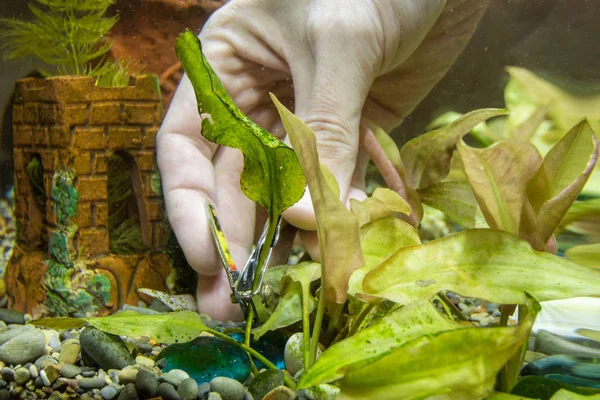
Do you see any dead or dying plant leaves? Trimming any leaves on their way out will help your live plants remain vigorous and minimize the nutrients released back into the aquarium water that fuel algae growth.

Weekly Fish Tank Cleaning Tasks

Check your filtration system for flow issues. Biweekly to monthly media changes are standard if your filtration system uses activated carbon. You may need to rinse out the sponge if beneficial bacteria have clogged it up enough to reduce tank water flow through the filter.

Use an algae scraper to remove excess growth from the fish tank glass.

Any visible uneaten food or fish poop should be vacuumed up. A fast 5-10% water change will do wonders for the health of your fish. Also, consider how heavily stocked your tank is or how all the food leftover is building up in the first place. You may need to make an adjustment to how you do things.

Wipe the front of your fish tank to remove dust and streaks from evaporated water with a fish-safe glass cleaner. There are store products that are formulated to do this (don’t use Windex or similar brands as they are toxic to fish). You can also add white vinegar to a spray bottle and wipe it off with newspaper for a streak-free clean!

Clean the clear glass or plastic lid above your fish tanks (if any) to remove algae and hard water deposits from the lid. These will reduce the amount of light that reaches your tank if allowed to build up.

Every two weeks, you should service any chemical filtration media (activated carbon, zeolite resins, etc.), replacing it with fresh filter media.

Biweekly or monthly, you will need to perform 20-50% water changes. However, the exact maintenance schedule depends on how many fish you have. A lightly stocked aquarium will have less dirty water to remove than a heavily stocked one.

Monthly Fish Tank Cleaning Tasks

A water change at a minimum of once per month is a good rule for preserving optimal water quality. Since I keep living plants in a mature aquarium and only keep a few fish, I don’t need to do major water changes more frequently. But if your fish tank is newly set up, heavily stocked, or you regularly overfeed, then you should do water changes more frequently.

Monthly water changes should be around 30-50% of the aquarium’s volume. But in this case, removing more water is not better. We don’t want to cause massive swings in water temperature or parameters so stick to partial water changes at all times unless there is a serious problem that requires more than a 50% water change.

And don’t forget to keep a tap water conditioner on hand whenever you do a water change. Tap water everywhere has chlorine and chloramine, both of which are poisonous to aquatic life.

If your municipal water treatment facility uses chlorine only, then water can be left to sit for 24 hours. This gives the chlorine time to outgas. But places that use chloramine need a proper water conditioner; chloramine is formulated specifically not to outgas over time.

Yearly Fish Tank Cleaning Tasks

Believe it or not, there are a few yearly fish tank cleaning tasks to consider. Not everyone does one, but a yearly spring cleaning can help you start the New Year off on the right foot.

In a spring cleaning, you perform a complete teardown, removing and scrubbing all of the decorations, getting all of the accumulated debris out of the substrate, cleaning all of the filter components, and so on.

Saltwater aquarists will also take the opportunity to remove coralline algae growths, which resist all but the most determined scrubbing attempts.

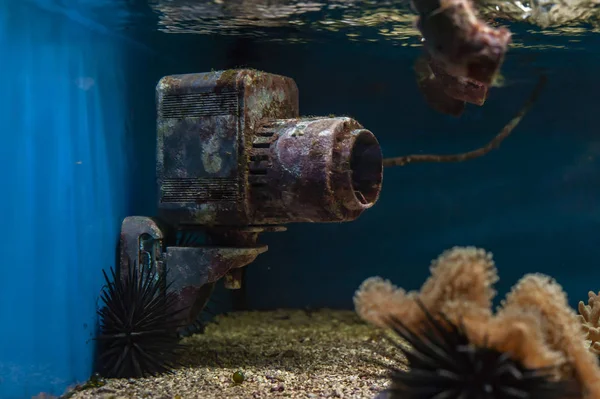
Rust equipment on aquarium

When performing a spring cleaning, you will likely need to move all of your fish over to a temporary fish tank. It is a good idea to fill this temporary tank with water from the main aquarium because it will contain plenty of your beneficial bacteria.

One downside of a spring cleaning is that it causes a partial reset to your biological cycle. So you want to preserve as many of these bacteria as possible during the cleaning process.

How Can I Keep My Fish Tank Water Clean for a Long Time?

Now that we know why your fish tank is becoming dirty so fast let’s look at how we can keep it clean after we’ve tidied things up!

Tips and Tricks to Keep Your Tank Clean for Longer

Tip#1: Grow Live Plants

Live plants are one of the best ways to help keep your aquarium clean. Plants help in several ways. For starters, they consume ammonia, nitrite, and nitrate as fertilizer, compounds that fish find toxic. Combined with all the good bacteria in your fish tanks, you should have less trouble with toxic waste accumulating. They also consume carbon dioxide and release oxygen for fish to breathe.

cutting thongs as maintenance on aquarium

Plant waste is an issue but less of one than fish waste. Dead plant leaves and stems are easy to remove, and in the process, they export nutrients that would go towards algae growth. Plant waste also does not decay very quickly, and bacteria don’t convert it into ammonia so easily.

Tip#2: Keep Less Fish

One of the main reasons I see dirty tank issues so frequently is that people have a lot of fish. And I don’t necessarily mean overcrowding the aquarium; I mean just keeping a full fish tank.

You don’t need to make full use of the carrying capacity of your fish tanks; it’s okay to leave a little extra room for your pets. An understocked tank is easier to clean, will grow less algae, and your fish will thank you! Less competition means more swimming space, less stress from territorial tank mates, less time spent maintaining it, and cleaner aquarium water!

Tip#3: Provide Aeration and Circulation

In the long term, aeration and water circulation do a lot for keeping your aquarium clean. Water circulation helps oxygen find its way into the substrate and other hard-to-reach places where beneficial bacteria would normally colonize. Since they are aerobic bacteria, they require oxygen in order to function as part of your aquarium’s nitrogen cycle.

Having good oxygen transport through aeration and circulation also means that O2 kills off the anaerobic (oxygen-hating) bacteria that cause oxygen-free rot. This sort of rot leads to the creation of hydrogen sulfide and other especially toxic compounds to fish.

Tip #4: Feed Your Fish Less

One of the best ways to help a dirty tank become cleaner is to ensure that little to no uneaten food remains after each feeding.

Fish need far less food than you think they do and often go in nature without eating at all for a very long time. As aquarium keepers, we do love feeding our fish; it is one of the best parts of keeping pets. But a light feeding once or twice per day is all that is needed in most cases. Feeding less not only results in a clean tank; it also means healthier fish.

Tip#5: Create a Regular Maintenance Schedule

One reason why tanks get dirty is that beginning aquarium keepers don’t perform maintenance on a regular basis. Instead, they wait to see if the aquarium looks like a dirty tank before deciding to clean it. Or they see a sick fish, algae growth, or some other issue and then clean in a reactive manner.

This is actually a poor way to maintain any fish tank. One of the best tricks I know to help make fish keeping an easy and fun task is to build a regular schedule around maintenance.

Knowing when to remove algae, maintain the filtration systems, use a water siphon to suck up fish feces, and so on ensures that tanks get dirty very rarely. When first setting up a fish tank cleaning schedule, you will have to make some adjustments.

You might discover that you can scrape algae at less frequent intervals than expected. Or that your test kit readings show that nitrate levels accumulate so quickly that you need to do more water changes than expected. But by being proactive in aquarium maintenance, you can help your fish tank get clean – and stay clean over the long term!

Wrapping Things Up

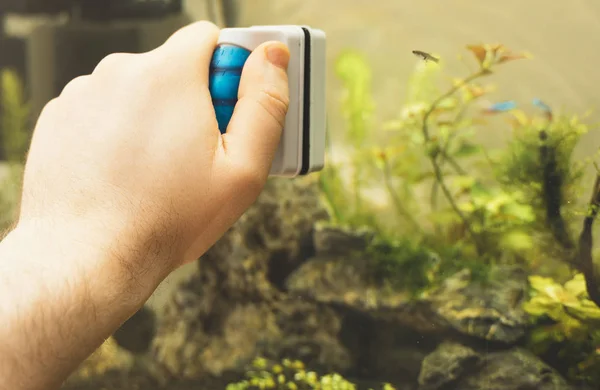
magnetic cleaner on aquarium

A dirty fish tank is not only not fun to look at; it is also a poor place for your fish to live in. Dirty aquariums mean more work for you because your fish health suffers, and you need to do more to fix it the longer you wait.

I always recommend being proactive with aquarium maintenance and not waiting until a tank is dirty to clean it. Hopefully, the recommendations I’ve made in this guide to keeping your fish tank clean will make the aquarium hobby even more fun for you!

Related Reading:

Why Does My Fish Tank Get Dirty So Fast - Featured Image

source https://aquariumlabs.com/why-does-my-fish-tank-get-dirty-so-fast/

Can Angelfish Live with Guppies? Compatibility Concerns You Should Understand

Can Angelfish Live with Guppies - Blog Image

Choosing the right fish species for a community tank is one of the most exciting aspects of caring for pets. But sometimes, the predatory or aggressive nature of one fish can make life very difficult for the others.

Playful guppies and stately angelfish sure sound like a winning combination, especially when small. The subdued, silvery tones of angelfish look so well alongside the loud colors and flag-like fins of guppies.

But can angelfish live with guppies in harmony together? Or might there be trouble in paradise in your near future?

Guppies and Angelfish in Their Natural Habitat

Both guppies and angelfish are found in South America, but you won’t find guppies and angelfish together in the same bodies of water naturally. Adult guppy fish are found exclusively in the northernmost parts of the continent in Venezuela, Barbados, and other parts of the region.

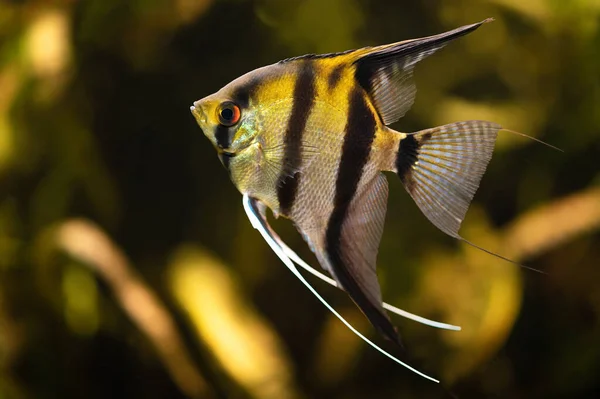
photography of Angelfish

Guppy and Angelfish Water Chemistry

On the other hand, Angelfish are natives of the Amazon river basin, which flows mostly through Brazil and Peru. That said, both guppies and angelfish prefer warm, tropical conditions.

Guppy fish are found in significantly different water chemistries as well compared to what angelfish live in. Angelfish prefer soft and acidic water conditions (pH of 5.0-7.0), while guppy fish are fond of mineralization and a neutral to alkaline pH (7.0+). That said, guppies will still do well even in slightly acidic conditions, so the chemistry is not that much of a problem.

The main issue with keeping guppies and angelfish together is that one is a much smaller fish than its other tank mates…

Can Angelfish Live With Guppies in the Same Aquarium?

Keeping guppy fish in the same aquarium as angelfish is bound to lead to trouble sooner or later. The unfortunate truth is that angelfish are very opportunistic when it comes to prey. Most fish species are, in fact. As tiny as they are, even guppies will eat guppy fry and any other animal small enough to fit in their mouths.

But unlike guppies, angelfish are good-sized community tank residents. An adult angelfish will be anywhere from 5 to 8 inches long when fully grown. Meanwhile, the smaller guppy fish does not grow much beyond 2 inches, which is typical for adult female guppies. Males are even smaller and rarely get much larger than 1 to 1.5 inches. They are also very slim, making them nicely bite-sized for a predatory fish.

fancy guppies in freshwater aquarium

Aggressive vs Predatory Fish

Many aquarists (and websites and blogs) confuse aggressive fish with predatory fish. In truth, angelfish are peaceful fish, which is surprising since they are members of the cichlid family. Most of these fish have an aggressive nature, but angelfish are quite calm. They show little territorial behavior except when spawning (though you may get an aggressive angelfish once in a while).

It’s simply that they don’t mind an easy snack if it swims by. And slim that guppies swim by in a careless fashion may end up being eaten.

The angelfish is not being aggressive; it simply sees a meal. Angelfish can be kept with smaller fish than you would expect since they have very small mouths for their size. But guppies are so thin that they are more easily in danger of being eaten.

Many tetra fish species are also in danger of being consumed by a hungry angelfish. Neon tetras, zebra danios, and rasboras are all tank mates that an angelfish would try eating if very hungry and no leftover food is readily available.

Keeping Guppies With Aggressive Fish Species

Guppy fish really should only be kept with other fish species that are gentle and passive. Aggressive species should never be chosen as residents within the same tank. Even smaller fish can be too aggressive to be tank mates for guppies. Some feisty small fish include convict cichlids, many dwarf cichlids, paradise fish, and many killifish species.

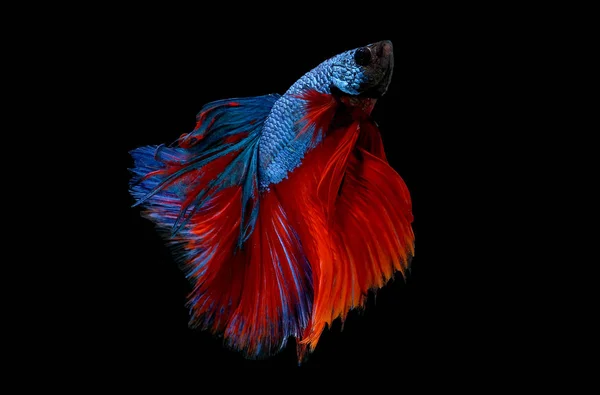
Blue and red bettafish photography

Betta fish can also sometimes be less than ideal tank mates. An adult betta fish can’t eat a guppy fish. But bettas will often act aggressively towards other fish species that have similar colors and long, waving fins. The betta is mistaking the other fish in the same tank as a rival male and will therefore chase it mercilessly. Guppy males are therefore a prime target for an especially aggressive male betta fish.

Are Guppy Fry In Danger Of Being Eaten?

Guppy fry are on the menu, even for the most peaceful community fish. Remember, predation is not aggression. Cherry barbs, danios, tetras, gouramis, angelfish, and other community aquarium residents will all eat any baby guppies that they come across. Even the adult guppies will try eating their babies. The young are just too small and helpless to survive most of the time.

If your fish tank is very well planted or it is a bigger tank with plenty of hiding places, then there is a chance that some of the guppy fry might survive. And even if most of your fish do eat baby guppies, some will usually make it to adulthood, surprising you as they eventually grow too large to be eaten.

How Can I Save My Guppy Fry?

Even young angelfish will find the babies of a female guppy to be a delightful snack. So how can we keep our baby guppy fish alive in a community tank? The best way to save them is to keep a pregnant female and the rest of your fish in separate aquariums.

Most pet stores carry breeding box setups, which can be quickly constructed and hung on the sides of your fish tank. A breeding box provides the female guppy with some privacy and protection. Once she has her babies, you can then move her back into the main fish tank.

The breeding chamber protects the young fry from the other fish in the tank while still offering water circulation and oxygenation. Once they grow large enough not to be easily eaten, you can move them into the main fish tank with their parents and new tank mates!

Compatible Tank Mates for Adult Guppies

Since guppies do not do well with any type of aggressive fish, it is better to choose other species that are not only non-predatory but also peaceful community tank residents. Peaceful species of fish that are usually around the same size include cherry barbs, tetras, dwarf gourami, danios, and other livebearing fish. Other livebearers include platies, swordtails, and mollies, all of whom prefer the same water conditions and are likely to have babies as well!

Bottom-dwelling fish that do not display territorial behavior and are great tank mates include corydoras catfish, the kuhli loach, and bristlenose plecos. You need to be very careful with dwarf cichlids because they can sometimes be temperamental. And if you have a male and female spawn, they will almost always display territorial behavior and harass every other fish in the tank.

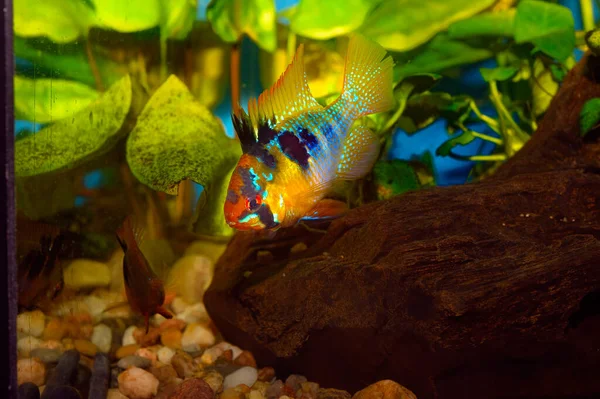
German blue ram cichlids are a good choice of tank mates for guppies since they don’t grow too large and are very mild-mannered for a cichlid. Be careful with medium-sized species like keyhole cichlids. While they are also peaceful fish, they grow just a little too large and could easily eat a small guppy fish.

ram cichlid aquarium fish

Young angelfish can live with adult guppies since they have fairly small mouths. But they will still try and eat young guppies if they think guppies will fit inside its mouth. It’s better to maintain two separate aquariums if you simply must have guppies and angelfish together.

Suitable Tank Mates for Adult Angelfish

Angelfish, on the other hand, need very different neighbors. In general, larger fishes make the best tank mates for adult angelfish. You are better off with a very large tank if you want to keep several angelfish and many larger fish in the same tank. You will want at least 55 gallons of space for a community tank full of appropriately sized fish.

What Fish Can Go With Angel Fish?

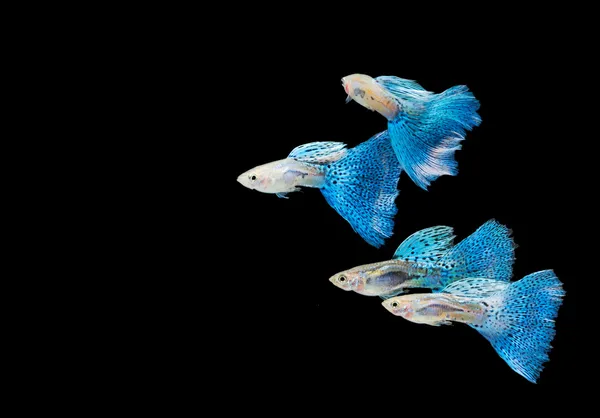
blue guppy, tropical fish

A few good tank mates for larger angelfish include blue gouramis, severums, keyhole cichlids, plecostomus, cory cats, giant danios, and sailfin mollies. You can also keep several angelfish together in a large aquarium because they are social fish and enjoy being kept in groups of around six individuals.

If you want to try other colorful cichlids, then you can also keep german blue rams with angelfish. Blue rams are just as mild-mannered and unwilling to fight as any angelfish. And their vibrant blue, gold, and purple tones really add extra interest to the black and silver hues that angelfish have!

In Conclusion

Overall, two separate aquariums are best, keeping both species separated from each other. Guppies are really beautiful and truly ideal community fish. But they are also just too perfect a snack for fully grown adult angelfish.

Related:

Can Angelfish Live with Guppies - Featured Image

source https://aquariumlabs.com/can-angelfish-live-with-guppies/

Best LED Lights for 125 Gallon Aquarium Tanks

Led Lights for 125 Gallon Aquarium

Choosing LED lights for 125 gallon aquarium is a little challenging given the dimensions a larger tank has. You need lights that are both long enough to cover the distance as well as powerful enough to penetrate the depths.

This need for strong illumination is doubly important when keeping live aquarium plants and corals, both of which are photosynthetic and require good lighting. Fish are less picky when it comes to light.

But quality full-spectrum lights will still maximize your viewing pleasure and are a worthy investment. So what should you understand about shopping for LED lights for large tanks?

Why Use LEDs As Aquarium Lighting Options?

Over the past decade, LED lights have undergone a tremendous shift in popularity within the aquarium hobby! Years ago, they were considered some of the most expensive specially designed lights you could buy.

However, manufacturing in Asia has brought prices down considerably. And considering all of the benefits LED lights have over fluorescent lights, they are the better buy for nearly all fish tank setups.

Fluorescent lights were the first step of improvement beyond incandescent light bulbs. Incandescent light bulbs have a very warm output that’s cozy for home interiors but poor for coral and plant growth.

They also emit a lot of heat, not as much as metal halide lights but enough to be a worry, especially for smaller aquariums.

Fluorescent lights still create heat, enough that they can crack if suddenly splashed by water from a filter or during a water change. LED aquarium lighting is the modern solution to keeping a fish tank well-lit. They run very cool and emit little dangerous heat.

The spectrum of light that an LED aquarium light emits can also be easily tailored to meet the needs of an aquarist. If you need full-spectrum light for the day but additional blue light during the evening, it is easy to include the requisite bulbs within the fixture.

The best LED lighting is also incredibly long-lasting, up to 50,000 hours (5 to 6 years of daily use) of output in many cases.

And despite their longevity, these bulbs are also extremely energy-efficient, using 50-80% less energy than a fluorescent or incandescent light fixture.

Choosing An Aquarium LED Light Fixture

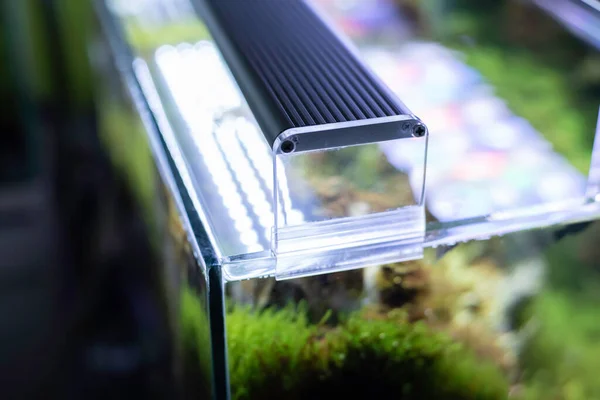
glass led on top of aquarium

With all of the options available in today’s online marketplace, we are really spoiled for choices. There are few truly bad brands out there and a heck of a lot of good.

That said, if you are reading this article, you likely want to know how to pick out a quality aquarium lighting brand and product. So here are some aspects to consider when choosing aquarium LED lights.

Full Spectrum Aquarium Lights

Full-spectrum lighting is important in order to grow coral in a saltwater fish tank as well as caring for live plants in a freshwater fish tank. Both of these organisms are photosynthetic, meaning they use light to produce food for themselves. But not all light is created equally.

For the most part, we need to look at aquarium light fixtures that emit the same colors that natural sunlight does. This range is called photosynthetically active radiation (PAR), and it varies depending on the organisms in question.

For example, you can have strong coral growth even with light that is shifted far into the blue-purple range using actinic light fixtures. This is an adaptation by corals since they have to make use of the abundant blue wavelengths found in the ocean.

But freshwater aquatic plants are far more photosynthetically active in the longer wavelengths (blue, green, yellow, orange, red).

Light Intensity Control

Good and clear LED lighting in aquarium

Another useful feature to be on the lookout for is a mechanism to control the intensity of the LED lights. Variable light output is very useful because sometimes you won’t want full power from your light fixtures.

Maybe you are having algae issues in your freshwater tanks and want to dial the light output back for a week without seriously harming your plants. If so, then being able to set the aquarium lights to 75% power can be very helpful.

Likewise, if you see signs of stress in a newly moved coral and want to give it time to acclimate.

Integrated Light Timers

Most LED aquarium lights are somewhat to entirely compatible with timers that are sold separately. They typically fit in between the power source and cord and can be programmed to shut on and off in a simplistic fashion. But integrated light timers are very handy because they offer a wider range of options.

Since they are fully compatible with the unit, they are attached – or built in – to, you can program more subtle changes to the light levels. You can time overcast days, thunderstorms, sunrises, sunsets, and other gradual shifts.

These changes not only increase viewing pleasure but also provide natural chronological shifts for the life cycles of plants and corals.

Light Coverage

One aspect to buying LED and fluorescent lamps that are sometimes forgotten is the angle of light coverage that the fixture provides.

This is less important in a fish tank free of corals or plants. But good plant and coral growth depend on all of your sessile (non-moving) aquarium inhabitants having access to bright white light with photosynthetically active radiation (PAR).

And in a heavily planted tank or well-stocked reef tank, some spots might not be getting as much light as the middle of the tank directly under the fixture does.

The corners and edges can lose as much as half the rated light output if the aquarium light is too small or not built to maximize the spread.

The height of the aquarium lights also matters a lot. This makes lighting a 150-gallon tank even more challenging because of the extra 7 inches of height relative to a 125-gallon tank.

The extra height means that even if you choose a fixture that covers the bottom area of a 125-gallon tank, it will be less intense than expected since it is further away from the substrate.

Additional Features For Light Fixtures

Lastly, when shopping for a new LED light fixture, be aware of any additional features that are included or are especially important to you. For example, some models are water-resistant and have an IP rating to reflect this.

Believe it or not, water and splash resistance is actually not so common in aquarium light fixtures! So a unit that offers it is providing an extra bit of security that may leave you more willing to place it above a cover-less fish tank.

Other additional features can include longer-running LED bulbs, more energy efficiency, a wider suite of color options, or lighting effects like weather, overcast, or moonlight.

Lighting A 125 Gallon Freshwater Aquarium

Aquarium with cichlids fish

Now that we have a good grasp of what is important in a quality product, here is our top pick for the best LED aquarium light fixtures for 125-gallon fish-only tanks!

Since fish don’t eat light (unlike plants and corals), the intensity and spectrum aren’t quite as important. However, we still want powerful light to bring out vibrant colors in our pets. And enough illumination to light up all parts of the fish tank.

1. NICREW ClassicLED Plus Planted Aquarium Light

As mentioned before, aquarium lights have become much more affordable over the years without sacrificing quality. And the NICREW ClassicLED Plus line is one of the best examples of this trend.

Here we have a high quality, durable, and long-lasting lighting solution with vibrant colors that only costs a fraction compared to the competition. You don’t get the built-in timers, weather controls, and a suite of custom light color temperature options.

Instead, you have either standard daylight or blue moonlight. NICREW also offers full intensity control ranging from 0 to 100% output, ideal if you want to keep nuisance algae under control.

What’s more, this unit is still usable for freshwater plants. At 100% intensity, the NICREW ClassicLED Plus is rated as suitable for low to medium light plants, though in a shallower aquarium, you could grow high light plants.

Though the lack of added features makes it not as good for the planted tank compared to the options outlined below.

Also, be aware that the ClassicLED Plus has a maximum length of 54 inches, so you will need more than one to fully illuminate your tank for medium-light plants.

Pros:

  • Very affordable light option for fish tank LED lighting
  • Simple controls and fewer overwhelming options

Cons:

  • No weather or additional color options to choose from
  • No built-in timer (but is compatible with timer units sold separately)
  • Feature set not ideal for a planted aquarium

Lighting A 125 Gallon Planted Tank

fish pterophyllum scalare in Freshwater aquarium

125 and 150-gallon planted aquariums have slightly different needs from fish-only tanks.

For starters, both the light intensity and spectrum are much more important.

Without both in the right levels, your plants are less likely to do well. Fortunately, each of the options detailed below is more than suitable for medium to high light plants in large aquariums!

2. Current USA Satellite Freshwater LED Plus Light

Thanks to the full spectrum light output and minimalist design elements, the Current USA Satellite is a good option for discerning aquarists. Remote controls are standard for LED lights these days, but few offer 32 buttons worth of control!

You have access to dynamic weather settings like cloud cover, fading moonlight, thunderstorms, dusk, and other complex light environments. The unit also casts light in a way that creates a shimmer effect similar to how natural sunlight and metal halide lights look above a reef tank!

The only real downside is that the mixture of white and blue LED lights is optimized for viewing purposes. The Current USA Satellite absolutely will grow coral and plants, but the cooler color is not optimal for live plants.

The warmer 660 nm true red bulbs of the Finnex Planted+ are more efficient at stimulating plant photosynthesis and improving the overall look of a planted tank. Current USA rates the Satellite as ideal for low to medium light plants.

Pros:

  • White/blue LEDs are ideal for fish viewing
  • Shimmer effect similar to reef tank lighting
  • Ability to create settings for overcast conditions, thunderstorms, and other weather
  • Largest unit covers 60 inches in length, making it suitable for a 125-gallon tank

Cons:

  • Light output is rated up to medium-light plants only

3. Finnex Planted+ 24/7 ALC Aquarium LED Light

Finnex is another brand that’s well known for making quality light fixture options. Finnex actually has a few lights designed specifically for the planted tank, including their HLC and Planted +Original lights.

All are excellent for growing aquarium plants, but the ALC is one of the lines that include the Finnex 660nm true red LED bulbs.

Coupled with full-spectrum light, these bulbs ensure that the Planted+ ALC outputs an ideal spectrum of light for plant photosynthesis.

The slightly warmer look is also perfect for the vibrant green and reds of freshwater aquatic planted tanks.

Each ALC light fixture also has the highest light intensity of any of the Finnex models, making them ideal for medium to high light planted aquariums. For a 125-gallon tank, the PAR rating will be 80-90 at substrate level directly under the fixture.

Just be aware that you will need two if you want full intensity across a larger tank. After all, the longest aquarium light Finnex makes is 48 inches long (a 125-gallon tank is 72 inches long).

Pros:

  • 660 nm True Red LED bulbs for optimal plant growth and viewing
  • Remote control for light intensity, output, and weather control
  • Ultra-slim design to avoid taking up additional visual real estate

Cons:

  • 48″ is the longest available light fixture, meaning that two are required for full coverage of a 125/150-gallon aquarium

4. Fluval Plant 3.0 LED Planted Aquarium Lighting

Fluval is another famous brand in the world of pet products, and they happen to make some of the finest LED aquarium lights around! Their Plant 3.0 is especially unique because you have the option of buying one of three different power levels ranging from 32W to 59W of power consumption.

Thanks to its IP67 water resistance rating, the Fluval Plant 3.0 can sit right near the water surface on uncovered aquariums without any fear of damage being done to the lighting.

This is the approach favored by professional planted tank keepers since even a cover can diffuse and reduce some of the incoming light over time.

Each unit has a 24-hour programming cycle, so you can set and forget the light fixture from the very beginning.

Fluval also includes three preprogrammed “habitats” balanced around natural light viewing: the Lake Malawi, Tropical River, and Planted tank lighting options!

The mounting brackets on the side of the LED aquarium lights are capable of spanning up to 60 inches of space, so you may want two for the full span of large tanks like 125 gallons or more.

Pros:

  • Low, medium, and high power options to choose from
  • IP67 water resistance
  • Light cycle settings (including sunrise, sunset, and midday)
  • Preset habitat-based light configurations

Cons:

  • No weather effects like cloudy days or thunderstorms
  • Pricier than the other full-spectrum light choices

LED Lights For 125 Gallon Aquarium Saltwater Reef Tank

Euphyllia LPS coral

Of all the aquarium light fixture options out there, choosing setups for saltwater fish and coral reef tanks is the most challenging. These systems demand powerful light output at a very precise spectrum to keep corals and other sensitive invertebrates alive.

From all of the different models out there, here are the three that will meet the needs of nearly every marine reef aquarist out there!

5. Phlizon 165W Dimmable Full Spectrum Aquarium LED

Choosing the right light for hard and soft corals can be a challenge sometimes. Fortunately, as the Phlizon 165W demonstrates, it does not need to be expensive.

Phlizon actually makes two slightly different lighting options: a 16″ x 8″ and a 20″ x 7″ design. Both have the same number of bulbs and a 165W power output. But a longer unit is often preferred by reef tank enthusiasts with a larger tank, such as a 125-gallon setup.

You will still need more than one Phlizon to cover the length of large tanks, but it is a little easier with the extra 4 inches provided by the 20″ x 7″ model!

The design is straightforward yet modern. Control knobs on the sides power on the unit and modify light intensity. Fans help keep the unit cool since it is consuming much more power compared to any freshwater aquarium light.

And the spectrum of colors is tailored to meet the needs of coral growth without sacrificing in the looks department. The green and red bulbs give you a look closer to white sunlight, yet the UV and blue light also help accentuate coral colors in a way similar to actinic bulbs.

Just be aware that each LED aquarium light is meant to be attached from the ceiling and hangs down over the reef tank. They don’t sit directly on the tank like a traditional light fixture.

Pros:

  • Extremely affordable high, intensity lighting
  • Ideal spectrum for both coral growth and viewing
  • Straightforward controls

Cons:

  • Few additional features
  • Multiple fixtures needed for large tanks
  • Requires ceiling mounting

6. VIPARSPECTRA Timer Control Dimmable 165W 300W LED Aquarium Light

We love the VIPARSPECTRA lights for large tanks because it takes everything great about the Phlizon and adds to it. For starters, you have the option of both 165W and an even more powerful 300W fixture for high light organisms like Acropora and other small polyp stony corals.

VIPARSPECTRA also includes both a remote control and a timer built into their lights. You have two channels to modify with start and stop times for the lights as well as brightness controls. All of which can be controlled from both the unit as well as the included remote control.

You are paying more for the VIPARSPECTRA relative to the Phlizon, but you are also getting a higher quality unit backed by a 1-year local warranty. VIPARSPECTRA provides precise data, rating their units as having up to 100,000 hours of runtime, which is exceptional for even LED lighting options!

And in the long run, using the VIPARSPECTRA is on par with cheaper units. They offer a spread of 30 inches when raised 12 inches from the water surface. Therefore two that are properly mounted from the ceiling will cover the majority of a 125/150-gallon aquarium!

Pros:

  • 165W-300W options make them the best high-intensity lights for coral growth
  • Includes a remote control and built-in timer
  • 100,000 hours of runtime and a 1-year local warranty

Cons:

  • Pricier compared to other hanging LED lights
  • Requires ceiling mounting

7. Current USA Orbit Marine LED Aquarium Light

Like the best quality reef tank aquarium lights, the Current USA Orbit Marine includes a host of features that promote both coral growth and viewing pleasure (check out our full review of it here).

You can easily program a 24-hour day/night cycle, complete with a natural dawn and a blue shift as sundown approaches. There are other programmable options as well, including dynamic weather effects like rolling clouds!

Unlike their Satellite freshwater version, the Orbit Marine LED includes a high number of actinic bulbs. Actinic lighting is popular for reef aquariums because they bring out more vibrant colors in corals and sea anemones.

The integrated timer and remote control included are also some of the more spectacular designs out there. Because it not only allows you to control light intensity, color temperature, and output.

The setup also integrates with the Current USA Wave Pump, allowing you to shape water flow and illumination all from a single remote.

For instance, you might set up the lighting to output maximum illumination, and for the currents to drop off for a few minutes of the day during each feeding period, so fish find every scrap with minimal fuss.

And at 60 inches in total length, it is one of the longer fixtures on the market. You may want to buy two of the shorter units instead to fully bridge the length of a 125-gallon tank – or aquascape the setup, so all of your high light corals are right under the fixture.

Pros:

  • Entirely customizable in terms of light output and intensity
  • More actinic blue light for beautiful coral colors
  • Controls link with Current USA’s Wave Pump
  • One of the longest light fixtures available

Cons:

  • Fewer dynamic weather effects compared to other brands

Frequently Asked Questions About LED Lights

Now that we’ve explored some of the best LED lighting options for 125 and 150-gallon aquariums let’s answer some frequently asked questions on LED lighting!

What is PAR Output?

When shopping for lights that replicate the natural environment for soft corals and plants, we need to be concerned about photosynthetically active radiation (PAR).

Because no matter how bright your light fixture is, it may not be doing much good if corals, live rock, and plants can’t use any of its output.

PAR peaks in the blue to red parts of the visible light spectrum. PAR meters are available for you to measure the intensity of light under a light. But it is becoming more common for high-quality LED full spectrum light brands to list the exact PAR rating on the package for your convenience.

If you are growing low light plants and corals, then it’s not so important to know the PAR rating as long as you know you are getting full-spectrum light. But if you are setting up medium to high light reef tanks and planted tanks, then having high PAR levels is crucial to success!

Knowing what PAR levels plants and corals were grown under can also help ease their transition into their new homes. Distributors can list the light intensity they keep their reef tanks under in PAR units.

This way, you can match that intensity when your new additions arrive and gradually increase or decrease it over time. Adding corals or plants to powerfully lit setups when they were grown in lower light levels can be very harmful if done too quickly, even causing burns to sensitive tissues.

How Can I Prevent Algae Growth?

Harpoon weed red algae

Algae is a fact of life in any aquatic system. Whether you have planted tanks, reef aquariums, or some other environment, you will need to know how to manage the algae that inevitably arise.

Algae needs two things to grow: light and nutrients. It is almost always present in some form because algae are (usually) microscopic cells and need very little compared to true aquatic plants. Even light levels that would kill true plants can still nurture algae.

But if you have loads of nutrients, such as fish waste, nitrate, ammonia, and leftover food, plus high intensity light fixtures, you are pretty much guaranteed to have algae growing in excess. So how can we prevent algae growth from taking over our tropical fish tanks?

If you have aquarium plants, then you need to encourage their growth in a way that helps them better compete with algae. Setting your lights to a timer allows them to synchronize their biological cycles to make the best use of available light.

Providing fertilizers on a regular basis also helps plant growth stabilize.

Remember, algae is a sign that growing plants aren’t making maximal use out of the available light and nutrients. Which algae will always be able to do better if the environment is always changing.

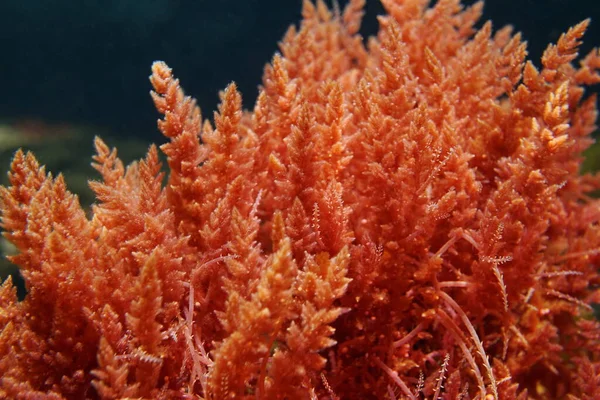
If you have a saltwater reef tank, introducing a little competition can also help get algae under control. Specifically, marine macroalgae, which look a lot like freshwater plants that come in fabulously bright shades of red, green, and pink!

Marine macroalgae aren’t usually as hard to get rid of as filamentous and green water algae. They also make an excellent food source for vegetarian pets like tangs, angelfish, hermit crabs, and nudibranchs.

As they grow, macroalgae soak up ammonia, nitrates, phosphates, and other sources of “pollution’ that can cause stress to fish and corals.

You can then either export them out of the system by simply trimming them back and throwing away the waste. Or feeding it to fish in another tank. Or simply allow the macroalgae to grow further, keeping these nutrients locked away in their leafy fronds.

What Color LED Light Is Best For Fish?

When shopping for aquarium lighting, you will quickly realize that there is a massive amount of options available when it comes to color output. We’ve already discussed the importance of full-spectrum light fixtures.

However, you also can find moonlight blue LEDs, purple, red, yellow, and any other color.

It is worth remembering that all of these extra LED lighting options are essentially for show. Natural light is yellow to white in color and is best for fish because it allows them to see more easily.

Some manufacturers suggest leaving on blue LEDs at night to simulate “moonlight.” But fish need to sleep, and the darker the tank is, the better.

Leaving on only blue LEDs can disrupt their sleep patterns just like it would do to you if you have to sleep in a room full of blue light.

So, in general, having different color LED lights is nice. But stick to yellow or white light as your main color for natural fish hues and activity!

Do I Need Strong Lighting For Low Light Plants?

Low light plants are a great choice for planted tanks because you can get away with LED lights with lower output. These plants require less energy usage because they typically grow very slowly compared to high-light live plants.

Low light plants also do well if you don’t plan on using carbon dioxide or intensive fertilizer regimens.

Some good low-light plants to choose from include java fern, anubias, java moss, and cryptocoryne species. All of these plants can be grown in high light environments, but they won’t grow much faster than they would in a low light tank.

A low-light planted tank also has the advantage of being easier to manage. Algae is fond of the high light and nutrient levels found in a traditional planted tank.

If you aren’t an expert in choosing the right plants and maintaining stable conditions, you might find it to be a frustrating and expensive experience.

That said, you do still need to choose specific lighting with the right spectrum. Even low-light plants need good PAR output and won’t grow using basic aquarium lighting.

In Summary

live plants and diamond tetra fish in a Freshwater planted aquarium

Aquarium LED lights have a staggering array of features that can complicate the buying process. From water resistance and specialized red wavelengths to weather and intensity controls, the sky really is the limit here.

But hopefully, in this breakdown, you’ve discovered what truly matters for your particular large tank setup. And feel empowered to make precisely the right choice for your fish, plants, or corals!

LED Lights for 125 Gallon Aquarium Featured Image v3.13.22

source https://aquariumlabs.com/led-lights-for-125-gallon-aquarium-tank/

7 Best Aquarium Glass Cleaners & Algae Scrapers of 2022

best aquarium glass cleaners

Aquarium glass cleaners are a must-have in any fish keeper’s toolbox.

Since aquarium glass constantly grows a crop of algae over time, it takes a handy tool to keep the green at bay and your fish easily visible.

Fortunately, there are tons of great tools that help you complete the job quickly and effectively!

Best Aquarium Glass Cleaner and Algae Scrapers

Image Product Specs Price
FL!PPER Flipper Cleaner Float - 2-in-1 Floating Magnetic Aquarium Glass Cleaner FL!PPER Flipper Cleaner Float – 2-in-1 Floating Magnetic Aquarium Glass Cleaner
  • SCRUB, SCRAPE, FLIP &FLOAT: Clean fresh or salt water tanks with the patented dual sided magnetic aquarium glass cleaner that flips from scrubber to scraper without you reaching into the tank.
  • MAJOR TIME SAVER: The 2-In-1 Magnetic Aquarium Fish Tank Cleaner halves the time for daily cleaning. Ideal aquarium accessories for use on glass tanks up to 6mm (1/4″) thickness / 25 gallons
  • These aquarium cleaning tools clean even the most stubborn Coraline. The Flipper fish tank cleaner is made with rare earth magnets for incredible cleaning strength.
  • FLOATING FISH TANK ACCESSORIES: The Flipper Floating Aquarium Cleaner is the last aquarium cleaning tool you will ever need for your fresh or salt water tank – it even floats to the top instead of sinking like a roc
Check Latest Price
NEPTONION Magnetic Aquarium Fish Tank Glass Algae Scrapers Glass Cleaner NEPTONION Magnetic Aquarium Fish Tank Glass Algae Scrapers Glass Cleaner
  • 👏-Bestie of Aquarium : This device helps clean glass by magnetizing from an outside pad to the inner glass cleaner part, quickly and easily cleans away algae growth to make your aquarium stays healthy and looks its best.
  • 💪-Premium Quality : The scrubber side is made of fabric with tiny hooks that scrape off the algae without damaging the glass. Outside, the surface of the handle is covered in felt so it glides smoothly along as you clean.
  • 🙉-Comfortable and Non-slip : it’s a long, wide bar shape that’s easy to get your fingers around, a large, chunky handle makes it easy to hold on to as you move it around and the non-slip grip comes in really handy, too.
  • 🌊-Floating and easy to storage : It floats so you never have to worry about it sinking to the bottom of the tank and you can retrieve it without getting your hands wet or disturbing any of your aquatic animals or plants.
  • 🙀-Simple and Durable : it’s made of waterproof plastic that protects the magnets from rusting. Because of how the fabric is attached, you don’t have to worry about it getting sand or substrate stuck in the fibers and scratching the glass while you clean. It’s also extremely durable, so it will last a long time.
Check Latest Price
API ALGAE SCRAPER For Acrylic Aquariums 1-Count Container API ALGAE SCRAPER For Acrylic Aquariums 1-Count Container
  • Quickly removes off anything unsightly from acrylic aquariums
  • The extra-long handle (18 inches) keeps the hand from getting wet
  • Extra-strong handle construction and durable scrubbing pad
  • For use on acrylic aquariums only.
  • Includes: API Scraper for Acrylic Aquarium, 1 Count
Check Latest Price
Kent Marine pro-Scraper, 24-Inch Kent Marine pro-Scraper, 24-Inch
  • Durable construction-handles are made of corrosion resistant fiberglass
  • Comes prepacked with three different blades to determine which works best for each cleaning job
  • Blades are interchangeable and replaceable
  • Model Number: 00977
  • Age Range Description: All Life Stages
Check Latest Price
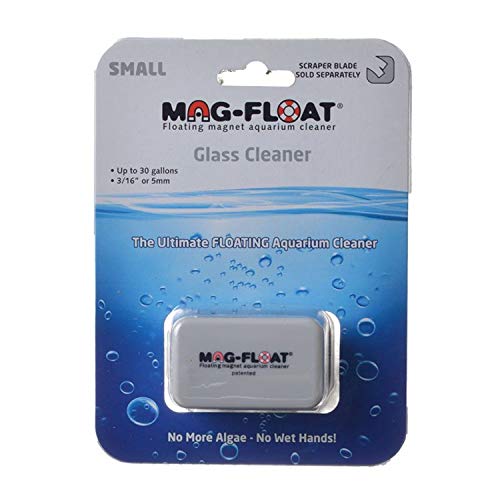
Gulfstream Tropical AGU030SM Mag-Float Glass Aquarium Cleaner Gulfstream Tropical AGU030SM Mag-Float Glass Aquarium Cleaner
  • Gulfstream tropical mag floating glass aquarium magnet small
  • This is a revolutionary magnetic aquarium cleaner, unique because it float
  • Its buoyancy makes it easy to operate and is easily guided around corners without sinking
Check Latest Price
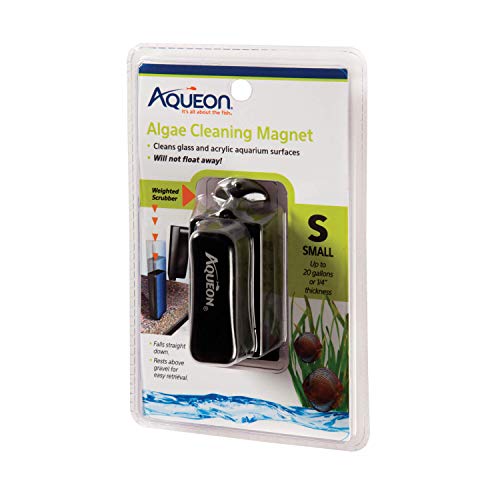
Aqueon Aquarium Algae Cleaning Magnets Glass Aqueon Aquarium Algae Cleaning Magnets Glass
  • Magnet makes it easy to clean the inside of the aquariums from the outside
  • Scrubber falls straight down if separated from magnet for easy retrieval
  • Curved pad cleans flat and curved surfaces
  • Weighted scrubber will not float away
  • Can be used on glass or acrylic aquariums
Check Latest Price
Jasonwell Magnetic Aquarium Fish Tank Glass Algae Glass Cleaner Jasonwell Magnetic Aquarium Fish Tank Glass Algae Glass Cleaner
  • Clean algae and scum off of the inside of your aquarium the easy, fun way!
  • Strong magnetic forces cause the inside cleaning brush to follow the outside handle. Just wipe the outside, and the inside is cleaned!
  • The inside piece floats, so if it becomes separated from the outside piece, it’s easy to retrieve.
  • Simply drag the no-scratch, felt-lined handle and inside your aquarium, the scrubber follows, cleaning as it goes
  • Important: Made for common glass fish tank, not for acrylic and low iron glass. Please choose the size by the thickness of your fish tank glass. The larger, the stronger the magnet.
Check Latest Price

Introducing the Best Aquarium Glass Cleaners of 2022

1. FL!PPER Flipper Cleaner Float – 2-in-1 Floating Magnetic Aquarium Glass Cleaner

While we lay out the differences between a razor blade algae scraper and a magnetic cleaner, what if you could have the best of both worlds? That is where the Flipper 2-in-1 Floating Magnetic Cleaner comes in!

The unit has not only a rare earth magnet for scrubbing without force; you also get a razor blade attached to the interior pad. Now you have handy tools for both soft green and hard algae!

Flipper designed three different sizes for aquariums of varying dimensions. The Max version will work even inside a large tank with thick glass, such as aquariums with glass thicker than 1/2 inches.

Keep in mind that the Flipper Nano version does not come with a blade that won’t scratch acrylic tanks. Only the Standard and Max versions have the acrylic-friendly scraper blade!

Lastly, the Flipper Cleaner floats! Should one magnet lose contact with the other, such as when moving the pads too fast when hitting a stubborn patch of algae growth, the inner pad will float up to the surface. This way, you won’t have to go for a dunk to get your missing pad!

Pros:

  • Uses both a magnetic scrub pad and a razor blade
  • Included blade is usable on both acrylic and glass fish tanks
  • Flipper will float if the inner and outer magnet loses contact with each other

Cons:

  • Included razor blade is not very durable and needs replacement regularly
  • Only the Standard and Max sizes come with the acrylic-friendly cleaning blade

2. NEPTONION Magnetic Aquarium Fish Tank Glass Algae Scraper

For a classic magnetic cleaner with a twist, it is hard to beat the Neptonion! It comes in three sizes for small, medium-sized, and larger tanks, with directions on choosing the right size for your particular aquarium.

What makes this magnetic aquarium cleaner so unique is the handle on the exterior algae scrubbing pad. It makes handling the cleaning pads much smoother and more accurate as a result. Tiny fabric hooks on the inner surface gently pull away any stubborn algae. And on the exterior magnetic pad, a felt covering ensures the glass won’t be damaged during each pass.

Unlike some of the more specialized tools in this list of the best algae scraper, the Neptonion is not soft enough to be used on acrylic or low-iron glass fish tank. With enough pressure, you could accidentally leave scratch marks on acrylic or low iron glass panel that are permanent.

The Neptonian also happens to float. So if the algae cleaning pads lose contact with each other, the interior pad won’t disturb your fish, plants, or substrate by crashing into them!

Pros:

  • floating algae cleaner when magnetic contact is lost
  • three different sizes for different sized fish tanks
  • convenient handle for directing the algae cleaner

Cons:

  • not rated for use with acrylic aquariums
  • does not generate enough force for cleaning more stubborn algae types

3. API Algae Scraper for Acrylic Aquariums

An acrylic fish tank has significant advantages over glass aquarium walls. But one thing that makes removing algae more difficult is how soft acrylic aquarium walls are. Fortunately, the API algae scraper here is rated specifically for use with acrylic tanks!

Each API algae scraper also uses an extra-long 18-inch handle. This ensures you won’t get your hands wet in all but the largest and deepest of fish tanks.

Keep in mind that there are a few downsides to using the API algae scraper. Since the fibers are softer to glide smoothly and avoid scratching an acrylic panel, they occasionally come loose. A few stray fibers here and there is rarely a big issue, but it is unsightly.

Also, when removing the algae scraper from your aquarium, keep in mind that it has a sponge-like consistency and holds a lot of water. Many uncautious aquarists have ended up with large splashes of water on the floor, not realizing that this algae pad retains some water.

Pros:

  • soft enough for use on acrylic aquarium panels as well as glass tanks
  • extra-long 18-inch handle for entire aquarium coverage

Cons:

  • retains some water when removing the glass cleaner from the fish tank
  • softer fibers can sometimes come loose during maintenance

4. Kent Marine Pro-Scraper II

Believe it or not, there is much more to an algae scraper blade than just a metal surface. The Kent Marine Pro-Scraper II even comes with three different kinds of algae blades for extra cleaning power!

You get a standard metal blade for use on a glass aquarium as per usual. Also, there is a plastic blade and a felt blade to remove algae from acrylic, plastic, and low-iron glass fish tank walls. All of which are softer and very easy to scratch compared to a glass tank!

The handle of the unit itself is made of fiberglass, which is very durable, corrosion-resistant, and long-lasting. You also have a variety of glass cleaners to choose from, from an extra short length to as much as 36 inches of reach!

I recommend scrapers with blades for fish tank glass that is full of hard to clean algae. Such as in a saltwater aquarium, where tough coralline algae can end up covering everything, and no magnetic cleaner will do the job.

Pros:

  • comes with several types of scraper blades, including acrylic-safe designs
  • short to long reach for a fish tank of any size
  • durable, corrosion-resistant handle

Cons:

  • blades tend to be flexible and a little difficult to replace at times
  • smaller scraper covers less surface area and can make maintenance take long

5. Gulfstream Tropical Mag-Float Glass Aquarium Cleaner

The patented Mag-Float Glass Cleaner is one of the most popular and best aquarium glass cleaner designs out there for good reason! The large surface area makes cleaning glass aquariums go by much faster compared to a smaller algae scraper tool. And the force of the magnets is enough for all but the toughest of algae varieties.

All three sizes of the Mag-Float Glass Cleaner also float. This way, should the magnets lose contact during a vigorous scrub, you won’t have to get your hands wet to retrieve it. The scrubbing pad also won’t fall into and disturb your fish, corals, plants, or substrate.

There are very few downsides to using the Gulfstream aquarium cleaner. One is that the color is not very well chosen. Some aquarists prefer leaving their magnetic glass cleaner inside their glass aquariums off to the side for quick cleaning. But the off-white color of the Gulfstream is visibly distracting from a casual view of one’s fish tank.

The magnet is also quite strong, so much so that you may find it difficult to move the magnetic aquarium glass cleaner if the glass is too thin. However, this makes the Gulfstream ideal for larger glass aquariums.

Pros:

  • an extra-strong magnet for larger glass aquariums and tough algae growth
  • floats if contact is lost, not disturbing aquarium residents
  • large surface area to cover ground quickly and efficiently

Cons:

  • off-white color is visually detracting and too obvious to be left inside a fish tank
  • magnet is too strong for thinner walls

6. Aqueon Aquarium Algae Cleaning Magnets

Unlike the other glass cleaners here, the Aqueon Algae Cleaning Magnet sinks instead of floats if magnetic contact is lost with the outer pad. At first, this seems like a distinct downside, but it really isn’t.

The difference is that the Aqueon aquarium cleaner is bottom-weighted. This way, it simply sinks to the bottom while still facing the glass. So all you need to do is press the outer magnet right against the glass to resume aquarium maintenance! Just be careful with this feature if your aquarium has a sand substrate since sand could get in between the pads and scratch your fish tank glass.

What’s more, the magnets used by the Aqueon algae cleaner are very strong, so this is rarely an issue. Strong magnets are also better at removing tough green spot and coralline algae growth.

Lastly, you have cleaning pads rated for standard aquarium glass as well as acrylic cleaning pads that are soft enough to gently remove algae growth from acrylic panels without scratching them!

Pros:

  • capable of cleaning both glass and acrylic aquarium panels
  • bottom weighted to keep pads from being lost
  • strong magnets rarely lose contact and remove even stubborn algae

Cons:

  • can sometimes trap sand grains in between pads if contact is lost
  • very strong magnets can be harder to use on thin aquarium walls

7. Jasonwell Magnetic Aquarium Fish Tank Scraper

Are you looking for aquarium glass cleaners that don’t force you to choose between blades and pads? The Jasonwell Magnetic Aquarium Scraper is an excellent fusion of these options!

Their system is based on a magnetic scraper, removing algae easily and effectively. However, you also have a scraper blade that retracts or extends as needed for harder types to remove. The blade is also swappable, and Jasonwell includes both a standard metal blade as well as a plastic one if you are wary of scratching.

That said, Jasonwell says their fish tank scraper is designed exclusively for glass fish tanks. So don’t use the plastic blade on an acrylic model.

The interior algae scraping pad also floats when magnetic contact is lost with the other pad. So you can avoid disturbing your fish and not deal with wet fingers in the process!

Pros:

  • floating internal pad for when magnetic contact is lost
  • plastic and metal scraping blades for tougher algae patches

Cons:

  • not rated for acrylic aquarium use
  • magnet is of average strength

Types of Aquarium Glass Cleaners

When shopping for the best aquarium glass cleaner, you should know that there are two main kinds that you will run into. Algae scrapers and magnetic cleaners offer very different experiences and benefits when cleaning algae. So here is what makes each type unique!

Algae Scrapers and Blades

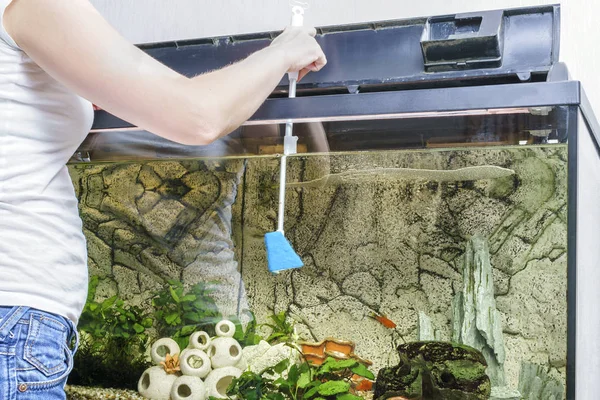
Of the two, the algae scraper is the less advanced. It consists entirely of scraper blades built into a plastic molding. Usually, the scraper attachment has a long handle so you can minimize how much of your arm gets wet when reaching in to clean the aquarium glass.

Many algae scraper blades are actually razor blades, just like the ones you’d buy from a hardware store. Since each metal blade is quite affordable and comes in a box of dozens, it is easy to replace them as they rust from water exposure!

A long-handled algae scraper often means that you can reach every section inside glass aquariums without getting your fingers wet. They are also perfect for reaching algae in corners and other hard-to-reach places.

An algae scraper is also great if you have to remove tougher algae like green spot algae, so long as you are willing to put in a little elbow grease!

woman cleaning aquarium

Magnetic Aquarium Cleaners

A magnetic aquarium glass cleaner is slightly different. Instead of using a replaceable scraper blade, the magnetic glass cleaner uses magnetic attractive force between two cleaning pads.

The inside magnet touching your aquarium glass is continually pulled towards the outside magnet. This way, you can use the inner magnet to scrub algae from glass tanks with ease!

Another benefit to using magnetic cleaners is that your hands can be left entirely dry. You don’t have to immerse your arm or hand when cleaning, and drips are minimized, making tank glass maintenance a snap to complete!

The downsides are very few for using a magnetic aquarium glass cleaner. The main one is that the rare earth magnets do not always create a lot of force. A magnetic cleaner is best at removing soft green and hair algae. Green spot algae and other more stubbornly attached varieties will usually resist being easily removed.

Also, if you need to switch to cleaning a new glass surface, you may have to get wet to shift the magnetic cleaner over to a new area. They are also not as good at cleaning inside of corners as many algae scrapers with blades.

Many people also use an aquarium glass cleaner to remove the crusted mineral deposits that form along the waterline. If the tap water deposits are too firmly attached, a magnetic cleaner won’t be able to do a good job of removing them.

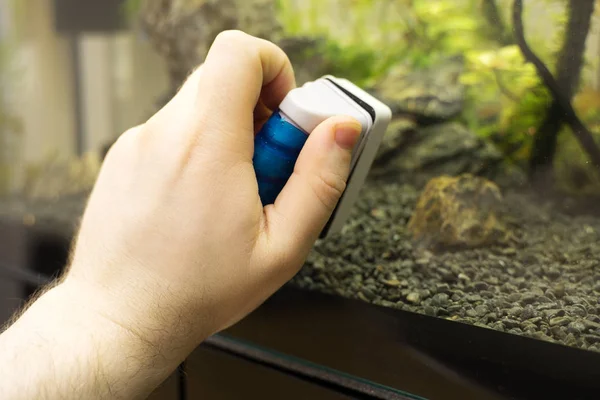
cleaning aquarium using magnetic cleaner

Aquarium Glass Cleaners and Acrylic Tanks

Something every new aquarist should be aware of is the need to buy the right aquarium glass cleaners for the kind of aquarium that they have. Glas and acrylic tanks are the two main models out there, and both handle being maintained by algae scrapers differently.

Glass tanks have hard panels that resist scratches. While glass is fragile in terms of sudden impacts, it is still a very hard substance. So you can use any type of aquarium glass cleaning tool on it, and it won’t be damaged.

Acrylic aquariums are made of molded plastic. An acrylic tank is much lighter than glass and very impact-resistant. They also hold heat in better and can be molded into almost any shape.

But the one major downside of acrylic surfaces is that they are softer than glass and are easily scratched. And the most common way acrylic aquariums get scratched is during maintenance. Someone who does not know can take an algae cleaner pad of the wrong type and create a whole mess of scratches in mere minutes.

Worse, these scratches are permanent and will often get filled in by algae growth. Algae that can now no longer be reached from within the scratches. So be very sure that you are using the right tool to clean aquarium acrylic panels!

In Conclusion

tropical freshwater aquarium

As you’ve come to see, there are numerous ways to remove most algae growth, no matter how stubborn or hard to reach. Many aquarists have a strong preference one way or another for magnetic algae cleaners or razor-bladed models.

But there are also designs that incorporate the best of both approaches. In this way, you can push or scrape as needed to ensure your fish tank looks beautiful with minimal effort! What did you end up choosing?

Related:

Best-Aquarium-Glass-Cleaners-Featured-Image-2.0

source https://aquariumlabs.com/best-fish-tank-glass-cleaners-algae-scrapers/

The 10 Best Fish Tank for Kids (2022 Kids Fish Tanks)

Choosing the Best Fish Tank for Kids - Blog Image

Any fish tank for kids needs to be carefully considered because they are not always as dedicated to pets as we wish them to be! The system should be small and simple enough for them to maintain. But still spacious enough to give them a few options in choosing fish to keep inside of it.

It is also great if the setup comes as an entire aquarium kit, complete with lighting, filtration, heating, fish food, and other items. Many of the best fish tanks for kids include all of these items in a single box, speeding up the process of getting things up and running!

So without further ado, allow us to introduce you to the best fish tanks for kids of 2022!

Introducing the 10 Best Fish Tank for Kids Options in 2022

1. Fluval Spec Freshwater Aquarium Kit

The Fluval Spec line of small aquarium kits is regularly recommended for people’s first small tank for many good reasons! Not only do you get everything you need right in the box, but they are also incredibly attractive.

Fluval uses a sleek, minimalist layout for these tanks that has them looking good on your desktop. They come in 2.6-gallon and 5-gallon sizes as well. This tank size is small enough to be placed safely on a writing desk or even a bedroom dresser with no need for a true aquarium stand.

What’s more, the led lighting system is on the higher end of the spectrum in terms of brightness. In fact, you can even keep low and medium-light live aquarium plants healthy using the included led lighting!

Just keep in mind that with an aquarium this small, you don’t have too much room for many fish. 2.6 and 5 gallons are in the nano fish realm. Even many common pet store aquarium fish may be too big for these setups. But a betta fish can make a good single resident in one!

Pros:

  • fish tank is small enough to safely be placed anywhere
  • filter media, lighting, and pump included
  • strong led lighting for beautiful fish and live plant growth

Cons:

  • no heater or thermometer included
  • glass panels can be fragile and breakable by curious children
  • not a lot of room for many fish

2. Koller Products 3-Gallon 360 Aquarium with LED Lighting

Koller Products is here to prove that an aquarium kit need not be expensive or difficult to set up! Their 3-gallon 360 Aquarium uses a cylindrical molded plastic wall instead of glass. Plastic is impact-resistant, lighter, and better insulated to hold heat in.

This is also the best fish tank for kids if you prefer being able to change the colors of the led lights! An included controller allows you to change the hue of the led lighting to one of seven bright hues! Perfect for the whimsy you’d hope for from a children’s fish tank.

The internal power filter provides 25 gallons per hour of flow; plenty for an aquarium kit of this size without being too powerful. Just keep in mind that you need to replace the power filter cartridges with Koller’s own name-brand options. Which your local pet store may not have in stock.

Pros:

  • strong, impact-resistant plastic design
  • power filter with good water flow
  • customizable led light colors

Cons:

  • cylindrical shape offers less swimming space and surface area for oxygen exchange
  • uses proprietary filter cartridges

3. Tetra ColorFusion Starter Aquarium Kit

Tetra products have been favorites of ours for decades now, and they even make some of the best fish tanks for kids or desktops. The ColorFusion gets its name from the led lights inside the air stone! Red, yellow, green, and blue led lights give your bubble curtain a look that you’ve never seen before. This color-rich setup is especially good for aquarists looking for a Glofish aquarium kit.

Rather than a square, cylinder, or rectangle, the Tetra ColorFusion uses a 180-degree half-moon shape instead. This allows you to enjoy the benefits of a flat back that can be matched to a wall with the curvature of a bowfront aquarium kit.

You even get an air pump sized perfectly for the ColorFusion LED air stone and aquarium!

Pros:

  • air stone has led lighting built into it
  • air pump sized for small tank included
  • 180-degree half-moon shape

Cons:

  • fairly weak included filter
  • no hood included

4. Koller Products BettaView 1.5-Gallon Aquarium 360

If you prefer an aquarium kit offering a 360-degree view instead, then it’s hard to beat this offering from Koller Products! The BettaView is optimized for being set up as a betta fish tank. 1.5 gallons may not seem like a lot, but a lone male betta fish will find it plenty spacious!

And unlike a betta bowl, you also get a hood with led lights built into it.

That said, there are a few things you will have to add to make the BettaView a good home for your new betta. For one, this model does not include a filtration system of any kind, so you will need to add a sponge or power filter.

You also don’t get a heater, which betta fish do need. Fortunately, small tank heaters are very easy to come by and extremely affordable!

Pros:

  • cylindrical 360-degree viewing
  • built-in led lights
  • very small aquarium

Cons:

  • no included filtration system
  • no included heater

5. Marineland Portrait Glass LED 5 Gallon Aquarium Kit

Like Tetra, Marineland has been a name brand in aquarium products for many decades now. So you know, any products they have are backed by extensive design testing and a solid warranty!

What’s more, their Portrait Glass LED kit is an attractive, well-thought-out fish tank setup! It is one of the larger fish tanks we’ve included here; at 5 gallons in volume, it is spacious enough for tetras and other active fish.

The design is unique in being square, so you have three total viewing areas to look from, with minimal distortion. This boxy design is how it gets the name “Portrait Glass,” after all!

A sliding glass canopy keeps splashes and bubbles from escaping the fish tank. And the included led lighting can be set up to run both white or cool blue moonlight for an evening simulation.

The Marineland Portrait is one of the best fish tanks for kids if you are looking for an advanced filtration system. The entire rear of the fish tank is dedicated to a three-stage filter that remains out of sight. There is even space for heaters and other technology. This way, the main viewing area of your fish tank is unspoiled by pipes or tubing.

Pros:

  • rear compartment contains a three-stage internal filtration system
  • white and blue led lights in hood
  • rounded corners allow for optimal viewing at any angle

Cons:

  • larger fish tank than you may want
  • no decorations included

6. Fluval View 4-Gallon Aquarium

The Fluval View 4-Gallon Aquarium kit is the best fish tank for kids if you want something that is spacious without feeling too large to easily manage. You also aren’t inundated with tons of led light color choices, decorations, or other features.

Instead, the layout is distinctly minimalistic, thanks to the white led light (with a nighttime blue option) and clear plastic housing. An internal filter is also included and built into the rear of the aquarium, keeping the swimming area free of distractions from viewing.

Being plastic, it is susceptible to being scratched. But the weight advantages it has over glass do matter, considering this is one of the larger aquarium kit options we’ve included here!

It is also worth noting that the blue led lights are solely for ambiance and night viewing. While you get 10 white led bulbs, the hood only contains a single blue led bulb, so it is not at all bright.

Pros:

  • clean and minimalistic design
  • lightweight molded plastic construction
  • internal filtration unit

Cons:

  • many have found the plastic prone to being easily scratched
  • none of the extra led colors found in other fish tanks

7. Tetra Bubbling LED 1-Gallon Aquarium Kit

Hexagon-shaped fish tanks are extremely popular fish tanks for kids! They are more unique in form than a traditional rectangular fish tank. And naturally, all six sides are transparent, so you can shift the tank to accommodate any viewing angle you wish!

This is also an excellent fish tank for kids if you want an almost entirely complete setup and needs next to nothing to get up and running. Tetra includes not only the fish tank but also an air pump, internal filter, and a central disk to diffuse the bubbles.

However, the air stone is more than just a simple diffuser! It also has led bulbs built into it that can be set to static colors or be set up to shift through the entire rainbow continually. All you need to buy at this point are the decorations, fish, and fish food!

Pros:

  • small enough to fit anywhere easily
  • bubble ring has built-in led lighting
  • internal filtration included

Cons:

  • many aquarists find that the pump and filter are fairly loud
  • little room for very many fish

8. My Fun Fish Kid’s Self Cleaning Betta Aquarium Bowl Tank

Of all the reasons to consider when choosing a fish tank mode, ease of maintenance is a big one. Because keeping a system clean can be a real hassle when setting up a bigger tank. This is why many of the best fish tanks for kids are so small: they are easier to clean!

The self-cleaning feature of My Fun Fish Kids’ betta fish tank is essentially a tap built into the side of the aquarium kit. You can use it to quickly empty tank water from the system into a cup or glass, to be replaced in just seconds. Considering the best starter fish tank for kids should be easy to maintain, we think this is a fantastic feature to include!

You even get an led lighting system but no filter or heater, both of which are important to help keep the tank water clean. The batteries that are included are also fairly weak and sometimes are even dead on arrival. But they are easily replaceable, should they end up being weak out of the box.

Pros:

  • best fish tank for kids in terms of maintenance
  • included led light bulbs
  • 360-degree viewing

Cons:

  • too small for anything more than a single betta
  • included batteries are very weak and sometimes dead

9. TetraCrescent Aquarium Kit

As we’ve seen, Tetra offers several tropical fish tank setups that come as a complete aquarium kit. The TetraCrescent is another great model using high-quality acrylic panels modeled to hold either 3 or 5 gallons of water, depending on the size you choose.

Included with the aquarium is one of their TetraWhisper internal power filters, which sit within the fish tank so it can sit flush against a wall. Whisper power filters are world-renowned for their ability to run both powerfully and near silently using their magnetic impeller drives.

Filter cartridges are also very easy to find at local pet stores all around the world.

The included led lighting setup is bright but not nearly enough to grow plants, like the Fluval system. It is also straightforward and has no ability to shift the color hues being displayed.

Pros:

  • uses a powerful TetraWhisper internal filter to keep the tank water clean
  • crescent-shaped viewing panel similar to a large bowfront aquarium
  • rigid acrylic panels that are tough and impact-resistant
  • large enough even for communities of small aquarium fish

Cons:

  • led lights that are included are not very bright
  • no ability to customize the led color output
  • internal power filter takes up some of the interior swimming space of the aquarium

10. GloFish Aquarium Kit Fish Tank with LED Lighting and Filtration

GloFish are something special; they are genetically engineered using jellyfish and coral DNA to fluoresce under a black light. Since UV lights rarely come with aquarium kits, these setups from the GloFish Store are well worth looking at!

The GloFish aquarium kit also includes decorations, which few of the other aquarium kits offer. We get an especially nice black gravel with colorful grains included. Paired with the blue and UV output of the led lighting, it is the perfect aesthetic to include with the ethereally glowing GloFish!

What’s more, the GloFish aquarium series comes in several sizes, from 3 gallons all the way up to 20 gallons! This makes the lineup extremely versatile and able to meet the needs of kids of all ages.

Say you have tweens or teens that are a little more trustworthy about aquarium maintenance. In that case, a 10 or 20-gallon fish tank offers them way more options in terms of the number and size of aquatic animals it can hold!

GloFish also includes many fish that are larger and more active, including danios and tetras. So the more space you can provide, the better off they will be.

Pros:

  • glofish aquarium kits come in several sizes, from 3 to 20 gallons in volume
  • uses blue and UV radiation to bring out the neon glow of glofish
  • also includes black gravel decoration and a TetraWhisper internal filter

Cons:

  • led bulbs are only blue and UV, with no white lighting
  • no heater, fish food, water conditioner, or other necessary items included

Why Are Fish Tanks a Good Gift for Kids?

A photo of a good aquarium

An aquarium kit can also inspire your children to learn more about science. In fact, this was the case for yours truly; my first starter fish tank was full of platies! I learned how to breed my fish, how to raise the fry, how to balance the water chemistry…It inspired a lifelong love for fish tank keeping specifically but pets and animals in general!

Instilling a sense of personal responsibility in young kids also starts very young. And a good way to begin is to give them an aquarium kit that they are solely responsible for. They learn how to monitor water conditions if they are older. And if younger, you can give your kids simple duties like knowing when to feed, when to do weekly water changes, and so on!

Are there Disadvantages to Giving Kids an Aquarium Kit?

Unfortunately, there are a few disadvantages to gifting a fish tank for kids. For one, you may need to step in if your children don’t know how to care for fish. They might try adding tap water to the aquarium, forgetting to add water conditioner during a water change. Or they may accidentally overfeed.

Or that worst nightmare of all parents: they may simply lose interest in the entire aquarium kit, as children often do. This means that you are now the one caring for their fish pets, which you may not have time or energy to do yourself.

You really need to know your kids and how realistic their enthusiasm is for the hobby. If you are already fish keepers, then young kids that spend a lot of time with you around your fish tank are more likely to take care of their own real fish tank!

And in a worst-case scenario, a true fish-keeping nerd will always find something to do with an extra tank that your kids no longer want!

How Much Effort is a Fish Tank for Kids?

kids playing with an aquarium

A children’s fish tank need not be difficult to care for. Besides water and filter cartridge changes, they are pretty much self-sustaining once the system is cycled and the fish are settled in. And it’s not like you are keeping saltwater aquariums with coral, a planted fish tank, or some other system constantly in need of adjustments.

Just remember that your kids probably won’t remember to keep up with the fish tank as often as they should. They may forget to offer fish food, do water changes, and so on. At times, you may need to perform aquarium maintenance, especially if your children are young. Therefore, it’s better if you are fish keepers alongside your kids!

Glass vs Acrylic Tanks

When shopping for your kid’s first fish tank, you will be confronted with a major choice! Do I start out with a glass tank? Or should I go with an acrylic tank instead?

Truthfully, both materials have advantages and disadvantages to consider. Acrylic fish tanks can be great for kids because acrylic is very impact-resistant. A child won’t have an easy time shattering an acrylic panel like they could a glass tank.

Acrylic also holds heat better, making temperatures more stable for a small fish tank, which tends to lose heat very easily. However, acrylic is also more challenging to clean because it scratches very easily. Without proper acrylic cleaning pads, you can easily ruin an acrylic setup during a tank clean.

Glass tanks are cheaper but a little more fragile and significantly heavier. But they are also very easy to clean and can be wiped down with any kind of normal cleaning pad. Either acrylic or glass can make excellent material for a kid’s fish tank; it really depends on your preferences!

What Kind of Fish Can I Buy my Kids?

kids looking at a huge aquarium

You will definitely want to stick with hardy fish species when buying fish tanks for your kids. Because no matter how much intervention you are performing, there is always the chance of your children doing something that can harm your fish.

Maybe they decide to add goldfish crackers to the tank as “friends” for the tropical fish. Or they disturb the filter system, heater, or some other piece of essential technology. Either way, your aquatic animals may be in for some occasional stress.

Fortunately, just about any aquatic pets that you encounter in the majority of name-brand pet stores are going to be very hardy fish! These include livebearing fish like guppies and platies, barbs, tetras, and so on.

Bottom dwellers like corydoras and plecostomus will add some activity along the bottom to engage your kids for hours. Avoid fish that are known to get large, even if you think that your kids will love the tank and you can upgrade in the future.

These include cichlids like oscars, loaches, koi, and so on. We want to make sure that you have a spacious fish tank enough for the number and size of fish you want from the very beginning!

Many of the aquarium kit sizes are around 5 to 10 gallons in volume, which is quite limited. Overcrowding a starter fish tank is one of the most common ways they end up failing in the beginning, resulting in dead fish.

Wrapping Up

family looking at a fish within a large aquarium

As you’ve come to discover, a fish tank can make a wonderful gift for kids of all ages! They are inexpensive, beautiful, and simple to maintain over a long period. And the learning curve is not at all advanced when keeping easy to care for community freshwater aquarium fish!

Which fish tank you decide to go with depends mostly on the needs of your kids. If you think the system needs to be very low maintenance, then the My Fun Fish Kid’s Fish Tank is an excellent choice! The side spigot makes water changes a breeze to perform, even for young children.

However, if you want a system that is a little more involved, then you have a wealth of options to explore here. Everything from 1-gallon desktop models to 5, 10, and 20-gallon complete fish tank kits are included here for any budget, aesthetic, and sense of responsibility!

Related Content:

Choosing the Best Fish Tank for Kids - Featured Image

source https://aquariumlabs.com/best-fish-tank-for-kids/

How Long Can a Fish Tank Go Without Power? Navigating Sudden Power Outages

How Long Can a Fish Tank go Without Power - Blog Image

Storms are not too big of a deal in our modern era. But sometimes, the loss of power is more than just a nuisance.

I’ve personally had to deal with this experience. As a keeper of several fish tanks, the last thing I want is for all of my expensive and efficient aquarium equipment to suddenly no longer be keeping my wet pets happy. In the midst of a storm and power outage, I had to learn a lot about how I could keep my wet pets alive and healthy for a few hours without electricity.

And in the aftermath, I learned several more tricks, so I’d never be caught unprepared again. So how can you do what I did and help your fish survive during a sudden power outage? And how long can a fish tank go without power?

How Long Can Fish Survive Without Power?

Assuming you do everything that is needed, so no fish die, a fish tank can go several days without power. The aquarium won’t be just sitting around, of course. You need to take an active hand in doing what your filter, heater, and other life support technology once did for your aquarium fish!

What to Consider During a Power Outage

How you respond to a power outage is going to depend on a number of things.

  • Whether you know if the outage is brief or more long-term
  • How many fish you have inside the tank
  • The ambient room temperature
  • The health of your fish
  • How large your aquarium is
  • Any backup options you have for power outages

If you are already receiving updates from the power company saying that they are aware of downed limbs that took out a power line, then it is likely that electricity will be restored within hours. Most power outages are in this category; inconvenient but brief affairs.

For example, if you already have a battery-powered air pump, then you are very well set to get through short to medium-term power outages. These units have up to 16 hours of run-time before they need to be recharged.

In this case, you don’t really need to panic too much! Just keep your aquarium water aerated and prevent it from growing too cold in the meantime using the techniques we’ve outlined below.

close photo inside of an aquarium

How Many Fish Do I Have?

The population and size of your fish tank matter a lot when you are dealing with a power outage. Without surface agitation, a filtration system, heater, and other life support tools operating, losing power becomes a major threat to aquatic life.

The more fish you have inside the tank, the faster they will consume available oxygen. Oxygen levels and water quality will steadily plummet since there is no air stone or aquarium filter running to help replenish it.

The filtration system not running also means that fish waste is no longer being processed. Your filter media is where your beneficial bacteria live, which consume the ammonia that fish produce, converting it into less toxic forms.

Ammonia toxicity becomes a problem in heavily populated aquariums where the filter has stopped running. Possibly within a day of having no power, but it depends on the size of your fish tank and the fish bioload.

Power Outages and Your Beneficial Bacteria

But something that is not nearly as obvious is that your beneficial bacteria also need the filter to be running. Nitrifying bacteria are aerobic organisms, meaning that they need oxygen levels to be high. They breathe oxygen, just like fish and humans. If the filter is no longer running for several hours, they slowly begin to die.

If a power outage lasts longer than a couple of days, you run the risk of partially resetting your biological cycling process. This can result in a crash once you get the tank back up and running again: fish start producing ammonia, and you start feeding again.

But there are no longer enough bacteria to keep up with the waste, causing pollution levels to suddenly skyrocket, killing fish. This is basically new tank syndrome, except in a formerly well-established, fully cycled aquarium.

If you have a filtration bio-wheel or other systems, it is especially vulnerable to drying out once the power stops running. We always recommend taking the bio wheel and soaking it in a small container of aquarium water to keep it hydrated during the outage.

Surviving Longer Power Outages

Sometimes a power outage can last for a few to several days at a time. Perhaps a disaster-level storm has leveled infrastructure across a large area. Or maybe you live in a rural area, and the power company seems to be dragging its feet. What can you do to get through a longer power outage?

downed power post

Perform Water Changes As Needed

If you know the fish tank will be without power for longer than a few hours, then you should be prepared to perform water changes as needed. Water changes remove any ammonia that builds up in the system from fish waste and the decay of leftover food, dead plant leaves, and any other organic matter.

All you need to do is siphon off a few inches from the total volume of the tank water at a time. I’d go for no more than a 20-40% water change if my liquid test kits show that the levels of ammonia and other toxic compounds seem to be rising.

Water changes not only help keep fish alive. But they also help aerate the water when adding it to the tank. Adding freshwater that is a few degrees warmer can also help raise the water temperature if your aquarium is starting to cool off.

How Long Can Aquarium Fish Go Without Light?

Fish live without power fine so long as the oxygen content remains high and a hot water temperature is maintained (for tropical fish). In fact, I recommend leaving the light off during a power outage, even if you have a battery backup and power strip that could keep them running.

Lights aren’t needed for fish to live. And corals, plants, and other photosynthetic animals will survive for a few days with no lights running. They may show some stress once you restore power. But any power that you do have access to should be channeled into major life support systems, not lighting.

Keeping the lights out will also reduce activity. The less your fish do, the less waste they create and the less oxygen they will consume. This buys you more time in the long term.

How Can I Oxygenate My Fish Tank Without Electricity?

The best way by far to oxygenate a fish tank when you no longer have power is by using battery-powered air pumps. An air pump running on batteries will usually have up to 16 hours of run time, depending on the power and size of the unit.

Many of the models you find online are rechargeable, which is normally a good thing, except during a power outage, you won’t have any way of recharging it without battery backups.

Instead, you should look for models that use AA, AAA, or D batteries, which can be bought at any convenience or grocery store. This way, your fish will have more oxygen for as long as you need to during an outage.

Oxygenating With Hydrogen Peroxide

Some sources also recommend using hydrogen peroxide as a sort of chemical oxygen booster. A teaspoon of 3% concentration per 10 gallons of water volume can significantly boost oxygen concentrations in a fish tank (hydrogen peroxide is unstable and breaks down into oxygen and water over time).

While this method does work, I recommend only using this as a method of last resort. Hydrogen peroxide is a very unstable, reactive molecule. It can cause harm to sensitive tissues like gills, coral flesh, and softer, sensitive plants. If you have no other option, then you might want to use hydrogen peroxide, but it’s an emergency tool and nothing more.

How Can I Keep My Aquarium Warm?

Unfortunately, cold weather and power outages often go hand in hand. Winter storms can cause ice to form, dropping tree limbs, trees, and power lines. So when you lose power, you may find yourself dealing with cold at the same time.

Since they just can’t put on a sweater and conserve body heat, tropical fish absolutely need a strict temperature range that is significantly higher than winter temperatures to survive. So how can we help the water temperature stay where it needs to be without a heater?

Seahorse in aquarium with thermometer

Heat Loss Versus Aeration

Unfortunately, there is a bit of a problem involved when it comes to managing both dissolved oxygen and heat. In order to help an aquarium retain as much heat as possible, you want to prevent surface agitation.

Leaving the lid on, only opening it to check water conditions or other essential tasks. And otherwise not disturbing the tank.

But if you don’t agitate the surface, which keeps the tank warm, dissolved oxygen levels will steadily drop as fish consume it. And carbon dioxide levels will steadily rise.

The answer is that you need to do enough of both to ensure that your fish tank gets enough oxygen but also does not grow too cold from opening the tank and aerating it.

Insulating Your Fish Tank

Instead of a sweater for your fish, try wrapping up the fish tank with insulating material! Towels, clothes, newspapers, or anything else you have on hand will help slow down heat loss over time. Use tape to secure these materials in place.

Heat is lost in smaller tanks much faster than in larger tanks, by the way, because of the difference in water volume. A large tank has more heat to hold onto, so the water temperature will remain warmer longer. If you have a larger fish tank (55+ gallons) and you know a power outage is only going to be for a few hours, you don’t have much to worry about. The tank will stay in the safe zone (at or above 70°F) for most fish.

If you have any thermal bottles or plastic jugs, you can try filling them with any hot water that is still within the system and hasn’t cooled off. Just be careful not to overheat your fish tank in doing so! To keep them warm until you need them, you can place the bottles of hot water in a standard picnic cooler (which will keep things hot as well as cold).

And as I mentioned before, it is best to leave the lid undisturbed. The air between the lid and the water’s surface will also act as an insulator. But every time you open the lid, some precious heat will be lost to the room.

What If I Need to Cool My Fish Tank?

Sometimes the opposite problem needs to be addressed! How can I cool off my fish tank if the climate is hot and the water temperature is rising?

Ice cubes that you’d normally use for drinks can be added to your fish tank instead. Again, don’t add too many at once since we don’t want the temperature to crash. Add a few at a time and monitor the temperature before adding more.

Since we want to cool the aquarium, we can open the lid to help heat escape. Aerating the water also helps a lot since it increases agitation at the surface and the overall surface area through bubble creation. This speeds up heat loss!

What Should I Check Once the Power Returns?

Once the worst has ended, and power is restored to your fish tank, the first thing I would do is check the water parameters. If ammonia and other compounds are looking a little too high, it might be time for a water change.

man holding candlestick due to outage of power

If the parameters look good, then it is probably time to feed your fish! They have been through an event that was a little stressful and have had no food. So turn the lights back on, give them time to adjust, and then feed lightly the first time.

Also, check their responses and numbers. Are there any fish missing that have died? Are they eating properly? How are the colors of your corals or plants? Do a general check-in and see if there are any signs of stress that need to be addressed!

Wrapping Up

Decorative Aquarium

Keeping fish alive without power can be a real challenge. Maintaining water quality, temperature, and oxygen levels take skill when you lose the tools you are used to.

Fortunately, it is not impossible to keep fish safe, even for a few days if need be, until power is restored! Just follow the instructions outlined in this guide, and your fish tanks should be no worse off.

And maybe consider buying a battery-powered air pump and other backup equipment if you live in an area prone to outages!

Related:

How Long Can a Fish Tank go Without Power - Featured Image

source https://aquariumlabs.com/how-long-can-a-fish-tank-go-without-power/

How to Tell If Fish Are Hungry?

How to Tell If Fish Are Hungry

Fish act like they are starving every time they see you come near the tank, don’t they? It makes you feel bad, thinking: Am I underfeeding my pets? What sign can we use to know what the right amount and time are?

Let’s tackle how to tell if fish are hungry!

How Often Do Wild Fish Eat?

Wild fish may go days without eating at times. And other times, fish will gorge themselves on an abundance of plankton or other food. They have intermittent periods of going hungry and eating a lot!

How Often do Aquarium Fish Get Hungry?

Pet aquarium fish act hungry, but they don’t necessarily eat more than any other fish. And most aquarium fish have very small stomachs, much smaller than you think.

As a rough rule of thumb, a fish’s eye is around the same size as its stomach. While this is less true of both large and predatory fish, for smaller aquarium fish, it gives you an idea of how much to offer.

How to Tell If Fish Are Hungry?

If you keep goldfish or other animals, they pretty much always act like they are hungry! So what signs tell us when they are truly hungry?

fish koi in pond

Do Fish Always Act Hungry?

Like many other pets, fish will quickly learn to associate you with being hungry! But just because your fish are dancing around in front of the tank does not mean they are really hungry.

Any animal will eat as much as it can. Because in nature, there are no signs to clue them in that a fast is coming. So it’s smarter to gorge, hungry or not!

You need to be on the lookout for signs of actual hunger in your fish. And feed them just the right amount so that they eat well without overfeeding.

When they are swimming near the surface for the first meal of the day, your fish are probably going to be faster and more active. Even after they stop eating, they will come back if they see you.

Since they are not hungry, they will be less active when swimming.

Setting a Usual Feeding Time

It is a good idea to feed your fish around the same time every day and week. Once you know how much to feed your fish, setting a feeding time will ensure you don’t accidentally overfeed.

It makes it easier not to forget feeding your fish as well! Missing a feeding won’t kill your fish, but they won’t be happy about not getting any food. No happier than you would be if lunch were skipped at the usual time!

What Happens If I Underfeed My Fish?

Underfeeding is a sign that you do not fully understand their natural rhythm. Within a week or two, you should have a good idea of how much to give your fish.

But assuming you aren’t feeding your fish enough, they will survive, so long as you only under-feed occasionally. In fact, feeding a little less every so often is good for not just fish but also other animals. Fat fish are signs you are definitely not underfeeding!

A starving fish may even stop eating because it has too little energy to find food. This is extremely rare, though, and more a sign of neglect. A fish would have to be nearly skeletal not to eat the food you offer it.

If you have territorial or aggressive tank mates, keep an eye on fish that stop eating for seemingly no reason. A dominant fish will sometimes exclude other fish from getting to the food. This is very harmful over the long term since they get hungry regularly.

assorted type of fish foods

How Much Should I Feed My Fish?

When it comes to small fish, use the eye as signs of the amount. Make sure that each fish has enough food to fill that space per feeding. For goldfish and larger pets, offer a little more.

You may need to balance that out if you have fish that will scavenge along the substrate. If they are fully grown or have slow metabolisms, these are signs that you should back off some unless they are truly hungry.

You may see some scavenge along the substrate but try not to offer so much food that there are a lot of leftovers!

Wrapping Up

young woman feeding fish

How much to offer pet fish is one of the most common topics that come up in pet keeping! Finding the right sign can be challenging, especially if you have fish whose appetites aren’t in sync. It all comes down to observation – and naturally, reading the latest articles!

And even if you offer a little less on occasion, don’t fret! Your pets will survive a missed meal. And they can even scavenge for leftovers until you’re back with the food jar!

Related:

How to Telll if Fish Are Hungry - Featured Image

source https://aquariumlabs.com/how-to-tell-if-fish-are-hungry/

Do Fish Tanks Need Air Pumps?

Do Fish Tanks Need Air Pumps - Blog Image

An air pump is often one of the first things people think about when setting up new home aquariums. We know that equipment like lights, a filter, and a heater are pretty indispensable. But do fish tanks need air pumps or it’s no longer necessary?

It really depends on what the air pump is for and the system you have in mind. So why not first get clear on what an air pump does so you know for sure if you can go without one!

What Does An Air Pump Do?

At its core, an air pump is a very simple device! Outside of your tank is a pump that uses electricity to force air into an air tubing usually made of silicone. Air runs from the air pump into your aquarium.

But without an air stone on the other end of the air pump, you’d have just a continual stream of big, noisy bubbles. The air stone is what diffuses this constant stream of air from the pump into a fine microbubble flow. This not only quiets the resulting bubbles but also vastly improves the function of your air pump!

Because the name of the game here is creating a large surface area and improving surface agitation!

The Benefits of Surface Agitation

Surface agitation is something that few aquarists think about when setting up a new tank. But it is a very important topic because it is the foundation for one of the most essential elements your fish and plants need: oxygen! Without ample dissolved oxygen levels, life inside your tank water simply can’t exist.

The breathable air in the atmosphere is around 21% oxygen. This concentration is roughly 100 times greater than the amount of dissolved oxygen in the water. Oxygen levels vary depending on the temperature; cooler water holds more than warm water does. But over air always holds way more oxygen than water.

Oxygen enters the aquarium environment at the surface, and carbon dioxide is released into the air at the same point. There is normally a constant gas exchange of the two molecules happening on its own. But we can speed up this process by introducing surface agitation!

When we think of an air pump, it seems like oxygen is being physically forced into the water by the pump. But what’s actually happening is that you are expanding the surface area of your tank with those bubbles.

Each bubble is an inverted surface where gas exchange can occur! In this way, you help oxygen saturate the environment faster and carbon dioxide to exist easier!

So as a general rule, we want to increase surface agitation, especially in a fish tank with a heavy population.

Betta Siamese fighting fish

Aeration and Water Temperature

Another benefit to increasing surface agitation is that the stream of bubbles affects the temperature of your fish tank. Gas exchange is not the only thing lost or gained at the surface; heat is also gained or lost, depending on how warm or cold the water is relative to the air.

If you live in an area where scorching hot summers are normal, running an air pump is one of the best things you can do for your fish. Since water has a very high heat capacity, it can be very difficult to cool it down once it gets warm.

But by running an air pump, you speed up heat loss at the surface. Remember, each bubble counts as an addition to the overall surface area of the tank from the moment it leaves the air stone to breaking at the surface.

This has the net effect of cooling your aquarium in hot conditions!

Air Pumps for a Large Fish Tank

Using an air pump is highly recommended for deep tanks with no current from proper filtration or a powerhead. Turnover is seriously important for these tanks because, without enough water circulation, you can get dead zones in a large tank.

Areas where heat builds up are common around the heater when dealing with a larger tank size. As are regions where the water is cold because warm water isn’t flowing there. Low oxygen levels can also occur in these areas of little water movement.

Air Pumps vs Air Driven Sponge Filters

Oftentimes it is possible to kill two birds with one stone; you can raise your oxygen levels and have some filtration done at the same time! Sponge filters are a favorite of many aquarium hobbyists for this reason.

A sponge filter is essentially a plastic tube with a thick sponge on the lower end. They use air pumps as the source of power and flow, which forces air in from the top of the unit. The rising curtain of bubbles creates water movement upwards. This causes water to be sucked into the lower sponge, which acts as mechanical filter media in the process by screening out floating debris.

Sponge filters also provide excellent biological filtration! All of that sponge media has loads of surface area for beneficial bacteria to colonize.

Fish waste contains ammonia and other toxic compounds. But these beneficial bacteria actually eat ammonia, transforming it into nitrite. Unfortunately, nitrite is still fairly toxic to fish – but a second set then eats it, reducing it further into nitrate. Nitrate then accumulates until you do a water change or your aquarium plants use it as fertilizer.

There are a few downsides, but not many. The main one is that you don’t get chemical filtration with most air drive sponge filters. But a few models do have small, replaceable activated carbon cartridges. The sponge is also large and very visible, taking up a lot of physical and visual real estate in your tank.

Sponge filters are only really recommended for smaller tanks – the sort of tanks where it is especially hard to hide a big sponge sitting in a corner.

But the very gentle flow they create is perfect for dwarf shrimp, fish fry, and other sensitive pets. And you still get all of the benefits that an air pump provides in preventing low oxygen levels!

Air Pump Powered Aquarium Decorations

Oxygen bubbles in aquarium

Fish tank decorations that take the place of air stones are another way to get excess carbon dioxide out of the water! Pretty much any local fish store will have all sorts of aquarium equipment that serves this function. Bubbling clamshells, treasure chests, and even fake fish can all serve this purpose!

Many fish tank decorations can also have a more natural appearance to them, like driftwood, rocks, or caves that have attachments for an air pump. If you need an air pump but want something that blends into the scenery better, this is a great way to replace an air stone in your fish tank!

When Should I Not Use an Air Pump?

Generally speaking, using an air pump is always a net positive. Increased oxygen levels are always a good thing, even if you aren’t keeping fish in a crowded situation. But are there times when we should not use an air pump?

Planted Aquariums with Carbon Dioxide

beautiful freshwater in aquarium

Planted aquascapes are like the freshwater version of a reef tank in terms of difficulty, chemical inputs, and sessile organism diversity. But adding an air pump to the tank is something you usually don’t want to do.

The problem is with the increased gas exchange that results from using air pumps. High levels of carbon dioxide are hard enough to get into the water. Fish release carbon dioxide but not at high enough levels to fuel rapid plant growth. So many aquarists that grow live plants use CO2 injection to increase saturation levels enough for plants to grow 5 to 10 times faster than they otherwise would.

But if you run air pumps in a CO2 enriched environment, you will be forcing much of it right back out into the air. The increased surface agitation from all of the air bubbles is simply a waste of carbon dioxide.

Plants add significantly to the oxygen levels anyway. And given how algae and nutrient-sensitive planted tanks are, you likely won’t have a huge fish load anyway. All reasons not to use an air pump in a planted fish tank!

Adding an Air Pump to a Fish Tank

Once you’ve decided that an aquarium air pump is right for you, where is the best place to put it inside your fish tank? Well, most aquarists prefer to place theirs near the rear of the tank. A curtain of bubbles in the middle of the aquarium or close to the front tends to be distracting.

That said, there are air stones that form a cylindrical curtain of bubbles rather than a line. These often make interesting centerpieces in an aquarium!

Can Fish Live Without an Air Pump?

What if you decide not to add an air pump to your aquarium equipment setup? Will the lack of airflow harm your fish? Fortunately, aquarium water holds plenty of oxygen on its own. So long as the tank is not overcrowded or especially deep, you should not have issues with dead spots or low oxygen levels.

A battery-powered model is one of the best aquarium air pump designs to have on hand, even if you don’t use them often. Powerful storms can sometimes knock over trees, which can take out power lines in your region.

An aquarium with no power for extended periods can sometimes suffer from oxygen deprivation if it is heavily populated and the filter provides most of your surface agitation.

A battery-powered air pump is an inexpensive piece of technological insurance. And it can mean the difference between your fish surviving a power outage or dying!

Wrapping Things

Air pumps are considered essential additions to the aquarium hobbyist’s tool kit for many good reasons. They boost oxygen levels while simultaneously removing excess carbon dioxide from the system. Extra water movement helps heat and oxygen get to all regions of the tank.

And in a pinch, you can combine them with sponge filters for extra mechanical and biological filtration capacity! Given how few downsides there are, I recommend adding them to the majority of aquarium setups!

Recommended Reading:

Do Fish Tanks Need Air Pumps - Featured Image

source https://aquariumlabs.com/do-fish-tanks-need-air-pumps/

17 Gifts for Aquarium Lovers – Gift Ideas for Fish Tank Hobbyists

gifts for aquarium lovers

The great thing about gifts for aquarium lovers or a family member that has fish is that they can be both fun and practical! From making maintenance and care easier to helping a family member discover something new about their aquarium, there are a lot of ways to show your affection for them and knowledge of what they love with a fun and affordable gift!

So if you are hunting for ideas, consider one of these 17 gift ideas for aquarium lovers! The diversity offered is staggering, with truly something for everybody, regardless of their skill level in the aquarium hobby. Many are practical, while others are just plain fun! Take a look and let us know your thoughts!

1. Aqueon Aquarium Algae Cleaning Magnets

Unfortunately, algae is a fact of life when it comes to keeping fish tanks. No matter how regularly you perform water changes and how careful you are in feeding, sooner or later, you need to deal with algae. Even algae eaters can only do so much to keep the green scourge at bay.

Fortunately, heavy algae growth does not need to be a permanent problem! Aqueon makes food and water chemicals and a series of excellent algae cleaning magnets! They make a perfect gift for the fish keeper that wants tidy glass but does not enjoy getting their fingers wet.

We prefer using a magnetic algae cleaner alongside a long-handled scraper as they complement one another. The aquarium hobbyist can use the long-handled scraper for those hard-to-reach places like behind filter intakes. Meanwhile, the Aqueon Algae Cleaning Magnet is a time and life saver at scrubbing clean vast swathes of aquarium glass.

These algae cleaning magnets are also weighted to fall down without falling over. Should they lose contact, you can simply align the exterior magnet with the interior one without having to reach into the tank!

2. Two Little Fishies MagFeeder Magnetic Feeding Ring

Fish food floating around is a big issue when water quality is of primary importance to your pet’s health. When it decays, it will cause ammonia levels to rise, which is a serious danger to fish health. So how can we ensure all of the food we offer gets eaten rather than goes to waste?

That’s what makes this magnetic feeding ring by Two Little Fishies such a good gift for a person’s aquarium! The feeding ring keeps food in one place, ensuring your community of freshwater fish has a much greater chance of consuming everything you feed them. The construction is also rugged and corrosion-resistant enough for saltwater fish tanks!

And by keeping food within the ring rather than floating about it, it is less affected by water currents while still at the surface. Without one, food will tend to sink rapidly as it encounters the outflow of your filter or disturbances from your air pump and bubbler.

The stability provided by the magnetic feeding ring helps fish food disperse more slowly. Which, in turn, makes it even more likely that it is eaten instead of going to waste!

3. Seachem Flourish Tabs Growth Supplement

Aquarium plants are becoming more popular these days, so let’s explore gift ideas that help them flourish! Lighting is essential for good plant growth, as is carbon dioxide. But if you want a less technically oriented gift idea for a friend, have you considered some of the best fertilizer tabs on the market?

Seachem has created aquarium plant growth tablets that can be added directly to the substrate rather than used as a liquid additive. Each tab slowly releases nutrients, so you don’t have to engage in the time-consuming task of dosing each one separately. By keeping the fertilizer at the root level, algae growth is also minimized since these tiny plants consume the same nutrients as larger plants do.

Many aquarists use these fertilizer tablets when setting up a new aquarium, placing tablets under the gravel or sand. But you can just as easily add them to an aquarium that is already up and running! The essential macro and micronutrients include iron, potassium, magnesium, calcium, and other additives planted tanks need that will eventually run out without supplementation.

Just keep in mind that these fertilizer tabs don’t contain every single nutrient required for aquarium plants – at least, not in the proper ratios. Nitrogen, in particular, will need supplementing, though fish can provide a lot of this. These are more like an essential supplement for your fish tank, providing the extra elements that plants need for good health and lush growth!

4. Jebao Programmable Auto Dosing Pump DP-4

As the advanced saltwater aquarium lover already knows, reef tanks have a precise balance of factors that must be tracked constantly to keep them healthy. Calcium, magnesium, iodine, and other trace elements are as important as reef lighting for good coral growth.

Not only is providing these elements crucial but doing so in a regular, stable manner, which the Jebao Programmable Auto Dosing Pump does. The DP-4 model has four chambers that can be calibrated for as many as 24 doses of fluid per day. While the fluids are usually going to be coral micronutrients, you might also use liquid coral or fish food!

By slowly-releasing coral nutrients over the day rather than one giant dose, you avoid creating a feast or famine cycle in your reef tank. Since ocean water is stable over the course of thousands of years, coral has evolved to grow in conditions that hardly ever change. Or at least change in predictable, cyclical ways.

This is why corals can become very stressed when nutrients eventually run out, only to get a sudden heavy dose of elements all at once. Their biology simply can’t adapt quickly enough. This need for stability is also why beginners have such a hard time with coral reef systems, making the Jebao Programmable Auto Dosing Pump a good gift for first-time reef hobbyists!

This auto-dosing pump is also the perfect gift for an aquarium lover with planted tanks! Instead of calcium or iodine, the chambers can be loaded with iron, potassium, and other elements critical for healthy freshwater plants! And in the same way, live plants vastly prefer a slow and steady stream of nutrients versus infrequent heavy doses that they can’t optimize their growth to take advantage of.

5. Marinecolor Acrylic Made Liquid Storage Bucket

If you are already looking at an auto dosing pump for the planted or reef tank of friends, then dosing pump reservoirs are a great gift accessory to include! Marinecolor created these 3.8mm thick acrylic options with precision dosing in mind; the gradations are clearly marked on the side, so you know how much fluid is held in each.

The maximum volume is 4.5 liters, making it heavy enough not to be easily knocked over. The entire system is more stable, accurate, durable, and longer-lasting than the soda bottles, jars, and other cheap fluid containers used by aquarists on a tight budget. Why not offer them a gift that both eases their job while making the entire reef or live plant aquarium dosing setup more organized and effective?

6. Innovative Marine Gourmet Gadget Defroster PRO

“Feeding well thawed out” is the maxim by which Innovative Marine has designed their Gourmet Gadget Defroster Pro, and it is an idea we fully agree with! It is the best gift that we’ve ever seen to smartly dispense prepared and frozen food into your aquarium.

The Gourmet Gadget consists of two cups with adjustable holes that speed up or slow down food dispersal. All you need to do is simply drop in a cube of frozen brine shrimp, blood worms, or other fish food.

Intake holes along the side allow warm fish tank water to circulate within, thawing out the cube of food. Thawed food then drops down into your fish tank in a steady stream, rather than blowing all over the aquarium, creating pollution as it rots, wasted.

Aquarium lovers can also use the Gourme Gadget for less fancy food choices, like flakes or pellets. The middle ring holds the frozen food dispenser cups and provides a steady place for prepared food to remain. Rather than having fish food all over the surface, you can provide a single spot for fish to eat. This is another way to prevent food from going to waste in your fish tank!

7. Coralife LED Biocube Marine or Freshwater Aquarium Kit 16

Is the aquarium lover in your life someone who you know will love a new fish tank? If so, then why not consider complete package gift ideas like this one from Coralife? Normally we want to buy our own fish tank, but this model has a host of interesting features guaranteed to please!

What is most exciting is that the LEDs used by the Biocube are actually intense enough for growing aquarium plants and corals. Many other aquarium kits use cheap or low-intensity bulbs that may look great but don’t put out the right spectrum. An integrated 24-hour timer also allows you to customize the output between bright white, sparkling blue, and a color-enhancing selection of LED bulbs for general viewing purposes.

Filtration is all integrated into a back wall series of compartments that frees up the tank’s interior for swimming space and decorations. The layout is minimalist and efficient, making the LED Biocube a beautiful addition to a small interior living room or office space!

Classrooms in need of fish tanks for educational purposes will find the near-silent magnetic impeller pump to help minimize any distraction potential!

Coralife also makes custom stands designed to fit their two Biocube models (16 + 32 gallons). The stand is also designed to match the sleek black aesthetic and holds plenty of interior space for food and cleaning supplies!

8. Marineland Portrait Glass LED Aquarium Kit

If you want to buy tanks as gifts for aquarium lovers, it is always a good idea to start small. The best gifts are ones that you are sure to be used by an aquarium hobbyist – and the Marineland Portrait Glass LED Aquarium Kit is small enough to fit anywhere in their home!

It is light enough for most desks with only 5 gallons of water volume. And the tall design ensures the footprint of the fish tank won’t take up much counter or desk space. The “portrait” orientation of the fish tank is also how it gets its name!

Another major feature of the Marineland Portrait is the included hinged LED lighting, providing normal and blue spectrum output for decorative viewing purposes. Impressively, the included lighting is powerful enough for low-light live plants like Java Fern and Anubias to grow!

To the rear of the tank is the 3-stage filtration system, cleverly designed to keep the media, pump, and heater all hidden from view while looking inside the tank. A Marineland Rite-Size Z Cartridge and Marineland Bio-Foam are included to ensure your beneficial bacteria have adequate living space!

We especially love the bent glass aquarium design, using a single panel curved to improve the aesthetic qualities of the fish tank. There are no ugly glued together joints, just a single seamless curve for the front and side viewing angles!

9. Tetra EasyStrips Complete Aquarium Test Kit

Water tests are a fact of life for aquarium lovers. We need to be constantly on alert for problem pH, ammonia, nitrite, and other water quality issues that arise. That’s why water test strips make such great gifts for aquarium lovers; whether you are keeping freshwater or saltwater, are a beginner or advanced level hobbyist…Water tests are something you always need to do, which means we need to have a test kit on hand at all times.

Within just 60 seconds, you can get readings on ammonia, nitrates, nitrites, water hardness, chlorine, alkalinity, and pH levels inside your aquarium. And with both 25-count and 150-count options for test kit strips, you have a great gift for a friend regardless of the number of fish tanks they have!

It’s worth mentioning that a liquid test kit is more accurate. But they require fluid reagents that can take several minutes to get accurate results. For a quick and easy reading of your water, especially when you know there aren’t any major worries, testing strips are a very convenient item to have on hand!

10. Current USA Satellite Freshwater LED Plus Light for Aquarium

LED aquarium lights have been revolutionizing the aquarium hobby for over a decade now. They run even cooler and more efficiently than fluorescent lights and provide aquatic plants and corals with the right spectrum for optimal growth. The Current USA Satellite uses 36 to 96 long-lasting LED bulbs depending on the length of the unit. Altogether, they can provide a pleasant 6500K color temperature, and blue spectrum LED lighting.

Included is a remote that allows you to create weather effects like thunderstorms, rolling clouds, moonlight, dawn/dusk cycles, and other effects that an indoor fish tank normally doesn’t get to enjoy! We especially love the shimmer effect, simulating the look of metal halide lighting and natural tropical sunlight on a bright day!

The aquarium lover in your life will also have a light source that is far more stable during storms and other potential power losses. Thanks to the built-in battery backup, you are ensuring that their wet pets remain well-lit even during outages.

And unlike the bulkier models of yesteryear, this modern Current USA design is sleek and thin, taking up little visual real estate despite how bright the output is!

11. Salinity Refractometer for Seawater and Marine Fishkeeping

Some gifts for aquarium lovers can be an essential item for fish keeping that is a solid upgrade from the usual tools of the trade! This Salinity Refractometer for Seater and Marine Fishkeeping is just such an item.

Standard hydrometers give relatively accurate readings, but this is a precision device built to the tolerances of laboratories, zoos, and public aquariums. A single drop of aquarium water is all that is required for the device to calculate the salinity with precision!

Best of all, you get to work with two scales of measurement: the usual specific gravity reading offered by most hydrometers as well as parts per thousand. Parts per thousand is even more accurate and a great diagnostic tool to have when working with especially sensitive species of coral and fish in the reef tank of aquarium lovers!

12. Polyplab Smartphone Coral View Lens Kit

Why not consider gifts for aquarium lovers that improve how much your friends already enjoy their tank? The special optical filters used by Polyplab viewing kit counter most of the strong blue spectrum lighting that reef lighting generates. Leaving you with beautiful and natural coral colors for smartphone photography!

For starters, we have an orange lens that helps correct the 15K LED spectrum of light. When combined with the yellow lens, you can create more vibrant photographs up to 20K reef lighting. The 10x macro lens is an excellent gift idea for aquarists that love fine details, allowing a close inspection of corals that is normally impossible without an interchangeable lens camera!

The Polyplab Smartphone Coral View Lens Kit can be used with any smartphone or tablet, which just about anyone is bound to own. Few of the best gifts we’ve laid out here are so usable and enjoyable for so many reef tank owners as enhanced photography!

13. Bubble Magus BM-Curve 5 Protein Skimmer

An essential piece for any saltwater tank with coral is a protein skimmer! By removing dissolved organic compounds before they can decay, they help prevent ammonia and other nitrogenous waste products from even forming! What’s more, they improve water quality in a saltwater fish tank by increasing clarity since these compounds tend to tint the water a dim yellow color.

The Bubble Magus Protein Skimmer uses a design meant for pairing with a standard sump filter in reef tanks. Inside you’ll notice the curved skimmer body, which allows the foam to rise smoothly to the collection cup. An air silencer also dampens noise when the unit is in operation, ensuring that this protein skimmer does not disturb aquarium lovers relaxing nearby!

Protein skimmers can sometimes take up too much space to be a great gift. But the Bubble Magus BM-Curve 5 uses a needle wheel pump that actually sits within the unit. What’s more, the pump also makes precisely the right bubble size for a dry, easily collected skimmate (protein foam) that can be disposed of efficiently.

14. API Freshwater Master Test Kit

Of all the gifts for aquarium lovers covered so far, here is one of the best gifts for folks unsure if your selection will be useful or not! A liquid test kit is something that many aquarists skip over, favoring the faster and cheaper paper test strips. However, paper tests are far less accurate and are really best for identifying potential problems. For example, they will tell you if your nitrates are high but not exactly how high.

The API Freshwater Master Test Kit gives far more precise readings on ammonia, low range pH, high range pH, nitrite, and nitrate, often to within .25 parts per million. The collection of chemical reagents means that each test can take anywhere from 1 to 5 minutes to complete. But there is no better substitute for aquarium lovers that need precision measurements on water quality if an issue arises.

Included is a booklet that breaks down how to perform each test for the fish keeper, making it less of a time-consuming process. You also better understand what safe water readings are using the color charts, the role of beneficial bacteria in the cycling process, and other bits of detailed information!

And if you need gifts for aquarium lovers with marine setups, API also has a saltwater version with the same important water parameters. As well as a reef-specific collection that measures calcium, carbonate hardness, phosphate, and nitrate!

15. Lefunpets Automatic Fish Feeder

When preparing to leave for an extended trip ensuring your fish are well fed during the trip can be a hassle. Do you have someone drop by to place food in the tank? Someone you can trust not to overfeed by mistake? I wouldn’t want to be concerned that someone who does not know my pets offers too little or too much food during an extended trip.

So are there gift ideas that can do the job better? Lefunpets thinks so and designed automatic fish feeders that intelligently dispense dry food to your fish tanks! The system includes two dispenser sizes of 50 grams and 100 grams for short or long trips.

And the automatic fish feeders run on AA batteries, so even a power outage won’t disrupt feeding while your fish-keeping friend is on the move! And since the unit comes with the batteries already, it is set up to be up and operational in mere minutes.

Even if someone is home, this automatic fish feeder can remain attached. The manual dispenser control allows you to add food on your own so you can still enjoy one of the peak pleasures of fish keeping!

16. CaribSea Eco-Complete 20-Pound Planted Aquarium Substrate

Looking for gifts for aquarium lovers with brand new aquarium plants? Get them started with a proper plant substrate like CaribSea Eco-Complete! This brand uses volcanic basalt infused with most of the essential micro and macronutrients aquarium plants need for survival.

This makes fertilizing a snap since you only need supplemental nitrogen occasionally via a liquid fertilizer and fish waste. The other nutrients plants need for survival are already bound into the gravel in a way that will last the planted fish tank for years to come!

Eco-Complete also has nitrifying bacteria added to each bag, similar to live sand in the marine fishkeeping world. This way, when you set up a new tank, it is effectively already cycled as soon as the water is added to it!

Without these beneficial bacteria to break down leftover food and fish waste, it would take weeks for you to be able to add a full tank load of fish. Not without many of them dying from elevated ammonia levels and swings in water chemistry.

Also, the interior pore space of this volcanic gravel is four times that of traditional gravel. This not only provides a home for bacteria (including anaerobic denitrifying bacteria) but also allows it to bind to essential nutrients, slowly regenerating its fertilization capacity over time!

Being so vibrantly dark, Eco-Complete is also a color-enhancing substrate, bringing out the natural beauty in your aquarium lover’s pets! When kept over pale gravel and bright lights, many fish tend to wash out in color. On the other hand, darker substrates bring out deeper tones in fish, especially when kept alongside live plants for added cover!

17. Aqualexs Aquarium Seiryu Stone Rock

Instead of gravel, have you considered decorative rocks as gift ideas? Rocks make great gifts for aquarium lovers because of their beauty and longevity. And for many good reasons, seiryu stone is one of the most popular and attractive choices.

Popularized by ADA aquarists like Takashi Amano in polished aquascapes, seiryu stone has a contrasting black and white texture to it. It is eye-catching yet minimalist. And it is very stunning when paired with brilliantly colored small fish, spacious layouts, and green, healthy plants!

Aqualexs provides not just any seiryu; they offer acid-washed seiryu stone, which is even more interesting. Seiryu is normally a dark grey rock but treating it with strong acid renders it a deep black color. Since the process can be intimidating if you are unfamiliar with chemistry, Aqualexs does the acid washing for you!

You get 25 lbs worth of seiryu stone, which is plenty for aquariums of all sizes. Seiryu stone is also pH neutral and won’t cause swings towards acidity or alkalinity, unlike many other aquarium rocks like limestone, which are beautiful but aren’t very good gift ideas since they introduce new problems to aquariums!

Gifts for Aquarium Lovers Featured Image

source https://aquariumlabs.com/gifts-for-fish-tank-lovers/